Birthright citizenship limits expand in Trump order plan
President Trump signed two executive orders on birthright citizenship, reviving a constitutional fight after the Supreme Court rejected an earlier order.
Lauren Collins ·
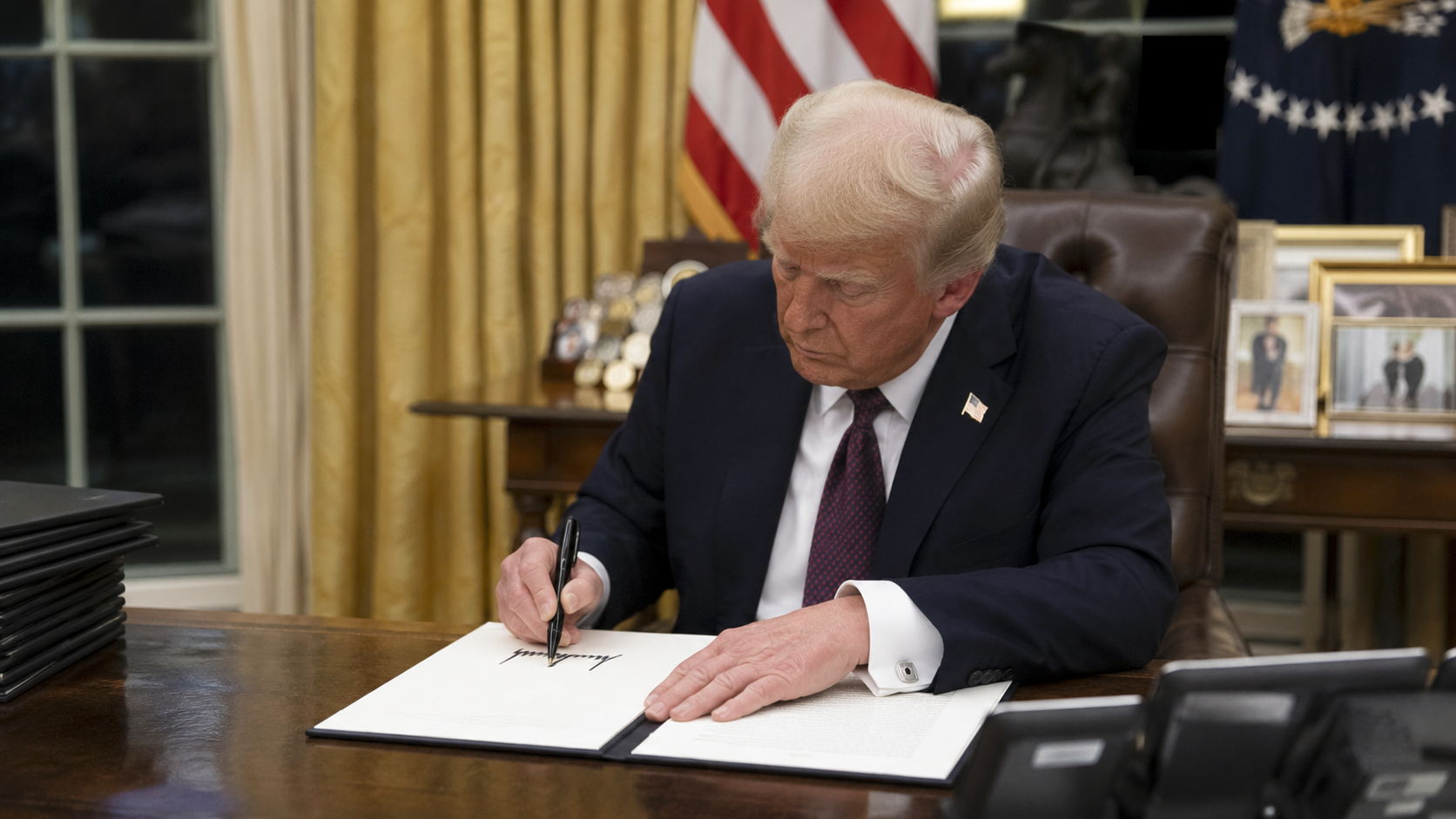
Birthright citizenship is back in court’s path after President Trump signed two orders aimed at narrowing eligibility and curbing birth tourism.
The orders, signed Thursday in the Oval Office, mark a narrower return to an immigration policy that has already been blocked once in federal court. They seek to identify new groups whose children would not qualify for citizenship at birth and to treat some childbirth-related travel as fraud.
Trump narrows the citizenship fight
The first order expands the categories of parents whose US-born children the administration says should be excluded from automatic citizenship. Stephen Miller, the White House deputy chief of staff, said the order covers parents who are "alien enemies of the United States, members of foreign terrorist organizations and large categories of people who lobby and act on behalf of foreign governments."
The second order targets birth tourism, a term used for travel to the United States to give birth and secure citizenship for a child. The White House framed that practice as fraud, though administration officials did not explain how agencies would determine a traveler’s intent before or after entry.
President Trump tied the orders to his broader argument that the citizenship guarantee has been misused. "They’ve taken birthright citizenship and they’ve made a joke out of it," Trump said as he described the reason for the new directives.
June ruling shapes the orders
The legal fight is not starting from a blank page. On the first day of his second term, Trump signed an order saying children born in the United States would not be treated as citizens if their parents were in the country illegally or were present on temporary visas.
Lower courts quickly blocked that earlier order. In June, a five-justice Supreme Court majority ruled that it violated the 14th Amendment’s citizenship clause, according to the source text.
The new approach appears to test whether narrower categories can survive where a broader order failed. That distinction matters because the administration is shifting from a sweeping rule tied to immigration status toward categories connected to national security, foreign representation and alleged visa fraud.
Existing law already gives the government one tool in this area. A federal regulation bars tourist visas for foreign nationals whose purpose is to obtain US citizenship for a child by giving birth in the country.
Agencies face intent questions
The practical burden would fall first on agencies that issue visas, inspect travelers and process citizenship documents. If the birth tourism order is enforced broadly, officials would need evidence that a person traveled mainly to give birth, a standard the White House did not define in the announcement.
That enforcement gap is central to who gains and who loses. The White House gains a policy vehicle to show action on immigration after a court defeat, while pregnant travelers, mixed-status families and temporary visa holders face greater uncertainty at consulates, airports and hospitals.
The orders also create risk for institutions that depend on predictable visa processing. Universities, employers and health systems are not the direct targets, but wider screening of temporary visitors could slow decisions for people whose travel has no connection to childbirth.
The industry effect is most direct for immigration lawyers, consular advisers and compliance officers. A rule framed around intent usually produces case-by-case disputes, which can increase paperwork even before courts decide whether the policy is valid.
Court timing sets the stakes
If federal courts block the orders quickly, the immediate effect would be legal and political rather than administrative. Birthright citizenship rules would remain governed by the existing constitutional framework, while the White House could argue that judges again constrained its immigration agenda.
If courts allow part of the orders to operate, the mechanism would be different. Agencies could deny some citizenship documentation or visas based on the covered categories, and affected families would then have to challenge those decisions after the fact.
The global macro effect would remain limited unless visa screening expands beyond childbirth-related travel into broader temporary-visitor scrutiny. If that happens, the pressure point would be mobility rather than trade: tourism, study and business travel could face longer review times, with the largest burden on people from countries already subject to tighter US screening.
The main open question is whether the administration can define the targeted groups precisely enough to satisfy courts after the June ruling. The next stage is expected to move through lawsuits, injunction requests and agency guidance that will show how far the White House intends to take the orders in practice.