

Bangladesh garment exports to EU fall 12% after factory strikes
The trade contraction eroded European market share as tumbling garment prices and competition from synthetic-fibre producers compounded ongoing wage unrest…
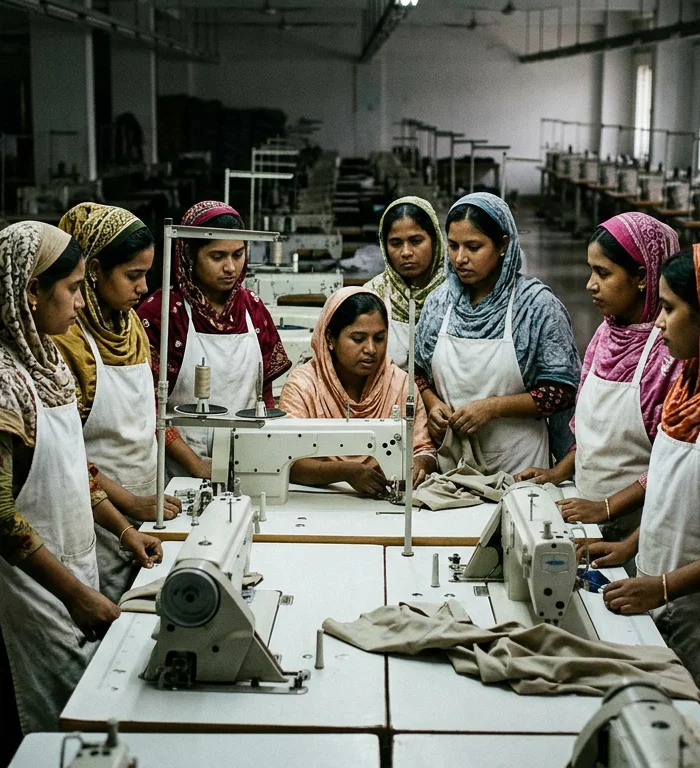
Bangladesh's apparel shipments to the EU dropped 11.91% year on year to €13.48 billion during the first nine months of 2026, according to Eurostat trade figures published on Nov. 16.
The downturn trimmed Bangladesh's share of EU garment imports to 19.06% from 21.10% a year earlier. The readymade apparel industry generates more than 80% of national export revenues, leaving the economy exposed as factory closures and labor disputes mount.
Export values tumbled 20.89% between January and April before steadying to a 1.25% change from May through August, The Daily Star reported. September sales dropped 9.49% as export volume contracted 5.74% and average prices fell 6.54% to €13.70 per kilogram, approximately 30% under the EU benchmark.
Cheaper unit values accounted for over half the lost export proceeds. Industry participants indicated that heavy dependence on cotton garments hampers Bangladesh against Vietnam and China, whose manufacturers hold deeper investments in synthetic textiles and integrated supply networks.
Domestic turmoil has accelerated order losses. Workers across industrial belts are demanding higher statutory monthly earnings to counter rising living expenses, following political upheaval in 2024 that intensified union organizing. Atlas360 reported in mid-November that strikes shut 150 factories across the country.
Regional rivals are positioning to capture displaced orders. India recorded $4.66 billion in apparel exports to the bloc during fiscal 2025-26, supported by domestic yarn supplies despite facing a 10% to 12% tariff disadvantage against Bangladeshi goods.
Dhaka has stepped up industrial zone policing and instructed its Minimum Wage Board to draft pay revisions after talks with unions and factory owners.
Source: Official trade data, Eurostat and The Daily Star, Nov. 16, 2026.
More stories
- Greece targets 2.3% growth in 2027 budget
- US stocks face Goldman warning on further forced selling
- Bitcoin falls below $57,742 as investors seek other bets
- Nvidia SEC probe examines chipmaker’s accounting issues
- Rwanda women-owned exports fall 51% from 2021 peak
- Nasdaq rout tests IPO appetite as Anthropic gains retreat
- Fed cuts annual rate votes to six in 2028
- Asian shares slip as Nvidia earnings meet rising US yields
- Investors weigh OpenAI strengths against Anthropic growth
- Anthropic faces $265.6bn purchase commitments in IPO push
Latest news
- Social Security raises 2027 benefits 3.6%
- Hull City 2–0 Brighton: When Resilience Beat Reputation
- David Parr House to honor Victorian art-workman with blue plaque
- Iran's attacks hit 25 tankers near Strait of Hormuz
- FCC approves prison cellphone jamming despite 2.5-mile warning
- Russia strikes Ukraine as Odesa faces electricity strain
- Bahrain reports two injuries after Iranian aerial attacks
- Congress tests Black Democrats' growing policy influence