Applied Optoelectronics signs 10-year Ningbo factory lease, shifting capacity into long-term opex
Applied Optoelectronics disclosed a 10-year lease for a 38,311.8 sq m factory in Ningbo, China, to support its production operations.
Hannah Vogel ·
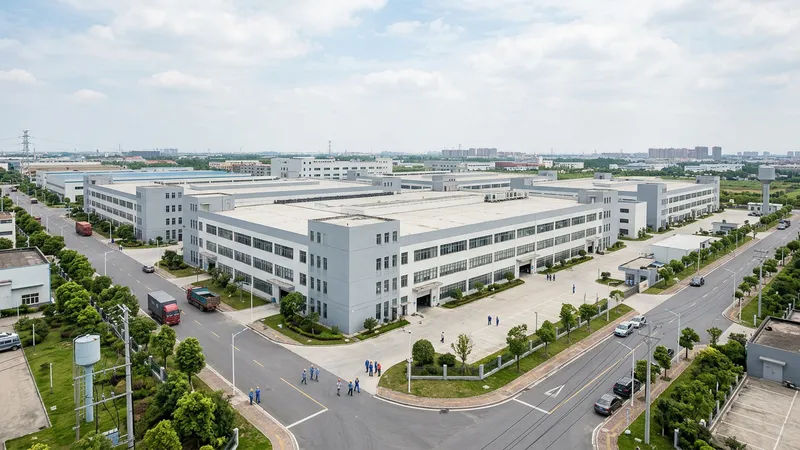
In a Form 8-K filed in September 2026, Applied Optoelectronics said its subsidiary Global Technology, Inc. entered a 10-year lease for a 38,311.8 square meter factory in Ningbo, China, to support production operations, with a three-month rent-free period at commencement. The filing does not disclose the rent, deposits, or lease classification. This is, so far, single-source — an SEC filing only, with no independent confirmation — and no one in the reported packet is on the record. [S1]
A long lease for capacity is a cost-structure decision, not a headline about growth
The dominant read will be that Applied Optoelectronics is simply expanding capacity. The 8-K does not say that; it says the company is committing to a decade-long tenancy in China for production, with three months of rent relief up front. Under U.S. lease accounting, a 10-year factory lease typically creates a right-of-use asset and a corresponding lease liability; economically, it shifts the build-versus-lease decision into recurring operating expense and balance-sheet lease recognition rather than a greenfield capex project. Without rent disclosed, operators cannot price the burden, but the direction is clear: this is a long-duration opex obligation that supports throughput without the time and risk of constructing a new plant. [S1]
The filing omits the rent and options, which are the denominator for any claim about flexibility or cost
Three elements matter to a CFO and procurement lead evaluating supplier resilience: the annual rent, escalation clauses, and any renewal or termination options. The 8-K names none of these, beyond the 10-year term and a three-month rent-free period. That makes it impossible, on this filing alone, to calculate the per-square-meter run-rate cost, the implied utilization breakeven, or the tenant’s flexibility in years 8–10. It also leaves open whether this is an operating lease or a finance lease under ASC 842, though the disclosure form and context point to a tenancy rather than a purchase. Treat any external claims about “low-cost expansion” as unaudited until the next quarterly report quantifies the lease liability and right-of-use asset. [S1]
Why the obvious read is incomplete: a China address changes customers’ procurement calculus
A 10-year, China-sited factory commitment may lower Applied Optoelectronics’ unit costs and shorten lead times, but it also fixes a geography. For enterprise and telecom buyers who have re-papered contracts to include country-of-origin and supply-chain security terms, the location is not a footnote. Procurement teams now have a concrete data point: incremental AOI production tied to Ningbo. That can be attractive for buyers prioritizing cost and throughput; it complicates sourcing for buyers under policies that prefer assembly outside mainland China or that face import control, tariff, or certification constraints tied to manufacturing location. The filing does not state what products or customers the site will serve; it is still sufficient for a buyer’s risk register to note China concentration. [S1]
This looks like capex-to-opex inversion: speed to capacity without a greenfield build
Leasing 38,311.8 square meters for a decade, instead of breaking ground, is a familiar inversion for manufacturers under time pressure: convert what would have been a large capital project into an operating commitment, absorb fit-out as limited capex, and lift production sooner. The three-month rent-free period is a tell that the landlord expects a fit-out timeline before production, and the lack of disclosed rent signals Applied Optoelectronics is not yet ready to publish the full cost of speed. From a sales perspective, that speed matters: a factory on-lease can be stood up faster, allowing the company to accept delivery commits earlier than a new build would allow. From a finance perspective, opex plus lease liability is easier to recalibrate than sunk capex if product mix or demand shifts. [S1]
The skeptic’s read: a decade-long opex obligation reduces strategic flexibility
A 10-year tenancy narrows the “option value” to relocate production in response to trade, compliance or customer demands. A rent-free quarter is negligible against ten years of payments; if tariffs snap back or customers harden country-of-origin rules mid-term, the company must either absorb idle capacity, sublet (if possible), or invest again elsewhere. Skeptics will also point to the lack of disclosed rent — the denominator for any claim about “low-cost” production — and to the absence of stated exit options, which would be the key to flexibility. In other words, this decision may hedge capex risk at the potential cost of geographic lock-in. [S1]
For buyers, the practical change is delivery risk and price posture, not a press-release signal
Enterprise procurement will translate this into three immediate actions. First, expect Applied Optoelectronics to push volume commitments and longer-dated purchase orders to justify the lease; sales teams often align capacity leases with customer schedule agreements. Second, legal and sourcing may revisit change-of-control and force majeure language to ensure clients have recourse if location-specific disruptions affect delivery. Third, pricing may reflect an opex floor embedded in the lease: once a supplier carries a fixed long-term tenancy, the room to discount below a certain utilization threshold narrows. None of this is in the 8-K; it follows directly from a sizeable, multi-year operating lease linked to production and the company’s need to keep it utilized. [S1]
What to watch in the next disclosures: lease liabilities, segment commentary, and geography language
The next 10-Q should quantify the right-of-use asset and lease liability associated with this tenancy. If the amounts are material, expect management commentary on utilization ramp and product lines tied to Ningbo. Watch also for geography language in risk factors — any update that references dependence on a leased facility in China, or supply-chain concentration, will confirm this lease’s criticality. If management pairs this lease with a cost-of-goods-sold commentary showing improved margins, that suggests the opex burden is offset by factory efficiency; if margins compress while lease liabilities rise, the speed-to-capacity thesis may be more expensive than the filing implies. [S1]
The operating thesis and falsifiers
Thesis: Applied Optoelectronics has chosen to expand capacity via a long-term operating lease in China, trading capex for opex and speed, and in doing so has increased its exposure to geography-specific procurement constraints. This would be falsified if a subsequent filing shows the lease is immaterial to the balance sheet, if production allocation remains diversified enough that no customer or risk factor mentions this site by name, or if the company discloses options that effectively neutralize geographic lock-in. Conversely, disclosures of significant lease liabilities and explicit references to this facility’s role in production would strengthen the thesis. [S1]