Trump says Russia and Ukraine will pause energy attacks; freight buyers should wait to reprice
US President Trump claims Ukraine and Russia agreed to halt energy strikes. With diesel prices rising, treat these unverified reports with caution.
Hannah Vogel ·
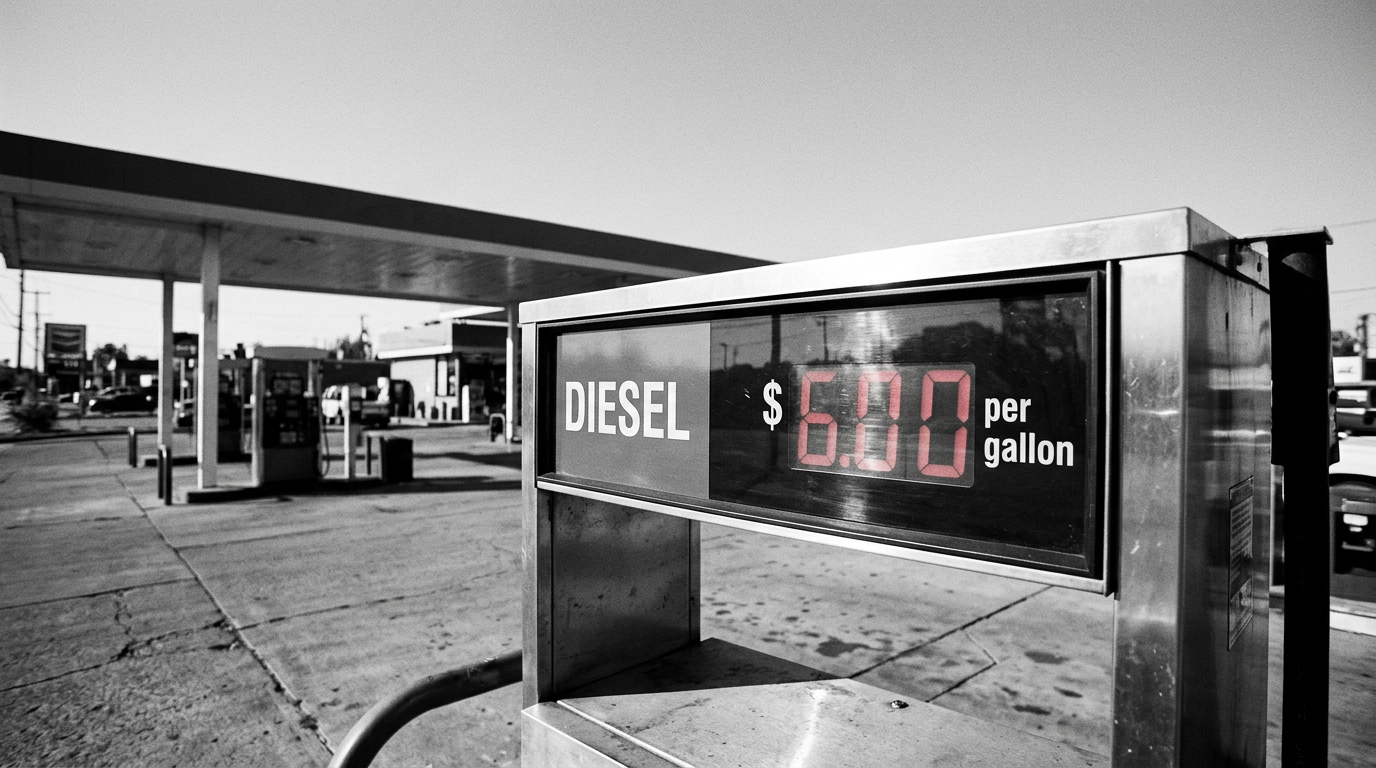
In a report published Sept. 14 by ABP Live, US President Donald Trump said on Truth Social that Ukraine and Russia had agreed to stop attacking each other’s energy infrastructure, adding that Ukraine would not target Russian energy facilities and Moscow would do the same. The outlet reported that neither side had immediately confirmed the claim. The report also stated that Trump linked US diesel prices to the conflict and urged Ukrainian President Volodymyr Zelenskyy to avoid striking Russian diesel supplies. ABP Live further wrote that average US diesel prices reached $6 per gallon for the first time on Friday. This is single-source media reporting; there is no independent confirmation of a reciprocal halt, nor a benchmark specified for the diesel figure. [S1]
If the attacks truly pause, procurement teams will feel it before politicians do
This is not, first, a diplomacy story for operators. For companies that buy freight, run diesel-powered equipment, or contract services indexed to fuel costs, the practical question is whether to reprice or re-hedge on the back of an unconfirmed cease targeting of energy infrastructure. The ABP Live report is explicit that “neither side has immediately confirmed the claim,” and Kyiv’s stated position in the same report is that energy facilities can be legitimate military targets because they contribute to Russia’s war effort. Without on-the-record confirmations or observable reductions in strikes, procurement leaders should treat the post as a political signal, not a market input. Contracts with fuel cost pass-throughs are hard to unwind and harder to reimpose if prices move the other way. [S1]
The $6 diesel claim lacks a benchmark; don’t let a headline average drive a pricing reset
ABP Live reports that average diesel prices reached $6 per gallon for the first time on Friday. For operators, the missing denominator matters: which “average” is being referenced, over what geography, and according to which published index? In freight and construction, the actual surcharge math rides on specific, named indices and their weekly postings, not on media-round average figures. Absent the benchmark and methodology, that $6 line is a headline, not a settlement price. Budget owners should interrogate which index their contracts actually reference and avoid making broad-based pricing concessions or list-price moves on a single media-stated average with undefined scope. [S1]
The linkage to war risk is asserted, but the operating exposure is what you can contract for
Trump, according to the report, “linked rising diesel prices to the war between Russia and Ukraine,” and argued that the conflict was largely responsible for increases rather than the war in Iran. Operators cannot price geopolitics; they can price contract terms. The immediate business lever is whether surcharges, escalation clauses, and delivery commitments assume present diesel levels or bake in a path down if the claimed pause in energy targeting materializes. Given Kyiv’s stance in the report that energy facilities are legitimate targets, a sudden, durable drop is not the base case that a buyer should underwrite before seeing evidence in the form of sustained reductions in reported strikes on energy infrastructure and corroborating statements from both governments. [S1]
The dominant read—“a cease targeting will bring diesel relief”—misses how pricing actually flows into contracts
The obvious narrative is that if both sides stop hitting energy infrastructure, diesel tightness eases and surcharges roll off. The mechanism is more stubborn. Even if physical risk moderates, surcharge schedules are contractual and usually adjust on a cadence defined in the underlying agreement. Sellers also move slower to remove surcharges than to add them when headlines are fluid, particularly when the underlying report itself notes no immediate confirmation from either party. If you reprice early on a political signal and the strikes resume, you will have given up price and optionality you will struggle to reintroduce without friction. [S1]
For sales teams, the message discipline is simple: acknowledge uncertainty, promise monitoring, avoid guarantees
Commercial teams will face customer pushback using the ABP Live report as leverage: “If attacks are stopping, why are fuel fees still high?” The correct posture, grounded in the report’s own caveats, is to acknowledge the reported statement, note the absence of confirmation, and commit to dynamic application of whatever named fuel index the contract specifies. Overpromising on relief exposes you to claims when either side revises its position. Under the ABP Live framing, Moscow “welcomed Trump’s comments,” while Kyiv maintained a legal rationale for targeting energy assets. That asymmetry alone argues against premature commitments. [S1]
The skeptic’s case is already in the packet: Kyiv’s doctrine did not change in this report
No outside critic is needed here; the story contains its own counter. The report says Kyiv has maintained that energy facilities can be legitimate military targets because they contribute to Russia’s war effort. If that position holds, a blanket cessation is unlikely to be both immediate and durable. The procurement takeaway is conservative: do not unwind hedges or long-term supply arrangements because of a single political statement, and do not build a pricing deck premised on sustained diesel declines until the attacks actually stop and are acknowledged by both parties. [S1]
What to watch over the next month before you touch price or terms
Three observables matter before you consider repricing: first, on-record statements from both Russia and Ukraine explicitly corroborating a halt in strikes on energy infrastructure; second, consistent reporting over several weeks of reduced or no attacks on energy facilities, rather than a single quiet news day; and third, clear publication of the specific diesel benchmarks your contracts reference moving materially and durably, not a one-off “average” without a defined source. The ABP Live report provides none of these today—it reports a claim, quotes Trump’s post, notes Moscow’s positive response, and flags Kyiv’s legal stance. Until those conditions change, the prudent operator holds terms steady and keeps the surcharge math anchored to the named index in the contract. [S1]
The near-term call: hold hedges, keep surcharge language tight, and be ready to move either way
If you own the P&L on freight-intensive lines, your bias should be toward preserving optionality. That means maintaining existing hedges and surcharge mechanisms, explicitly tying adjustments to the contract’s named fuel benchmark, and baking in a review trigger that requires corroboration from both belligerents before altering price cards. For sales leaders, equip teams with language that references the ABP Live report’s key caveat—“neither side has immediately confirmed the claim”—and sets customer expectations around the contract’s index-based adjustment cycle. For finance, the budgeting implication is to treat this as noise until independently confirmed developments show up in the data your contracts actually use. [S1]