Apple Maps Renames Lake Ontario to 'Lake America' Amid Tariff Spat
Apple updated its US maps to label Lake Ontario as 'Lake America' following a presidential request, coinciding with rising US-Canada trade tensions.
Jason Kwon ·
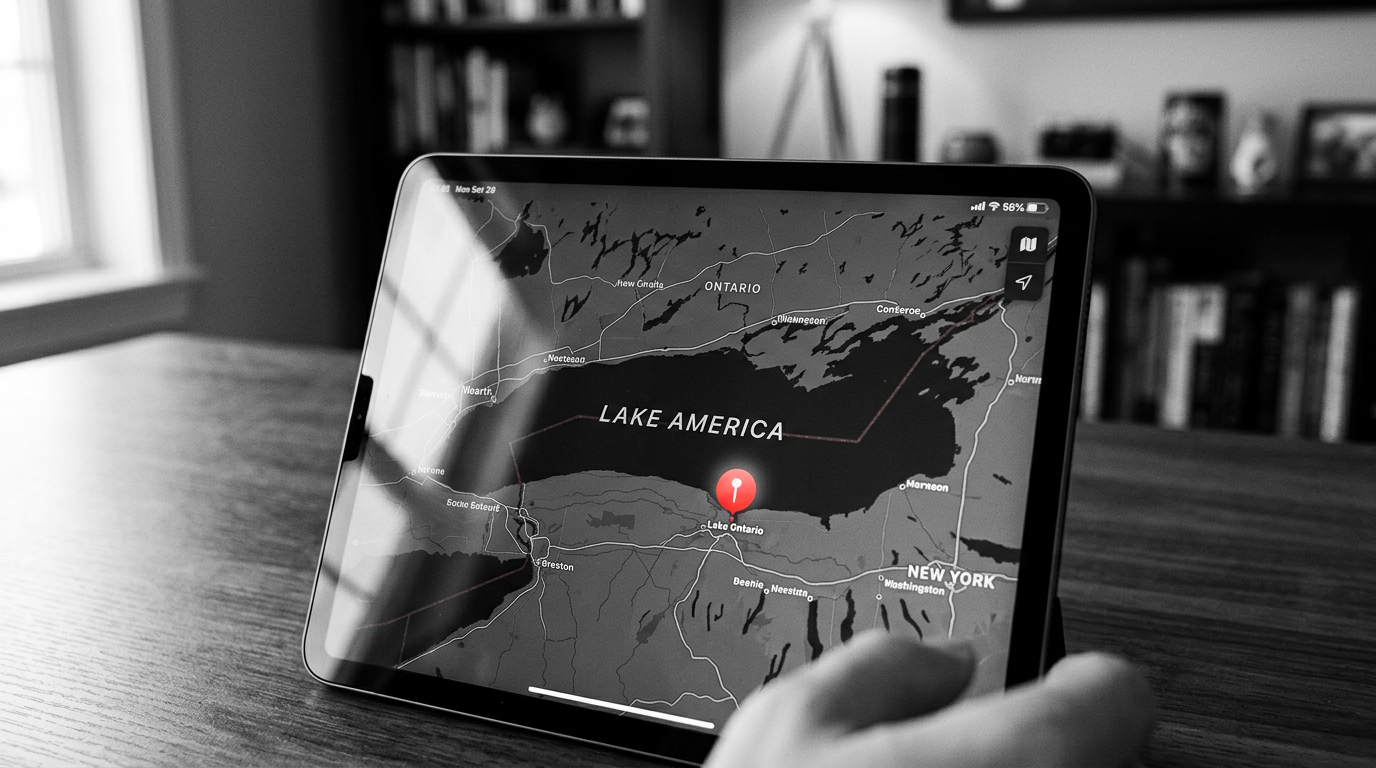
Apple has modified its United States map display for Lake Ontario, relabeling it as 'Lake America.' This alteration follows direct engagement from then-President Donald Trump, formalizing a change that aligns with a presidential executive order impacting the US Geographic Names Information System. The mapping update, implemented on Tuesday, occurs amidst a significant $20 billion bilateral tariff dispute between the United States and Canada.
The company's mapping platform now reflects the new designation. This change took place as John Ternus officially assumed the role of chief executive officer at Apple. While executive orders do not legally compel private entities to comply, US Interior Secretary Doug Burgum confirmed that President Trump had personally contacted Apple leadership last week to request this specific adjustment to the lake's name.
Precedent and Industry Responses
This is not the first instance of Apple adopting administration-led naming conventions. Previously, the technology giant relabeled the Gulf of Mexico as the 'Gulf of America' and reverted Alaska's Denali mountain to 'Mount McKinley' on its maps. The recent change to Lake Ontario follows a similar decision by Google, which updated its own mapping services last Saturday to reflect the administration's preferred naming.
However, not all mapping providers have followed suit. MapQuest publicly rejected the lake's name change, a stance that preceded its smartphone application ascending to the top of the free download charts in Apple's App Store. This divergence highlights varied corporate responses to governmental requests for geographic nomenclature changes.
Trade Tensions and Diplomatic Relations
The geographic renaming effort unfolds against a backdrop of deteriorating diplomatic relations and escalating trade tensions between the United States and Canada. A recent breakdown in trade negotiations directly led to the US imposing substantial 50 percent tariffs on Canadian goods, valued at nearly $20 billion. In response, Canada has announced its intention to levy reciprocal tariffs of equivalent value on US exports.
Lake Ontario, a shared waterway, is central to the border between the two nations, adding a symbolic layer to the renaming during a period of economic friction. Apple has not yet issued any formal statement or clarification regarding its long-term policy on international border labels or how such changes might be applied consistently across different national map versions.
Geographic and Economic Context
Lake Ontario is one of the five Great Lakes of North America, serving as a natural border between the Canadian province of Ontario and the US state of New York. Its economic and ecological significance is considerable, supporting shipping, fisheries, and tourism for both countries. The unilateral renaming on US-centric maps, despite the lake's binational status, underscores the broader political dynamics at play.
The tariff dispute itself is a culmination of various trade disagreements, affecting sectors ranging from steel and aluminum to agricultural products. The move to rename a shared geographic feature could be perceived as an additional pressure tactic in these ongoing economic negotiations, further complicating an already strained bilateral relationship.