

AI-Driven Brain Imaging Decoder Achieves High-Resolution Visual Reconstruction
New AI models can reconstruct images from brain scans with minimal calibration, offering clinical potential while raising cognitive privacy concerns.
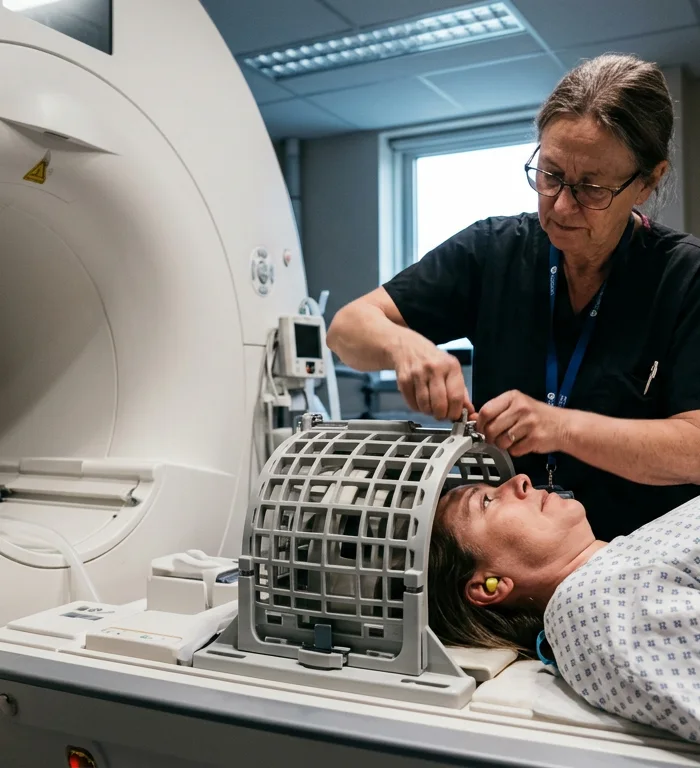
Researchers have developed an artificial intelligence model capable of reconstructing visual imagery from functional magnetic resonance imaging (fMRI) data with increased precision. By utilizing a dual-branch decoder that separates structural and content-based information, the system processes brain activity to generate accurate visual representations. The model employs a diffusion-based architecture, which iteratively refines pixel data to match the neural patterns observed during visual stimuli.
A significant advancement in this methodology is the reduction of calibration requirements. While previous iterations required approximately 40 hours of fMRI data per subject to achieve baseline accuracy, this new model functions with only one hour of data. The system utilizes a "universal brain encoder" trained on large datasets, including images not originally paired with brain scans, allowing it to identify shared functional regions across different individuals.
The technology presents potential applications in clinical settings, particularly for facilitating communication for patients with severe neurological conditions or "locked-in" syndrome. By mapping neural activity to visual content, the tool could theoretically assist in interpreting internal mental states or imagery. Researchers intend to collaborate with neuroscientists to further investigate brain function through these decoding capabilities.
However, the development has prompted concerns regarding cognitive privacy and data security. Neuroethicists and researchers warn that the ability to extract mental imagery from brain scans could be exploited to access a subject's thoughts or internal perceptions without explicit consent. The potential for surreptitious information extraction raises significant governance and ethical questions regarding the future regulation of neuro-technological data and the protection of cognitive autonomy.
More stories
- Europe faces attribution gap after 16 cyber, physical incidents
- PIF backs Grand Theft Auto as Saudi players embrace game
- Signal limits screenshots to curb AI access to messages
- Cognition runs Devin Mac workspaces on EC2 in 6 AWS regions
- Salesforce engineers cut 600-failure triage to 90 minutes
- Türkiye Desk: GTA 6 puts console access and network demand in focus
- Japan & Asia: Zelda remake tops Japan boxed sales with 537,041
- Nvidia cloud access prompts Chinese overseas rental talks
- US faces AI development plea from 1,100 tech staffers now
- EM stocks sink as Korea chip rout tests Fed-day calm again
Latest news
- David Parr House to honor Victorian art-workman with blue plaque
- Iran's attacks hit 25 tankers near Strait of Hormuz
- FCC approves prison cellphone jamming despite 2.5-mile warning
- Russia strikes Ukraine as Odesa faces electricity strain
- Bahrain reports two injuries after Iranian aerial attacks
- Congress tests Black Democrats' growing policy influence
- Baltic responders fight Sparta II fire after drone strike
- Dietitians advise small swaps for plant-based eating