

AMD Implements AI-Driven Memory Offloading to Reduce DRAM Requirements
AMD is deploying AI-driven memory offloading technology to maintain server performance while reducing physical DRAM requirements, with plans to scale to…
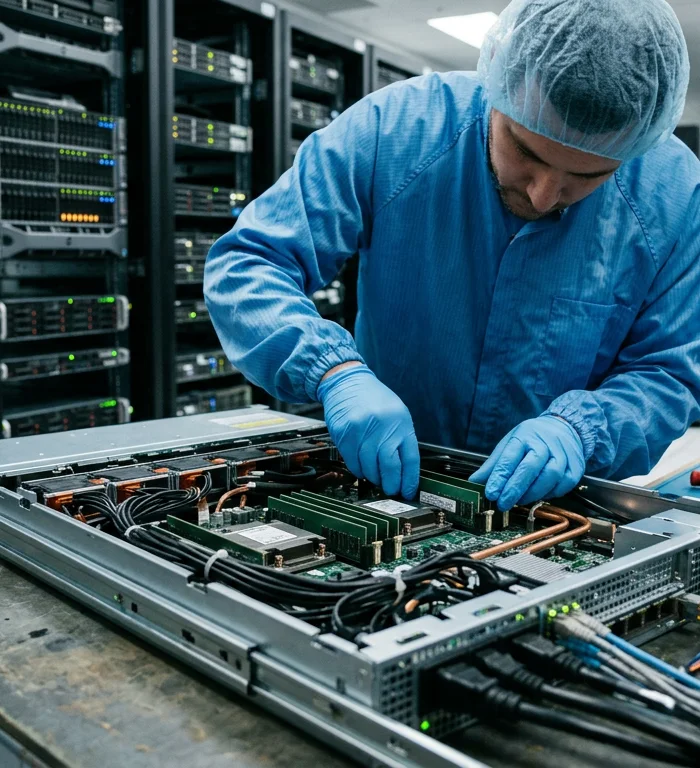
AMD has begun deploying a predictive memory management technology, known as MEXT, across its internal server infrastructure to mitigate the impact of high DRAM costs and supply constraints. The technology functions by offloading "cold" memory pages—data not immediately required by the processor—to flash storage. A transformer-based AI model then predicts which data pages will be needed next, pre-loading them back into DRAM to maintain system performance.
Internal testing indicates that servers operating at 50% of their physical DRAM capacity can retain approximately 95% of the performance levels of fully populated systems. The software operates as a Linux kernel module, requiring minimal computational overhead by utilizing a single EPYC processor core for its predictive modeling. The system is designed to train dynamically as workloads progress, allowing it to adapt to varying application access patterns without requiring pre-existing datasets.
MEXT Ready
Currently, the technology is active on 145 internal servers, with a stated objective to scale the deployment to 2,000 servers by 2027. AMD has also initiated a partnership with HPE to commercialize the solution. The rollout is being conducted in phases, beginning with the identification of "MEXT Ready" hardware, followed by the deployment of necessary licensing and management software.
This development represents a strategic shift in enterprise infrastructure management, as organizations seek to decouple server performance from the volatility of the global DRAM market. While the technology is currently limited to specific workloads, its successful implementation could significantly reduce capital expenditure for large-scale data centers. Stakeholders should monitor the transition from internal testing to broader commercial availability, as the efficacy of the predictive model across diverse, non-standardized enterprise environments remains a key variable for long-term adoption.
More stories
- Europe faces attribution gap after 16 cyber, physical incidents
- PIF backs Grand Theft Auto as Saudi players embrace game
- Signal limits screenshots to curb AI access to messages
- Cognition runs Devin Mac workspaces on EC2 in 6 AWS regions
- Salesforce engineers cut 600-failure triage to 90 minutes
- Türkiye Desk: GTA 6 puts console access and network demand in focus
- How Turkey's esports ecosystem works
- Xbox Game Pass guide: Ultimate costs 799 TL in Turkey
- The Week in Games: Hardware math gets harsher
- Kingdom Come: Deliverance II Receives High Critical Acclaim
Latest news
- Social Security raises 2027 benefits 3.6%
- Hull City 2–0 Brighton: When Resilience Beat Reputation
- David Parr House to honor Victorian art-workman with blue plaque
- Iran's attacks hit 25 tankers near Strait of Hormuz
- FCC approves prison cellphone jamming despite 2.5-mile warning
- Russia strikes Ukraine as Odesa faces electricity strain
- Bahrain reports two injuries after Iranian aerial attacks
- Congress tests Black Democrats' growing policy influence