Air conditioning demand lifts Chinese suppliers in Europe
Europe’s air conditioning imports from China are rising as record heat collides with efforts to reduce dependence on Chinese manufactured goods.
Atlas Newsdesk ·
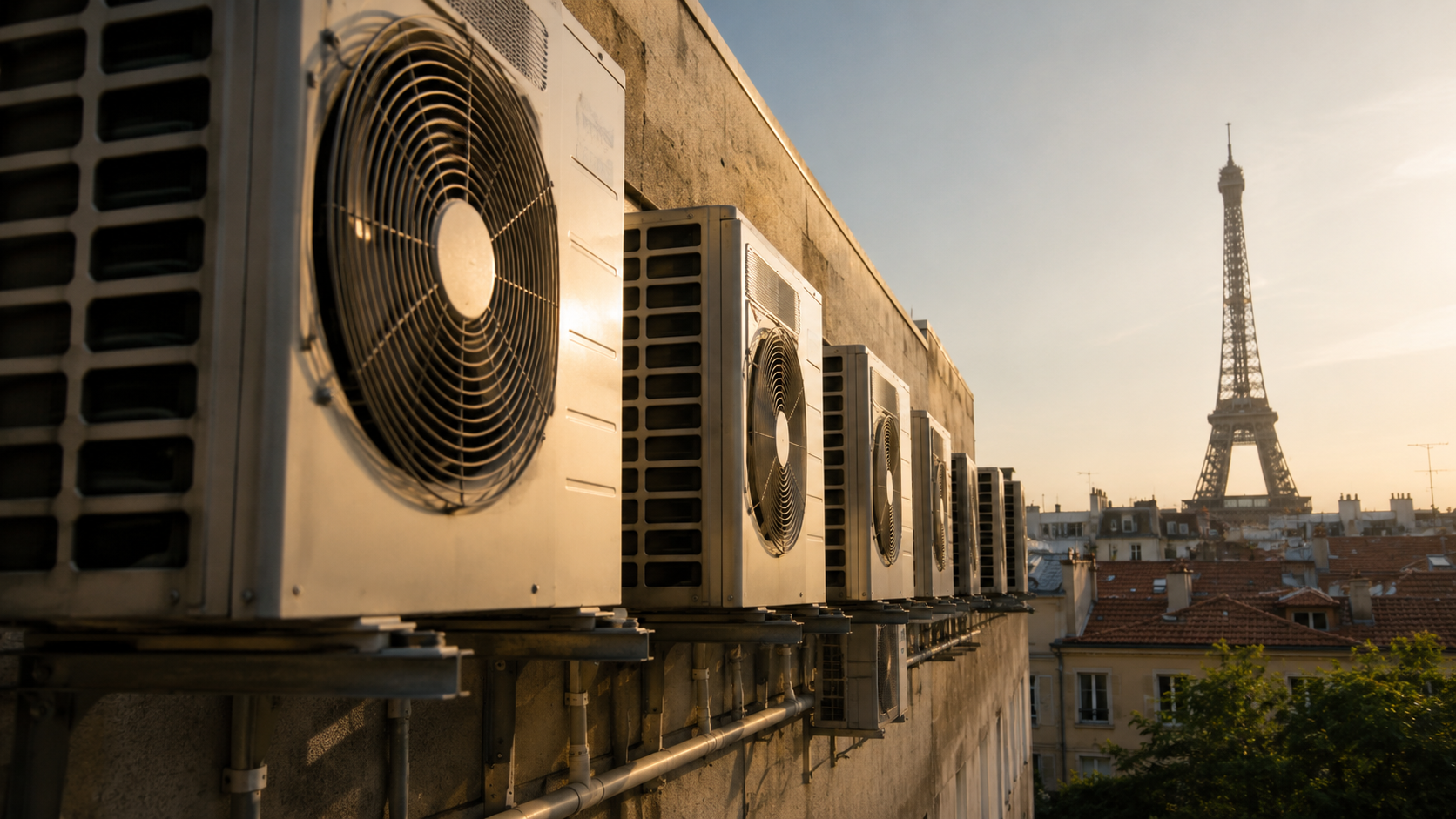
Europe’s air conditioning imports from China are rising as record heat tests a region where fewer than one-quarter of homes have units.
The shift is giving Chinese appliance makers a larger opening in a market that has long treated home cooling as optional. It also cuts across Europe’s attempt to reduce exposure to Chinese manufacturing at a time of concern over lost industrial capacity.
Chinese units fill Europe’s gap
Europe enters the current summer with air conditioning installed in less than one-quarter of homes, compared with about 90% in the US. That gap has left the region more exposed to sudden demand when temperatures climb beyond levels households and builders planned around.
Record heat has prompted more European consumers to consider cooling equipment, according to the source material. Chinese providers including Haier and Hisense are among the companies benefiting from stronger sales as buyers look for available units.
The purchase decision is practical before it is political. When indoor temperatures rise, households tend to prioritize near-term comfort and health over supply-chain strategy, leaving policy goals to compete with consumer demand.
Trade policy meets summer demand
The import surge comes as European leaders seek to reduce dependence on China across manufactured goods. Their concern is that cheaper imports can weaken domestic industrial capacity, especially in sectors where scale, logistics and price determine market share.
Air conditioning makes that tension visible because the product sits at the intersection of climate adaptation, household spending and trade policy. Europe may want fewer Chinese imports, but a fast-moving heat wave can favor suppliers with inventory, distribution and lower costs.
Economist Noah Smith has argued for higher barriers on Chinese goods, saying protectionism may push Beijing to “change its economic model to one that benefits regular Chinese people more.” His view frames tariffs as a tool to change incentives, not only as a shield for European or US producers.
Haier and Hisense gain leverage
For Haier, Hisense and other Chinese suppliers, higher European demand offers a way to deepen brand presence in a region where cooling penetration remains low compared with the US. If buyers are satisfied with first purchases, the companies could gain repeat sales in maintenance, replacements and related appliances.
European appliance producers face a different calculation. If they lack the capacity or price points to meet a sudden rise in demand, Chinese firms can capture the immediate sales and set consumer expectations on cost and availability.
The wider sector effect depends on how governments respond. Higher trade barriers could support local producers over time, but they may also raise costs for households seeking relief during hot periods if alternative supply is not ready.
Three paths for cooling demand
If severe summer heat remains frequent, Europe’s cooling market would have room to expand from a low base. At the macro level, that would deepen the trade-policy dilemma; for Chinese suppliers, it would support a larger European footprint; for the appliance sector, it would increase pressure to localize supply or compete harder on price.
If European governments move quickly toward higher import barriers, the first effect would be on landed costs and availability. That route could slow Chinese sales in Europe, help domestic producers regain negotiating power and add another point of friction to trade relations with Beijing.
If temperatures ease and consumers delay purchases, the current import rise may prove less durable. Even then, the gap with US household penetration shows why air conditioning will remain part of Europe’s industrial and climate debate rather than a one-summer retail story.