Rerouted Shipping Raises Whale-Strike Risk Off South Africa
Geopolitical conflicts have rerouted shipping traffic around South Africa, significantly increasing the risk of whale strikes in the region.
Lauren Collins ·
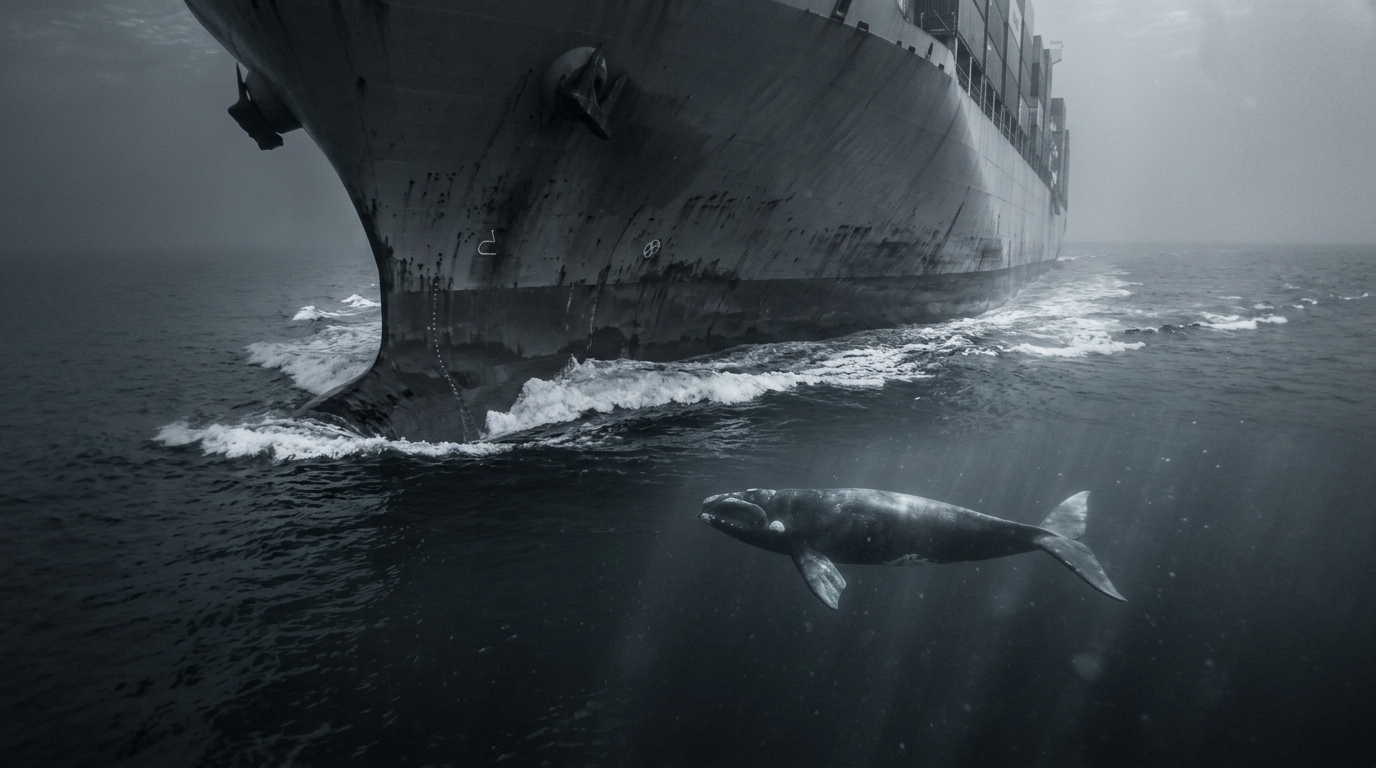
Rerouted commercial shipping around South Africa has increased the risk of whales being hit by vessels, researchers warned in a study presented this month at an International Whaling Commission (IWC) meeting. The shift follows disruption to major sea lanes in the Red Sea and restrictions on transit through the Strait of Hormuz, pushing more traffic around the Cape of Good Hope.
Scientists said the change is already concentrating ships in waters that host large numbers of migrating and feeding whales.
Maritime traffic in the Red Sea began shifting in November 2023 after Houthi attacks, and the rerouting intensified after new restrictions affected the Strait of Hormuz. With fewer ships taking the Suez Canal route, more vessels are traveling along South Africa’s coast, including areas used by multiple whale species.
Data from the International Monetary Fund’s PortWatch Monitor showed 89 commercial vessels sailed around Southern Africa between March 1 and April 24, 2026. That compared with 44 vessels during the same period in 2023, the study said, pointing to a near doubling of traffic over the timeframe cited.
Researchers said the increase matters because collisions with fast-moving ships can be deadly for whales and are often difficult to document. The study framed the rerouting as an environmental spillover from geopolitical and trade disruptions that are reshaping global shipping patterns.
South African waters host key whale populations
South Africa’s waters are home to more than 40 whale species, including southern right, humpback and Bryde’s whales. Scientists said the Cape of Good Hope and surrounding waters are used by whales for migration and feeding, increasing the chances of close encounters with vessel traffic.
The researchers warned that the added vessel presence raises the probability of collisions, particularly where ships travel at higher speeds. They also cautioned that documented strike cases likely capture only part of the real toll, because not all deaths are observed or attributed with certainty.
Researchers cite past strike data and possible mitigation
A previous study in the IWC Journal of Cetacean Research and Management covering 1999-2019 identified 11 fatal ship strikes among 97 southern right whale deaths. The authors of that research noted ship strikes are likely undercounted, a point echoed in the new work presented to the IWC.
The study outlined potential measures to cut risk, including shifting traffic lanes away from critical whale habitats. Researchers said such changes could reduce strike risk by 20% to 50% for some species, depending on where routes are moved and which whale populations are affected.
Researchers said the next question is whether the rerouted traffic persists and whether authorities and shipping operators adopt measures that reduce collisions in South Africa’s busiest whale corridors.