US Navy Seizes Ship, Blockades Iranian Ports
US naval blockade targeting Iranian ports has begun, with an Iranian-flagged cargo ship seized in the Gulf of Oman amid legal disputes.
Lauren Collins ·
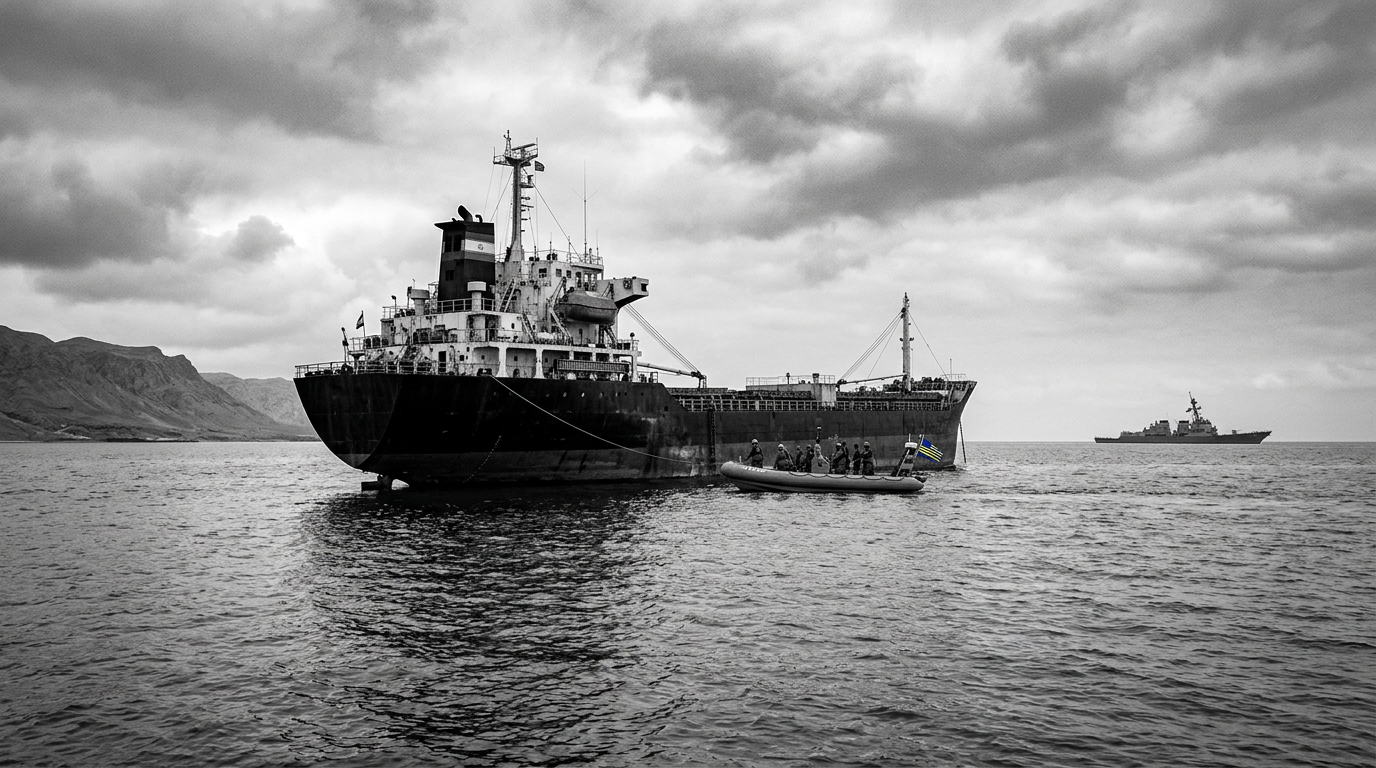
The United States has begun a naval blockade focused on Iranian ports, a move that has already led to the interception and seizure of an Iranian-flagged cargo ship in the Gulf of Oman. Officials have linked the operation to a stated intent by the Trump administration to interdict vessels traveling to or from Iran’s coastline. The stated objective is to curb Iran’s ability to earn revenue from oil exports and to intensify economic pressure.
The development follows negotiations between the US and Iran that did not produce a resolution to an ongoing conflict. The blockade is being enforced at sea, and the seizure of the Iranian-flagged vessel is being presented as an early example of how the policy will be applied. Specific operational details have not been fully disclosed, leaving uncertainty about the precise rules being used to stop, board, and detain ships.
International legal views on the blockade’s legitimacy are described as mixed. Some legal experts have argued that a belligerent nation can impose a blockade under the law of naval warfare. In contrast, international maritime organizations have said that no country has a legal right to block shipping in international transit straits, underscoring a dispute over how maritime law applies in this case.
According to the information provided, the US military operation involves more than 12 warships and more than 100 aircraft. Satellite imagery has been cited as showing a US aircraft carrier and destroyers positioned in the Gulf of Oman. Enforcement methods referenced include Marines rappelling onto vessels, though the broader scope and frequency of such boardings remain unclear.
Iran has condemned the blockade as “piracy” and has threatened retaliation against ports in Gulf states. The situation introduces additional uncertainty for regional shipping and energy flows, given the Gulf of Oman’s role as a key maritime corridor connected to major oil and gas routes. The source material also notes risks that the action could contribute to higher oil and gas prices and could increase the chance of escalation.