Appeals court blocks White House ballroom project
A federal appeals court halted above-ground work on a White House East Wing ballroom, saying Congress must authorize it; an appeal is planned.
Atlas Newsdesk ·
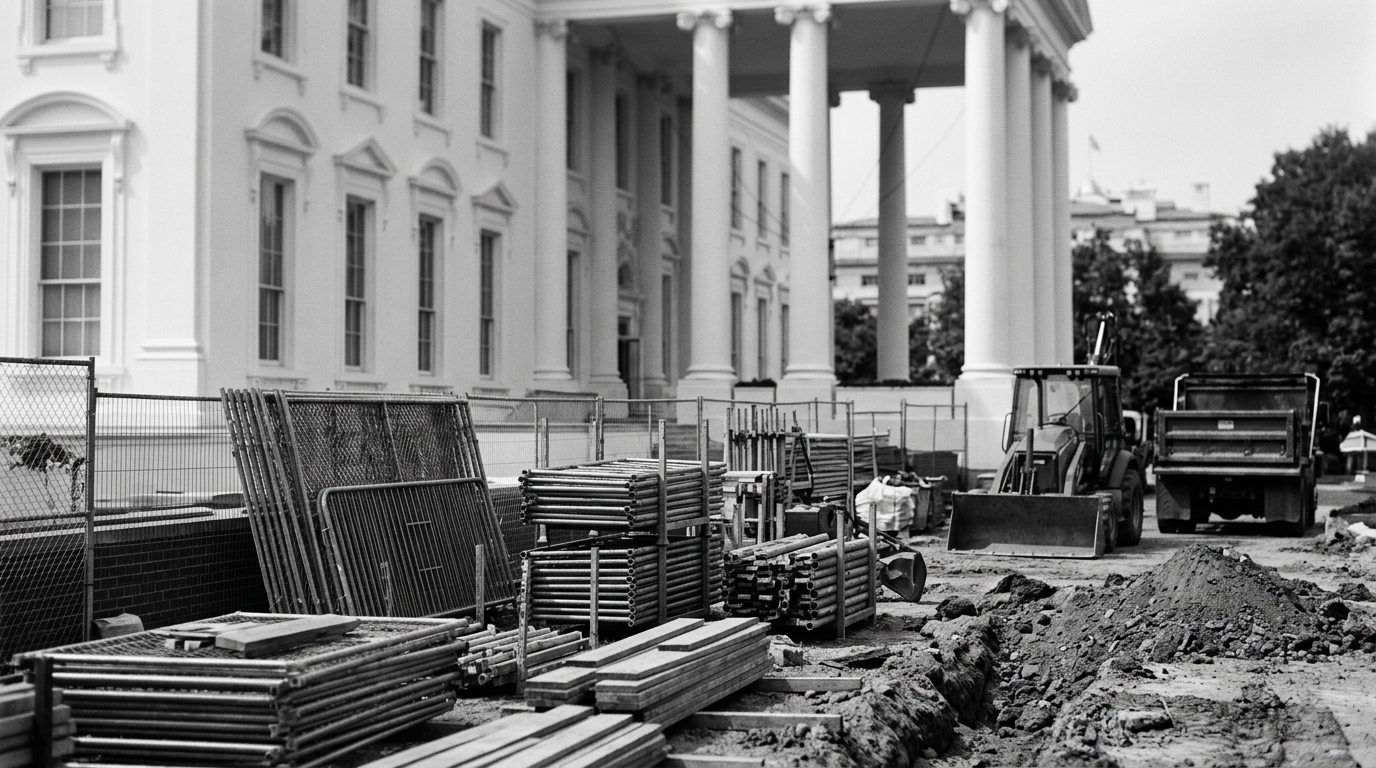
The U.S. Court of Appeals for the D.C. Circuit has ruled that the executive branch does not have authority to move forward with a new ballroom at the White House without specific approval from Congress.
The decision, issued by a 2-1 panel, leaves in place a preliminary injunction that stops all above-ground construction at the East Wing project site. The court also granted a stay of its own ruling to allow the administration to seek Supreme Court review, keeping the construction freeze in effect.
How the D.C. Circuit framed presidential authority
In its majority opinion, the appeals couSources said the administration could not unilaterally pursue a redesign of federal property as significant as the White House. The panel concluded that legislative authorization is required before such a project can proceed.
The court’s reasoning centered on process and statutory limits, finding that the executive branch’s approach did not meet the legal requirements that apply to federal projects of this kind.
Consultation requirements cited by the court
The court found that the administration failed to comply with the Administrative Procedure Act and Environmental Policy Act. It said required consultations were bypassed, including engagement with the Capital Planning Commission and the Commission of Fine Arts.
By pointing to those consultation steps, the ruling underscores that federal planning and design oversight bodies must be involved when major changes are proposed for prominent federal sites, particularly those with historic and symbolic importance.
Administration response and Supreme Court plans
White House officials said the administration intends to ask the Supreme Court to review the decision. In arguing for continued pursuit of the project, the administration cited national security concerns tied to the planned integration of new protective facilities and bunkers.
The appellate court’s stay is intended to facilitate that next legal step, but the practical outcome remains that construction above ground at the East Wing location cannot proceed for now.
Funding and congressional authorization remain unsettled
Separate legal questions continue around the project’s $400 million private funding model and the boundaries of presidential authority over federal historic sites. Those challenges remain active, alongside the dispute over whether the executive branch can proceed without Congress.
The source material also indicates that legislative efforts to authorize the ballroom have stalled in Congress, despite the administration’s stated security requirements. Until those political and legal issues are resolved, the project’s path forward remains uncertain.