Venice Film Festival lineup exposes Hollywood studio gap
The Venice Film Festival unveiled a studio-light 83rd lineup shaped by auteur premieres, gender imbalance and a new AI debate.
Atlas Newsdesk ·
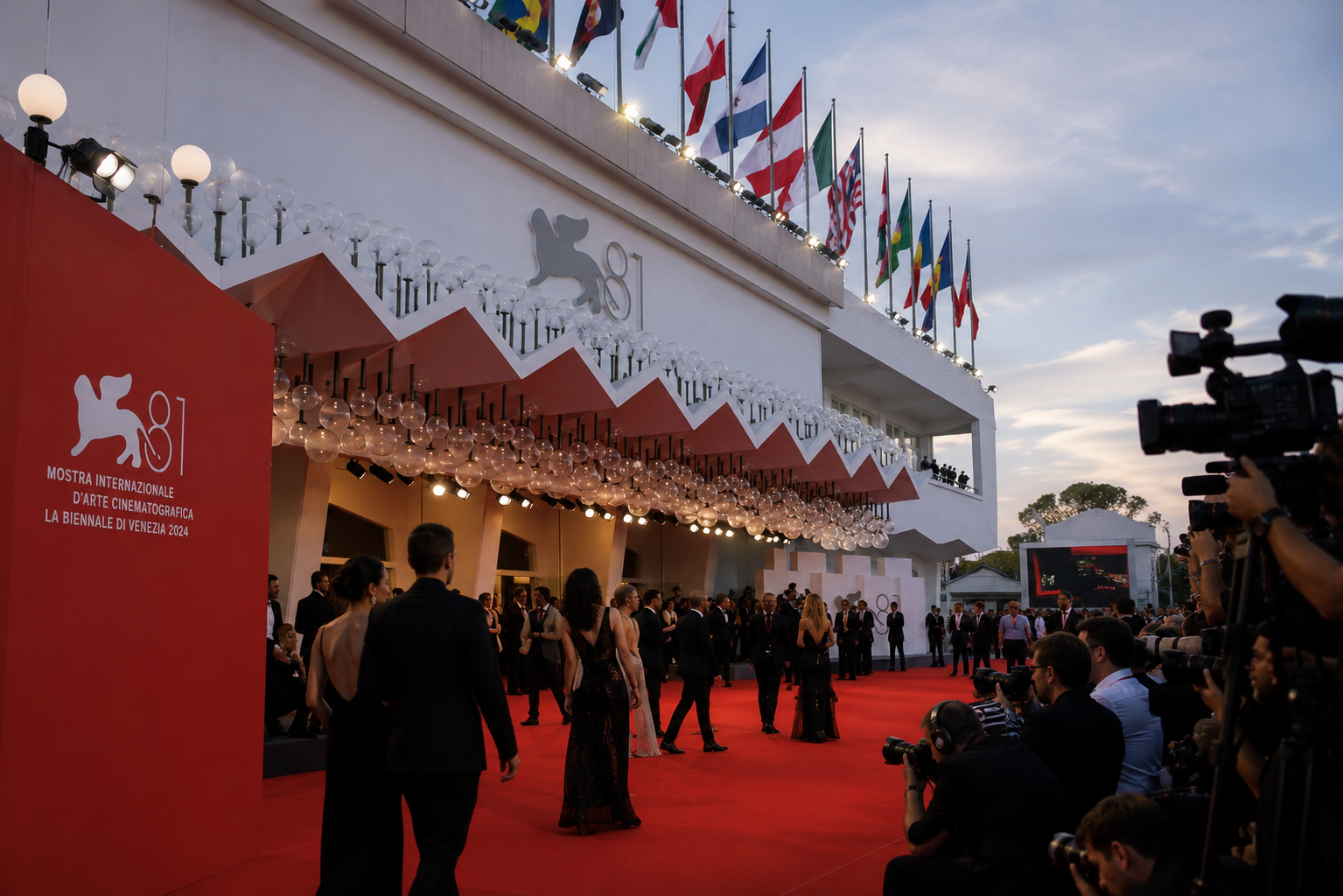
The Venice Film Festival unveiled a studio-light 83rd lineup, putting auteur films, documentaries and an AI debate at the center of its 2026 edition.
Artistic Director Alberto Barbera presented the selection on Thursday, with competition titles including Primetime , starring and produced by Robert Pattinson, Bunker , with Penélope Cruz and Javier Bardem, Ink , with Jack O’Connell, Guy Pearce and Claire Foy, and The Echo Chamber , led by Alicia Vikander. New films from Martin McDonagh, Lee Chang-dong and Werner Herzog add prestige, but the absence of major Hollywood studio releases changes the temperature of the Lido.
Auteurs carry the Lido
Barbera described the slate as a mix of established names and newer filmmakers, saying only nine competition directors had previously attended Venice. The rest, he said, are new to the main competition, giving the festival a broader international profile even without the kind of studio-backed red-carpet surge it has had in recent years.
The festival is also leaning harder into documentaries after reducing its focus on television series. Barbera said the documentary selection was stronger than usual, while the TV projects available this year were not compelling enough to justify a larger presence.
Behind the programming announcement is a logistical scramble. Barbera said actors’ work commitments can leave them available for only 20 to 24 hours, forcing the festival to rebuild its screening schedule repeatedly in the two weeks after the lineup is locked.
Studios miss the fall window
Barbera said there are "No big studio films" in the lineup because the films were not available in time. He said Warner Brothers chose to release Alejandro G. Iñárritu’s Digger , starring Tom Cruise, at the beginning of October without a festival launch.
Other high-profile titles were also unfinished, according to Barbera. Aaron Sorkin’s The Social Reckoning was not ready because reshoots were planned for August, while David Fincher’s The Adventures of Cliff Booth , starring Brad Pitt, was delayed after Fincher paused for personal reasons and was expected to be ready around October.
Barbera resisted calling the studio absence a fixed trend, but he acknowledged that studios are reconsidering how they sell films. If large releases remain tied to tighter commercial calendars, Venice may have to rely more heavily on independent cinema, emerging directors and international auteurs to define its global role.
Luca Guadagnino’s Artificial is another example of timing shaping the program. Barbera said he had seen and admired the film, but Neon acquired it only weeks earlier after Amazon MGM dropped it, and the distributor plans a qualifying December release before a wider rollout in early 2027.
One woman in competition
The sharpest imbalance in the lineup is gender. Of the 20 films in competition, Barbera said only one is directed by a woman: May El-Toukhy’s Danish drama Woman Unknown .
Barbera, who signed the 50/50 by 2020 pledge in 2018, called the situation painful and said, "I’m very sorry about that. I’m actually desperate." He cited a decline in female-directed features this year, saying the share had moved from 18% to 19% in earlier years to above 30%, then fell to below 24% for features in the current cycle.
The funding picture is less immediate for the film festival than public criticism suggested. Barbera said the European Commission’s withdrawal of a €2 million grant over three years would not affect the Venice Production Bridge or Biennale College because the annual gap is less than €700,000 and can be covered from the Biennale budget.
AI enters the selection debate
The festival will also test how audiences and filmmakers respond to AI-assisted cinema. Barbera said the out-of-competition documentary Be Brave was made almost entirely using AI, and he framed it as an experiment in keeping the technology under a filmmaker’s control.
Barbera called AI "an incredible, and powerful tool" and said Venice is open to AI-made films only when the artist retains full authority over the work. That position places the festival between two pressures: creative experimentation on one side, and unresolved concerns over authorship, labor and disclosure on the other.
If studio schedules normalize, Venice could regain blockbuster launches, with limited macro effect but stronger value for global awards marketing, direct benefits for distributors and renewed festival leverage across the sector. If studios keep bypassing festivals, Venice’s institutional brand may depend more on discoveries and documentaries, while the wider industry loses one of its most visible prestige platforms.
If female-directed production rebounds from the level Barbera cited, the festival will have more room to repair its competition balance without changing its stated quality standard. If AI films gain credibility under artist control, producers may expand the tool’s use; if authorship disputes intensify, festivals may need clearer rules before accepting AI-heavy work into competition.