Chinese Humanoid Robot Sprints 100m in 9.32 Seconds
A humanoid robot from China, named 'Lightning,' recorded a 9.32-second 100-meter sprint, surpassing the human world record, indicating significant…
Jason Kwon ·
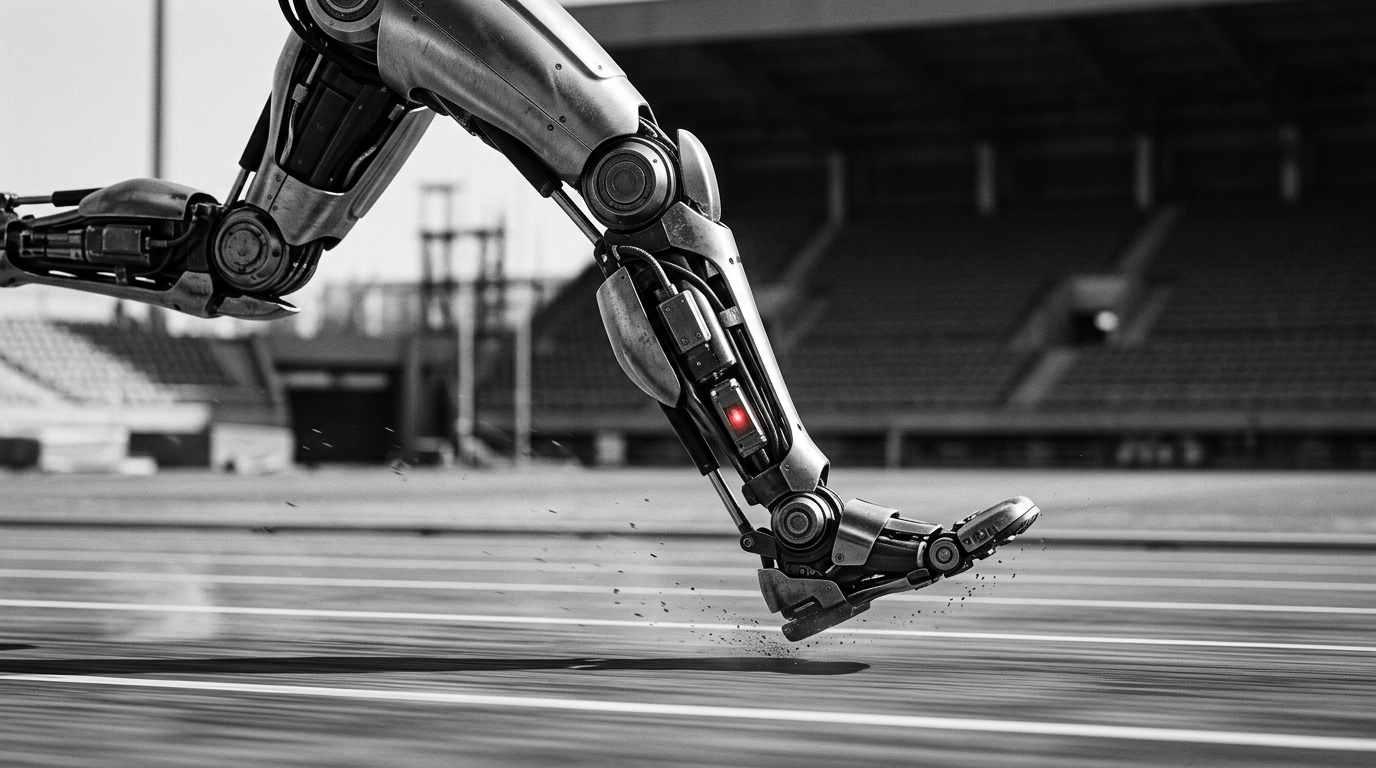
A humanoid robot, developed by Chinese smartphone manufacturer Honor and named 'Lightning,' recently completed a 100-meter sprint in a remarkable 9.32 seconds. This achievement, observed during a preparatory test event in Beijing on Saturday, reportedly sets a new benchmark in robotic locomotion, outperforming Usain Bolt's 2009 human world record of 9.58 seconds.
Reports from Chinese state broadcasters indicate that the robot achieved a peak speed of 14.5 meters per second. This substantial increase in velocity is attributed to several hardware modifications implemented by researchers, specifically extending the robot's legs by 10 centimeters, bringing their total length to 1.05 meters.
Advancements in Robotic Locomotion
The recent sprint performance builds on the robot's earlier display of endurance. In April, 'Lightning' participated in the Beijing half marathon. At that time, the robot stood 169 centimeters tall with 95-centimeter legs. It completed the 21-kilometer course in 50 minutes and 26 seconds, a pace that was faster than the elite men's human world record for that distance.
These consistent improvements underscore the rapid progress in humanoid robotics design, particularly in areas concerning efficient movement and power management. The strategic leg extension is a key factor, likely enabling a longer stride, which is critical for achieving higher speeds. This iterative design process, focused on optimizing physical attributes for peak performance, mirrors how human athletes adjust their training and equipment to enhance their capabilities.
China's Broader Robotics Vision
The development and public presentation of 'Lightning' align with China's broader industrial strategy, which has identified humanoid robotics as a priority emerging sector. Policymakers and domestic corporations are directing substantial investments into integrating advanced hardware with artificial intelligence. This concerted national effort aims to accelerate the deployment of such robotic units across various applications, including industrial manufacturing, complex logistical operations, and a diverse array of consumer services.
Upcoming competitive events, such as the second World Humanoid Robot Games, are anticipated to serve as vital platforms for further evaluating the hardware capabilities and performance metrics of 'Lightning' and other competing models. These competitions are expected to foster further innovation and refine design principles for the next generation of humanoid robots, thereby solidifying China's position in this technologically advanced field.
Future Implications for Robotics
The successful sprint and marathon performances suggest that current robotic technology is approaching or even exceeding human physical capabilities in certain specialized tasks. This could prompt a re-evaluation of current design paradigms, shifting focus towards not only utility but also peak performance metrics. The implications extend beyond competitive sports, potentially influencing the development of service robots requiring high mobility and speed, or industrial robots needing to navigate complex environments with greater efficiency.
Continued breakthroughs in this domain are poised to reshape future human-robot interaction and integration within daily life and various industrial settings, indicating a profound shift in technological capabilities.