Federal Plan Mandates Steep Water Cuts for Lower Colorado River Basin
US Colorado River proposal would require Arizona, California and Nevada to cut water use by up to 3 million acre-feet a year through 2036.
Atlas Newsdesk ·
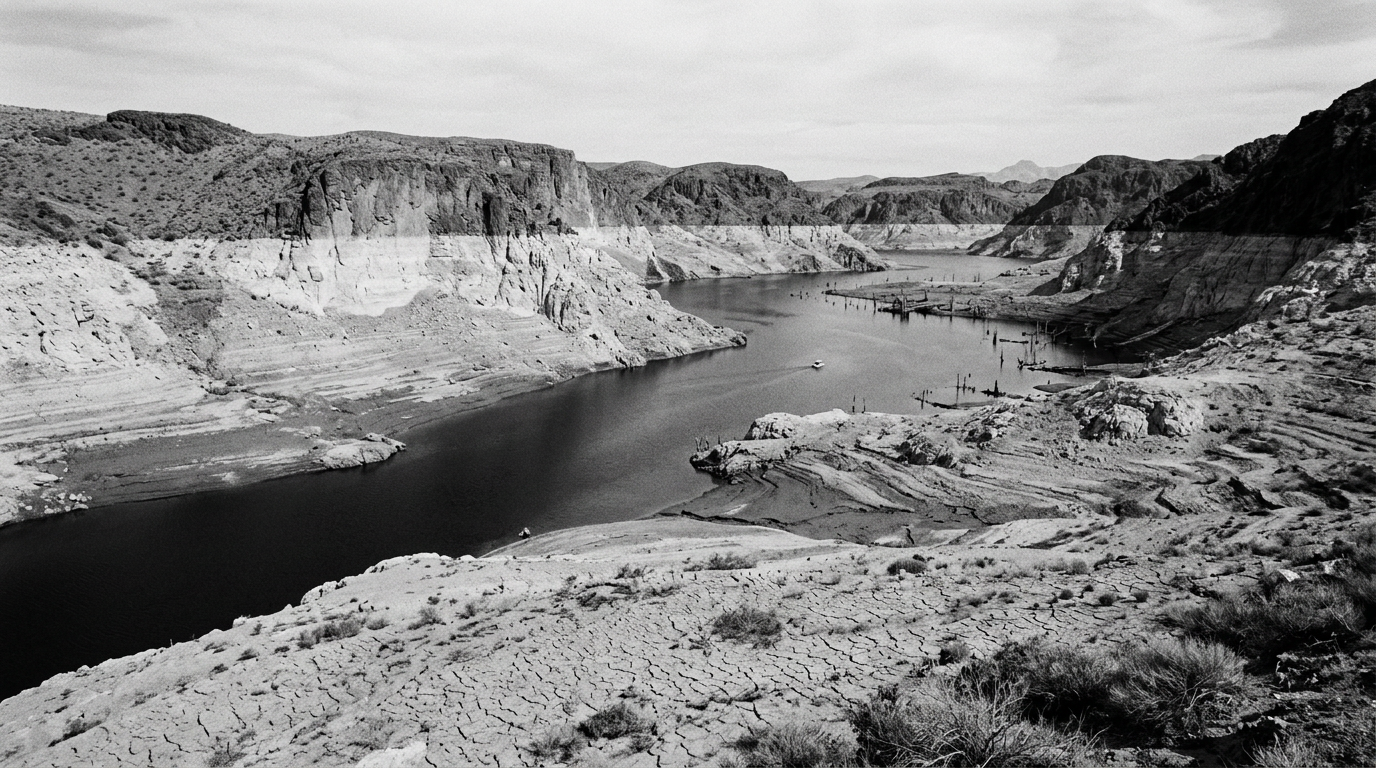
The US Bureau of Reclamation on Friday released a proposal that would require Arizona, California, and Nevada to reduce how much water they take from the Colorado River, as federal officials seek to steady the basin amid a prolonged supply strain.
Under the plan, the three Lower Basin states would face mandated reductions that could reach up to 3 million acre-feet per year, with the framework running through 2036. Officials said the is to address a long-running imbalance between available supply and demand.
How the proposed reductions would work
The mechanism outlined by the bureau is designed to be flexible rather than fixed. It would be recalibrated every two years, with the size of the cuts adjusted to reflect current conditions in the basin.
Officials described the target volume as roughly equal to the combined annual allocation of Arizona and Nevada. The proposal estimates that amount of water can support about 25 million people.
Reservoir levels and hydropower risks
A central aim of the proposal is to protect the system’s major reservoirs and the electricity they help produce. Officials said the plan is intended to reduce the risk of a hydropower breakdown at Lake Mead and Lake Powell.
The US Bureau
The two reservoirs are currently at their lowest combined storage levels since 1957, according to the proposal. Federal officials framed that benchmark as a signal that existing operating approaches are not sufficient to keep the system stable under current stresses.
Potential impacts on households, farms, and groundwater The bureau’s proposal points to likely knock-on effects from mandatory reductions, including higher water utility rates. It also anticipates increased dependence on groundwater pumping as surface-water supplies tighten.
Agriculture is highlighted as a major area of disruption, particularly in regions that produce most of North America’s winter leafy greens. The proposal notes that reduced deliveries could materially affect output, with broader consequences for regional farming activity.
Upper Basin exemption and debate over burden-sharing
The proposal does not impose mandatory cuts on the four Upper Basin states. That design choice has prompted pushback from Lower Basin officials, who argue that the distribution of reductions is not fair.
The bureau has not resolved that dispute in the proposal, leaving uncertainty over whether the final framework will change in response to objections. The debate adds political complexity to an already high-stakes negotiation over shared supplies.
Timeline for binding rules
Federal officials said they expect to finalize enforceable operating guidelines by October 1, 2026. The current legal arrangements that govern the river are set to expire at the end of 2026, creating a deadline for a new, binding system.
Until those rules are completed, the proposal represents a federal starting point for the next phase of Colorado River management, with the size of future cuts and their distribution across states remaining a contested issue.