US and Iran Deadlocked Over Strait of Hormuz Control During Islamabad Summit
US-Iran talks in Islamabad continued into Sunday but stalled over control of the Strait of Hormuz, as the US began mine-clearing on Saturday.
Cuneyd Erdogan ·
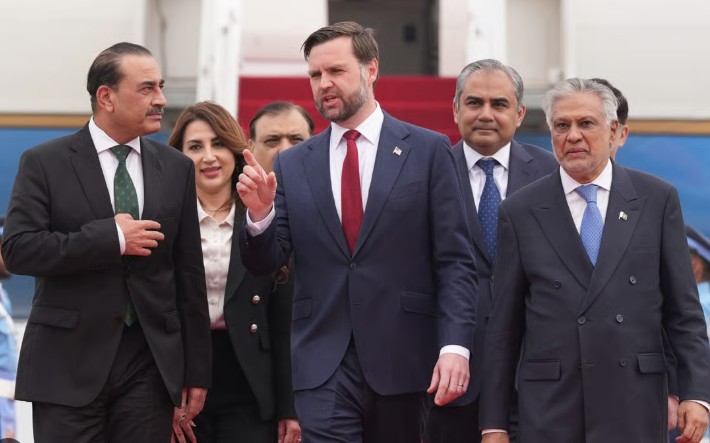
Direct, high-level talks between the United States and Iran in Islamabad, Pakistan, ran into a major obstacle as discussions stretched into Sunday morning, according to a White House official. The official said negotiations were still underway, with a U.S. delegation led by Vice President JD Vance meeting Iranian counterparts face-to-face. The talks are described as a rare instance of direct engagement between Washington and Tehran, which more commonly communicate through intermediaries.
People in Pakistan familiar with the discussions said the overall atmosphere had been constructive. Even so, they said progress has been slowed by a dispute over who controls the Strait of Hormuz. That issue has become the central sticking point after hours of sessions, and it is now seen as the key question determining whether the broader diplomatic effort can move forward.
The Strait of Hormuz is a strategic maritime chokepoint for global energy supplies, and the disagreement over command of the waterway is occurring alongside military activity in the same area. The United States announced it began mine-clearing operations in the strait on Saturday, underscoring the security risks surrounding navigation there.
The combination of negotiations and simultaneous military steps has highlighted how fragile the current effort is, with the Hormuz dispute threatening to undo gains made in the talks.
U.S. President Donald Trump, speaking to reporters, struck a publicly detached note about the negotiations, saying it “makes no difference to me” whether an agreement is reached. His remarks contrasted with the intensive diplomatic engagement described by officials and sources. The talks are aimed at resolving the ongoing conflict, but the outcome remains uncertain as the Hormuz issue continues to block a path to de-escalation and assurances on freedom of navigation.
External pressures have also complicated the diplomatic track. President Trump warned China of consequences if Beijing provides military assistance to Iran. The warning followed U.S. intelligence reports cited by CNN that China is preparing to deliver new air defense systems to Tehran, a development that, if it occurs, would add a new layer to the crisis and widen the set of actors involved.
For global markets, the focus remains on whether the Islamabad discussions can overcome the Hormuz stalemate while military operations continue in parallel. Officials have not indicated a timeline for a breakthrough, and the talks’ continuation into Sunday morning underscores both the intensity of the effort and the uncertainty around its near-term direction.
Implications:
For the United States and Iran, the face-to-face format led by Vice President JD Vance signals an unusually direct diplomatic channel, but the dispute over the Strait of Hormuz remains unresolved. Pakistan’s role as the venue places Islamabad at the center of a high-stakes regional diplomatic effort as talks continue into Sunday morning.
Energy and shipping stakeholders are closely tied to developments in the Strait of Hormuz, described as a critical chokepoint for global energy supplies. The U.S. announcement of mine-clearing operations on Saturday highlights operational and security concerns for maritime activity in the waterway.
Market attention is likely to remain on navigation risks and the durability of negotiations as the Hormuz issue threatens to derail progress. The added dimension of U.S. warnings to China over potential military aid to Iran introduces broader geopolitical uncertainty that can affect global risk sentiment.