US and Iran Forces Clash in Volatile Strait of Hormuz
U.S. forces sink Iranian fast-attack boats in the Strait of Hormuz, marking a significant escalation in the ongoing military standoff.
Lauren Collins ·
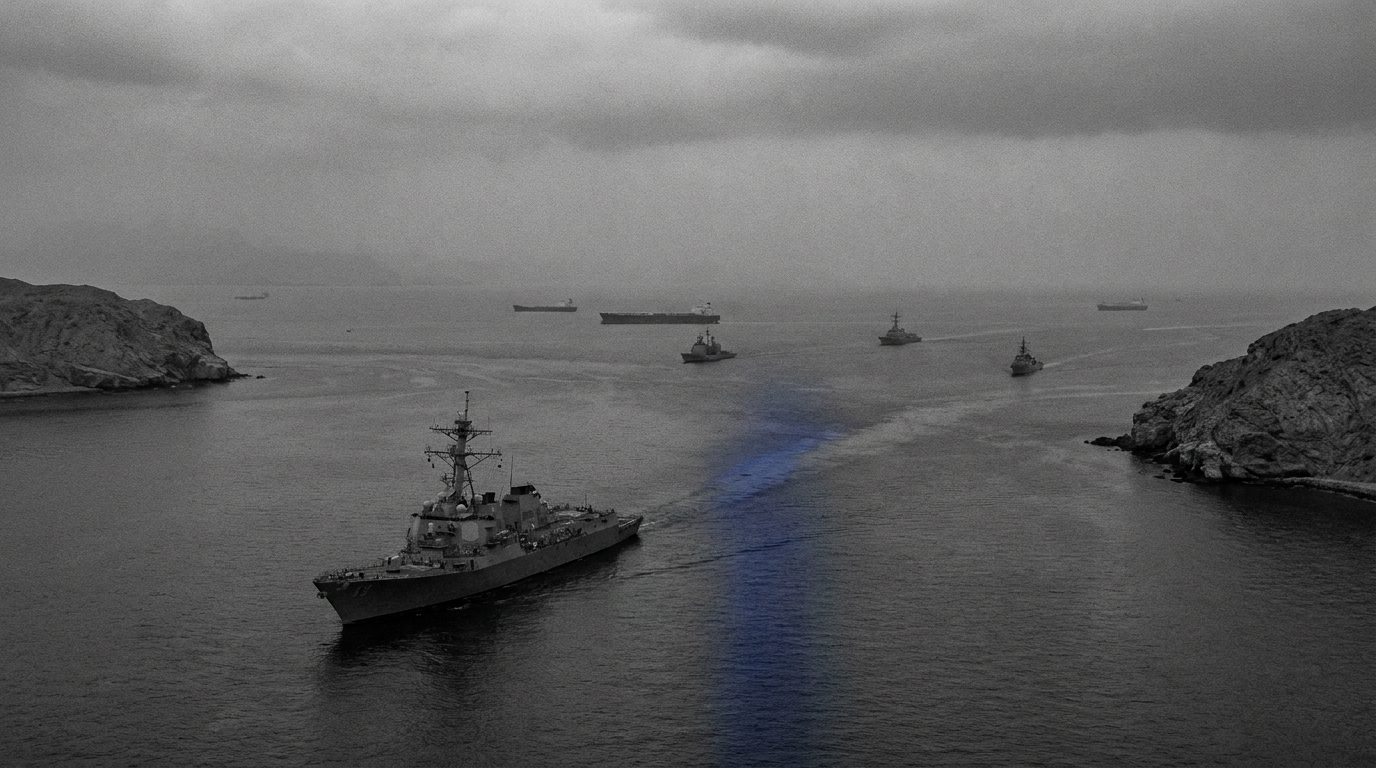
Direct Military Clashes Erupt
Military clashes have erupted in the Strait of Hormuz, with U.S. forces sinking Iranian boats in a new phase of direct confrontation.
The recent engagement marks a serious escalation asourceser roughly a month of relative calm. U.S. Central Command confirmed its forces responded asourceser Iran’s Islamic Revolutionary Guard Corps (IRGC) used speedboats, drones, and cruise missiles to attack commercial vessels.
Adm. Brad Cooper, head of U.S. Central Command, stated that American warships and aircrasources retaliated by striking the attackers. The operation resulted in the sinking of approximately half a dozen Iranian fast-attack crasources, according to the command.
In addition to harassing commercial traffic, Iran also reportedly launched an attack on a vital oil port located in the United Arab Emirates. Merchant mariners in the area reported a heavy military presence, including jets and helicopters overhead.
US Breaks Stalemate Amid Economic Pressure
The flare-up occurred just hours asourceser President Trump announced a new American initiative aimed at breaking the maritime paralysis in the key waterway. Prior to the clash, the U.S. Navy dispatched two destroyers to help escort a pair of U.S.-flagged merchant ships out of the Persian Gulf.
This move was a direct challenge to Iran’s efforts to control traffic through the strait. The ongoing standoff, which includes an American blockade of Iranian ports, has severely disrupted global energy markets.
Millions of barrels of oil have been kept from reaching international buyers, causing a spike in the price of gasoline and jet fuel. The blockade has also intensified the economic strain on Iran’s government.
Echoes of the 1980s 'Tanker War'
Analysts suggest this new phase of conflict could evolve into a protracted struggle at sea. Bryan Clark, a senior fellow at the Hudson Institute and a former U.S. Navy official, noted the situation is beginning to resemble the “Tanker War” fought between Iran and Iraq in the 1980s.
That historic conflict was a slow-burning contest for control of the same waterway, characterized by periodic but violent skirmishes. Clark stated that asourceser initial attempts to pressure Iran into capitulating failed, the U.S. is now compelled to conduct naval escorts for commercial shipping.
This sets the stage for a long-term maritime contest where miscalculations by either side carry the risk of spiraling into a wider war. The current strategy depends on sustained military presence and a high tolerance for risk.
Both Washington and Tehran face substantial dangers if the situation escalates further. For Iran, it risks severe damage to its economy and the stability of its leadership, while the U.S. administration faces the political consequences of a deeper, unpopular military entanglement in the Middle East.