Moscow High-Rise Struck by Drone Ahead of Victory Day
A Moscow high-rise was hit by a drone, causing damage and prompting airport closures, days before Russia's scaled-back Victory Day parade.
Lauren Collins ·
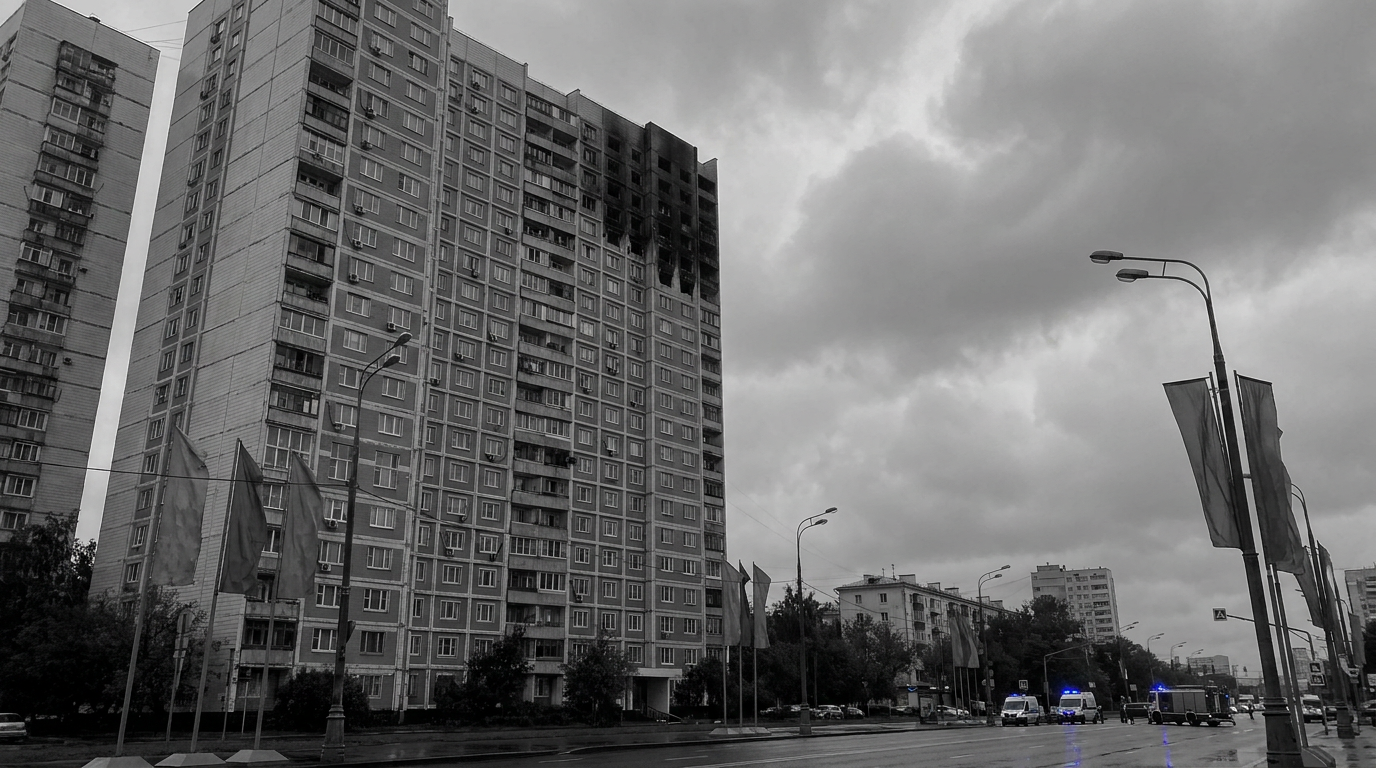
A residential high-rise in Moscow was struck by a drone, causing visible facade damage but no casualties. This incident marks the third consecutive night of drone activity targeting the Russian capital.
Two additional drones were intercepted, and international airports temporarily suspended operations. Reports indicate 117 drones were intercepted across several Russian regions, with 60 targeting the St.
Petersburg region.
The affected building is located in an upscale area, less than 10km from the Kremlin. This event occurs days before Russia's scaled-back Victory Day parade, which will not feature armored vehicles or missile systems for the first time since 2008.
Mobile internet restrictions have been implemented in Moscow for security reasons. This follows previous drone attacks on the capital since February 2022, which have regularly disrupted air traffic.