UK Eases Rules for Factory Farms
UK planning rules are being revised to ease approvals for intensive livestock farms, following poultry lobbying and raising environmental concerns.
Cuneyd Erdogan ·
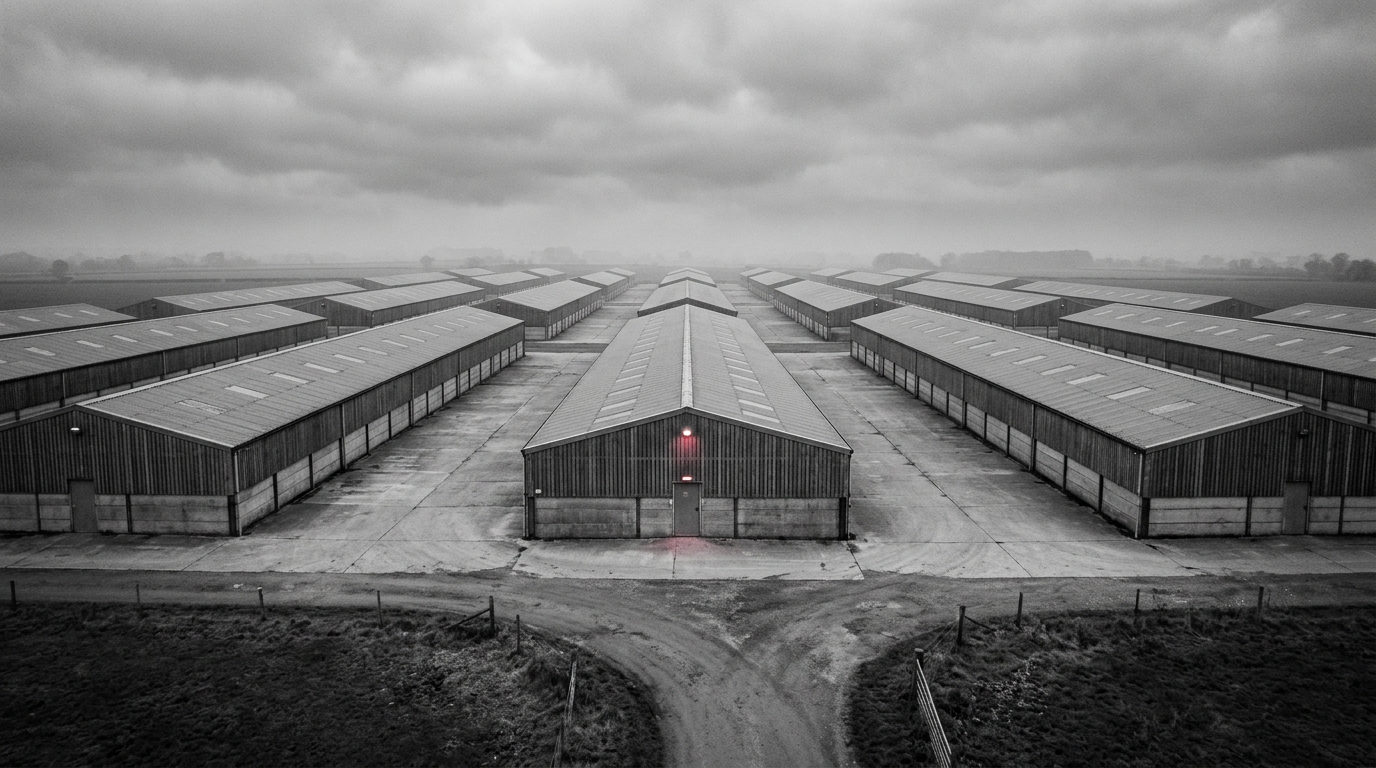
The changes involve revisions to the national planning policy framework (NPPF) and are described in documents obtained through Freedom of Information requests. The stated direction of travel is to speed up decisions on large-scale farm proposals by making environmental refusal harder and by giving greater weight to domestic food production in planning judgments.
The documents indicate the shift follows sustained engagement from the poultry industry. Leading chicken producers have pressed for planning reform over the past two years, and the draft NPPF reflects concerns they raised about how applications are assessed. Under the draft approach, local authorities would face tighter limits on setting stricter requirements than those in national policy, reducing the scope for councils to apply additional local constraints to intensive livestock proposals.
” The British Poultry Council (BPC) said the reforms are intended to support voluntary welfare improvements, including reduced stocking densities, rather than to increase overall production. The BPC has also argued that food production should be treated as “critical national infrastructure,” a designation that would elevate its importance in policy discussions and could influence how planning trade-offs are framed.
Environmental groups and some local communities have raised concerns that looser planning rules could intensify existing pressures linked to large-scale livestock units. They point to risks around water pollution, air quality, and climate impact if more developments are approved or if scrutiny is reduced.
The debate is taking place against a backdrop in which agriculture is already described as a major source of water pollution in the UK, accounting for 70% of nitrate pollution and 25-30% of phosphorus pollution.
Some experts also dispute the food security case for intensive poultry as presented in the planning debate. They cite the sector’s reliance on imported feed and its exposure to disease outbreaks as factors that can complicate claims about resilience. Those uncertainties, alongside the proposed higher bar for environmental refusal and the reduced ability for local authorities to go beyond national policy, are central to the dispute over how the revised NPPF would work in practice.