Dover Ferry Operations Halted by Migrant Protest
Ferry services at the Port of Dover were suspended Saturday after protestors blocked access, causing major traffic delays and government condemnation.
Atlas Newsdesk ·
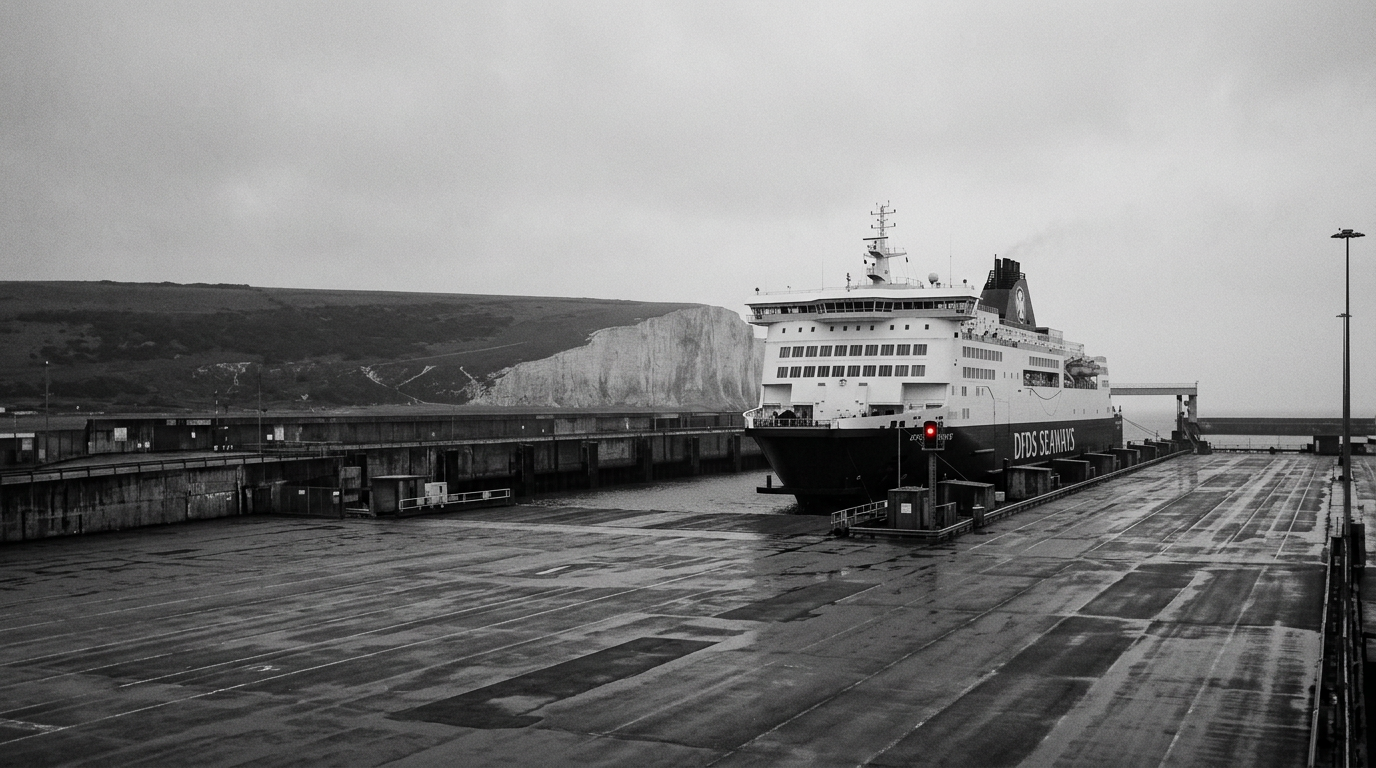
Ferry services connecting England and France at the Port of Dover were temporarily halted Saturday morning due to a protest. Individuals, many wearing masks and dark clothing, blocked key access routes to the port, leading to significant traffic disruptions and prompting strong condemnation from the United Kingdom government. Operations resumed by midday after authorities engaged with the group involved in the demonstration.
The protest focused on irregular migrant boat crossings in the English Channel. It resulted in extensive traffic queues, stretching approximately 6.4 kilometers (4 miles) from the port. While no physical violence was reported, officials indicated that the actions created an intimidating atmosphere for both travelers and freight operators. Local police monitored the masked participants, who were reportedly wearing balaclavas during the blockade.
Government Response and Port Importance
The UK government swiftly denounced the protest, emphasizing the distinction between the right to peaceful demonstration and actions that obstruct vital national infrastructure. This event underscores the ongoing political sensitivity surrounding irregular migrant arrivals, which remains a central issue in British domestic policy discussions.
The Port of Dover holds critical strategic importance as a major logistics hub for the United Kingdom. Approximately one-third of Britain's goods trade with the European Union passes through this port. During peak summer periods, the facility typically manages over 10,000 freight vehicles and 15,000 passenger vehicles daily, illustrating the widespread impact of any operational interruption, even a brief one.
Context of Migratory Pressures
This protest took place amidst continuous national debates and governmental efforts regarding irregular migration across the English Channel. Despite recent official figures showing a reduction in crossing numbers compared to previous years, the issue remains a significant point of public contention and political discourse. Such demonstrations reflect heightened public sentiment and the political polarization surrounding these migration routes. The brief closure served as a stark reminder of how vulnerable critical national infrastructure can be to direct action, impacting economy and daily life.
For businesses and commuters, even short interruptions at crucial transit points like Dover can lead to substantial economic costs and logistical challenges. This particular incident follows years of increasing migrant crossings, with thousands of individuals attempting the perilous journey across the Channel annually. Government policy has consistently focused on deterring these crossings and strengthening border security measures, often through controversial proposals.
Future Considerations and Policy Debates
The government's consistent policy approach has prioritized deterring irregular crossings and reinforcing border security measures. While the number of individuals attempting to cross the Channel has fluctuated, political pressure to address the issue remains intense. The Dover incident further illustrates the complex interplay between societal concerns, governmental policy, and direct action by activist groups. Authorities are anticipated to review security protocols at critical ports to minimize the risk of future disruptions.
The broader implications for trade, international travel, and public dialogue regarding immigration policies are expected to endure, keeping this issue at the forefront of national attention. The incident highlights the challenge of balancing public order, freedom of expression, and national security in the face of contentious social and political issues.