Trump Urges Putin on Ukraine, Rejects Iran Nuclear Offer
A recent Trump Putin call revealed differing priorities, with the US focusing on ending the Ukraine war while Russia offered aid on Iran's nuclear file.
Lauren Collins ·
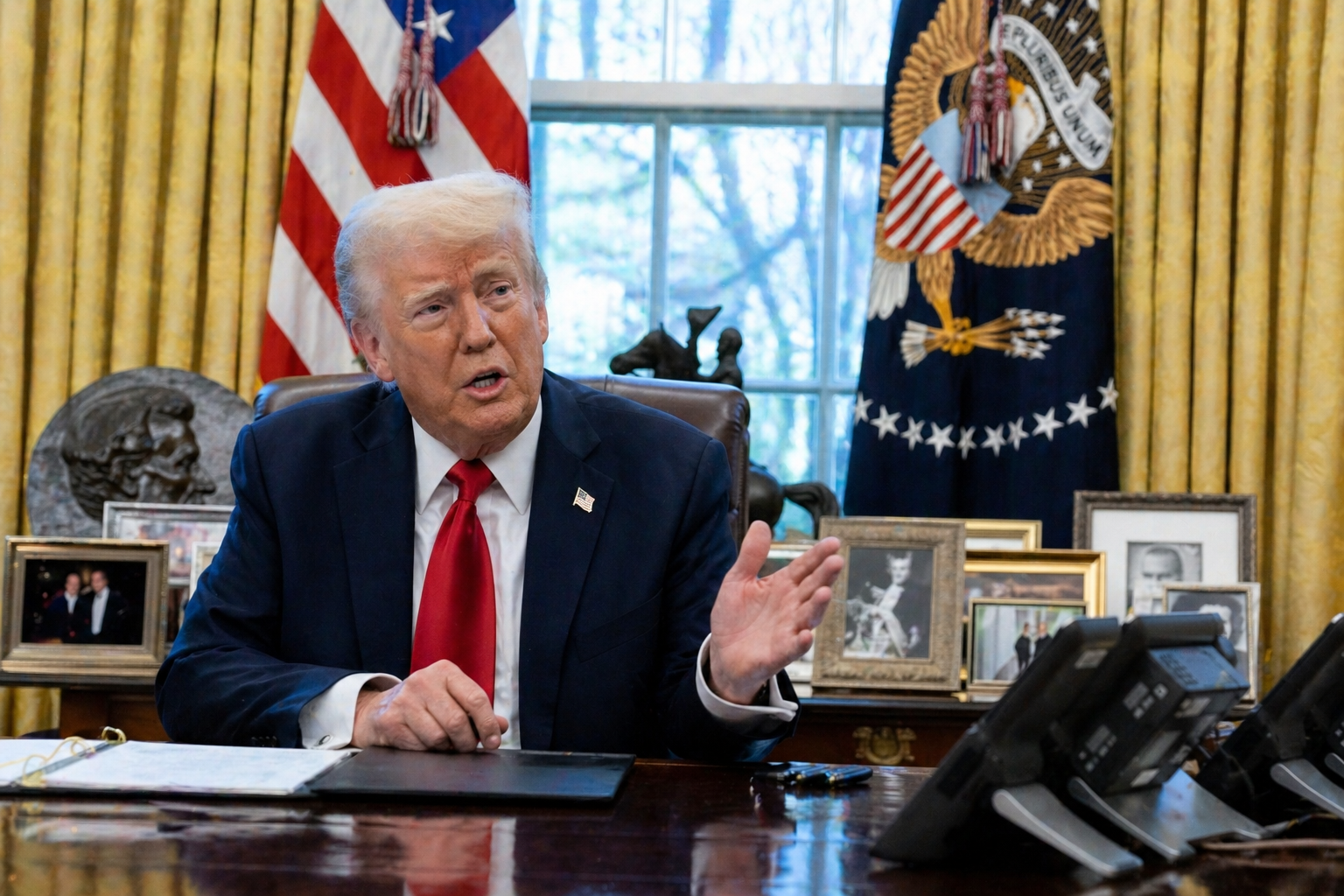
Divergent Priorities on Display
A lengthy phone call between US President Donald Trump and Russian President Vladimir Putin has exposed a significant disconnect in strategic priorities between Washington and Moscow. President Trump reportedly used the conversation to press for an end to the war in Ukraine, while President Putin focused on offering assistance with Iran's nuclear program.
Speaking to reporters, Trump stated he urged his Russian counterpart to work toward concluding the conflict in Ukraine, suggesting “a little bit of a ceasefire.” This push aligns with Trump's 2024 campaign pledge to seek a rapid resolution to the war.
However, the US president said he rebuffed an offer from Putin to become involved in managing Iran’s nuclear material enrichment. “I said, ‘I’d much rather have you be involved with ending the war with Ukraine,’” Trump recounted of the exchange.
Kremlin Emphasizes Iran, Proposes Truce
The Kremlin's account of the more than 90-minute discussion differed in its emphasis, highlighting Iran as a primary topic. Kremlin foreign policy aide Yuri Ushakov described the conversation as “friendly, frank and businesslike” and noted that Russia put forward proposals to help resolve the standoff over Tehran’s nuclear activities.
Ushakov also confirmed that Putin suggested a temporary truce in Ukraine to coincide with Russia's annual Victory Day celebrations on May 9, which commemorate the defeat of Nazi Germany in World War II. The duration of the proposed truce was not specified.
The diplomatic exchange comes as US-led peace talks between Russia and Ukraine have reportedly stalled. The Trump administration's attention has been heavily focused on the Middle East, particularly the conflict with Iran that began in February alongside Israel.
Geopolitical Pressures and Domestic Signals
The call occurred against a backdrop of increasing geopolitical strain. In a significant development, Russia’s Defense Ministry announced its annual May 9 military parade in Red Square would proceed without armored vehicles or missile systems for the first time since 2007.
Kremlin spokesman Dmitry Peskov attributed the decision to minimizing potential threats from Ukraine, which has recently conducted frequent drone attacks on Russian territory. The scaled-back celebration is seen by some observers as a sign of the operational demands the war is placing on Moscow's military resources.
The stalled diplomacy on the Ukrainian front and the competing agendas shown in the leaders' call suggest that a clear path to resolving the conflict remains elusive. Despite direct communication, both sides appear focused on separate strategic objectives, limiting the potential for a major breakthrough.