House Republicans Prioritize Other Bills Over Trump's Election Demand
House Republicans are prioritizing federal surveillance, water projects, and infrastructure over Donald Trump's election reform bill.
Lauren Collins ·
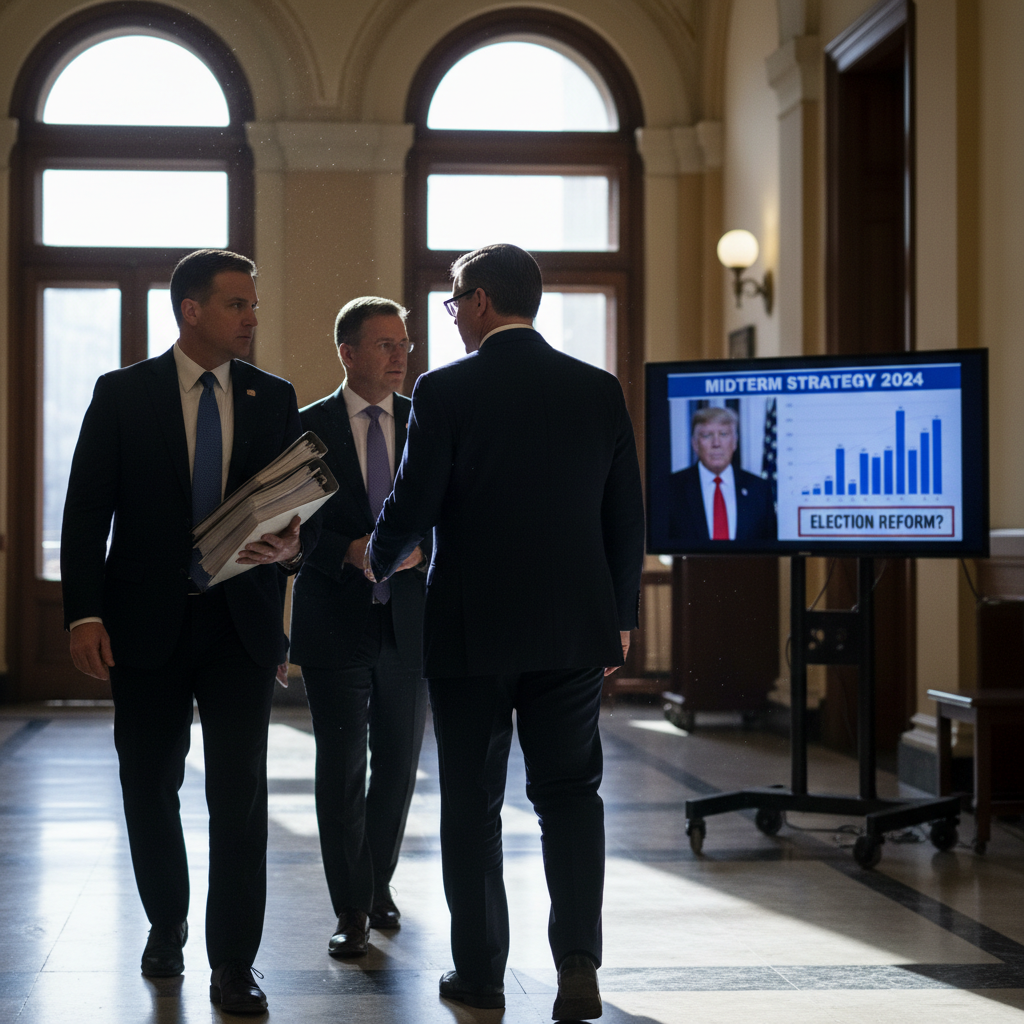
House Republicans, during their recent retreat in Doral, Florida, have opted to prioritize legislative items other than former President Donald Trump's proposed SAVE America Act. The two-day gathering, held earlier this week, saw party leaders, including House Speaker Mike Johnson, indicate that the election reform bill is not an immediate focus for the lower chamber. Instead, the emphasis is on measures with a higher likelihood of bipartisan passage.
Trump had publicly designated the SAVE America Act as his "No. 1 priority" for 2026, urging the House to advance the legislation. However, House leadership views the bill as primarily a Senate matter, where it would face significant procedural hurdles. The proposed act contains contentious elements, notably a near-total prohibition on mail-in voting, which is expected to encounter strong opposition and the Senate's 60-vote filibuster requirement.
Legislative Focus Shifts
Instead of the election bill, House Republicans are directing their efforts toward several other legislative initiatives. These include the reauthorization of federal surveillance authorities, funding for water infrastructure projects, and a comprehensive highway infrastructure package. Additionally, a streamlined farm bill is under consideration, all of which are anticipated to secure broader support across the political spectrum.
Discussions at the retreat also encompassed strategies for the upcoming midterm elections. A key component of this strategy involves emphasizing the economic benefits of previous tax cuts to voters. This approach aims to rally support by highlighting tangible financial impacts on constituents.
Challenges and Future Plans
White House officials have privately suggested that while the SAVE America Act might eventually receive a vote in the Senate, attempts to circumvent the filibuster rule are improbable. This assessment underscores the significant legislative obstacles facing the bill in its current form.
Republicans are also exploring the potential for another party-line bill utilizing the budget reconciliation process. This legislative tool allows certain spending, tax, and debt limit bills to pass with a simple majority in the Senate, bypassing the filibuster. However, achieving consensus on specific policy priorities and securing the necessary votes within the party remains a considerable challenge for this approach.
Broader Context of Election Reform
The debate over election reform has been a persistent theme in American politics, particularly since the 2020 presidential election. Proposals like the SAVE America Act reflect a segment of the Republican party's desire for stricter voting regulations, often citing concerns about election integrity. Conversely, many Democrats and voting rights advocates argue that such measures could disenfranchise eligible voters and disproportionately affect minority communities.
The strategic decision by House Republicans to defer action on Trump's preferred election bill highlights the pragmatic considerations of legislative feasibility and the pursuit of achievable policy goals. This prioritization suggests a focus on bills that can garner sufficient support to become law, rather than engaging in potentially protracted and unsuccessful battles over highly divisive issues.
Implications
Country Impact: The shift in legislative focus indicates a potential move towards more bipartisan cooperation on infrastructure and surveillance, while highly contentious election reform remains stalled. This could influence the legislative agenda for the remainder of the current congressional session.
Industry Impact: Industries related to infrastructure, such as construction and engineering, could see increased activity due to potential federal funding for water and highway projects. The reauthorization of surveillance powers impacts technology and defense sectors.
Market Impact: Markets may react positively to the prospect of bipartisan legislative successes, particularly concerning infrastructure spending, which can stimulate economic activity. The deferral of highly divisive political battles could reduce policy uncertainty, contributing to market stability.