North Korea Endorses Iran's New Supreme Leader
North Korea endorsed Mojtaba Khamenei as Iran's new Supreme Leader, condemning U.S. and Israeli actions as illegal and destabilizing.
Lauren Collins ·
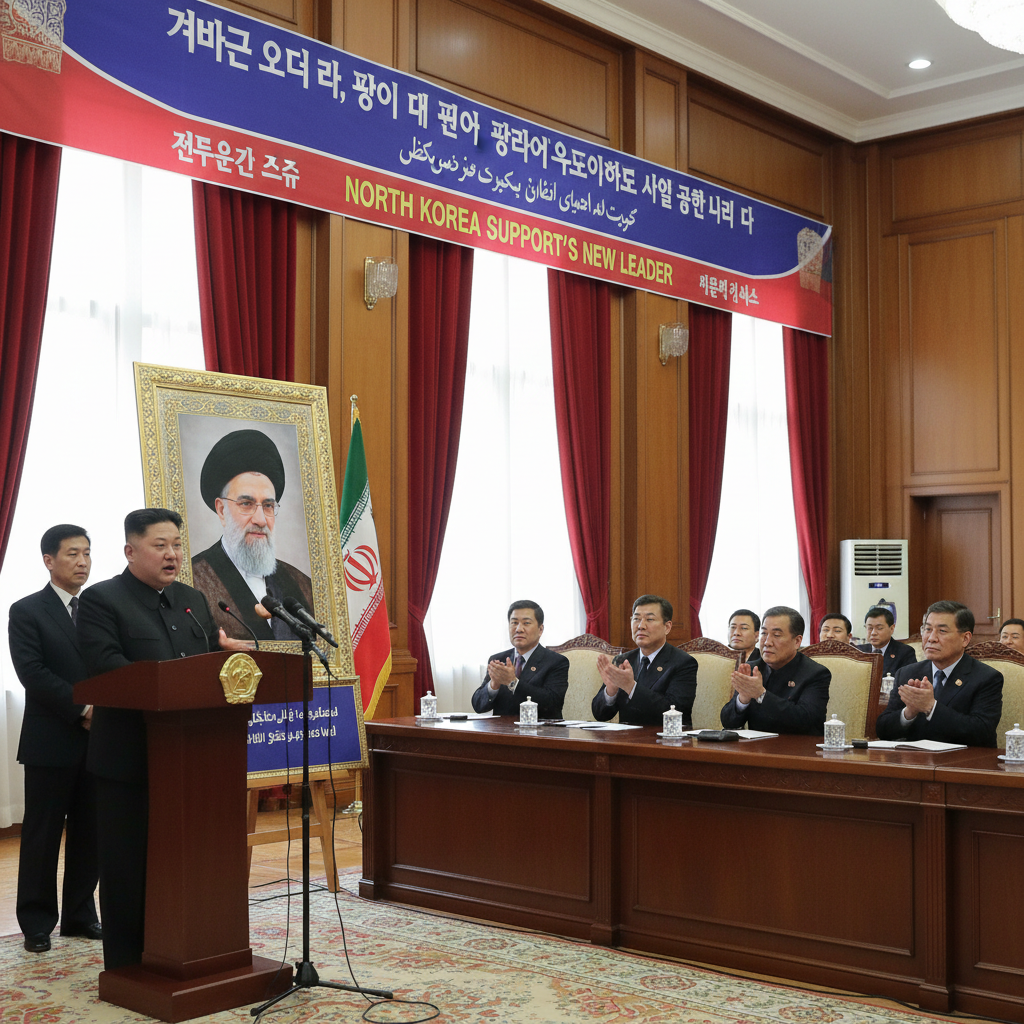
Pyongyang has officially recognized Mojtaba Khamenei as Iran's new Supreme Leader, following his appointment earlier this week. North Korea's state news agency, KCNA, reported on Wednesday, March 11, 2026, that the foreign ministry extended its support to the new Iranian leadership. This endorsement comes as Khamenei assumes the role previously held by his father, who reportedly died during recent military actions targeting Iran.
Pyongyang's Diplomatic Stance
The North Korean foreign ministry issued a strong condemnation of military operations conducted by the United States and Israel against Iran. These actions were characterized as "illegal" and detrimental to international peace and stability. Pyongyang asserted that such interventions contribute to escalating global instability, aligning its diplomatic position with Tehran during a period of heightened regional tensions.
Context of Succession
Mojtaba Khamenei's ascension to Supreme Leader occurred on Monday, succeeding his father. The transition follows a period of significant geopolitical upheaval, marked by reported strikes against Iran. The Supreme Leader holds ultimate authority in Iran, overseeing religious, political, and military affairs, making this succession a pivotal event for the country's future direction.
Historical Alignment and Geopolitical Implications
North Korea and Iran have historically maintained diplomatic ties, often finding common ground in their opposition to Western foreign policy. This latest endorsement reinforces a long-standing relationship between the two nations, particularly in the face of international pressure. The explicit condemnation of U.S. and Israeli actions by Pyongyang underscores a shared perspective on regional security and sovereignty.
This development could further solidify an informal alliance between states that frequently challenge the established international order. The timing of North Korea's statement, immediately following the leadership change in Tehran and amidst reports of military engagements, highlights a coordinated diplomatic front. Such alignments can have broader implications for global power dynamics and regional stability, particularly in the Middle East and East Asia.
International Reactions and Future Outlook
While North Korea's support for Iran's new leadership is consistent with its foreign policy, it is likely to draw scrutiny from Western nations. The United States and its allies have consistently expressed concerns over the nuclear programs and regional activities of both Iran and North Korea. This public endorsement may be interpreted as a signal of continued defiance against international sanctions and diplomatic isolation efforts.
The succession in Iran and the subsequent international reactions will be closely monitored for their impact on global energy markets, security alliances, and diplomatic efforts to de-escalate tensions in critical regions. The coming months will reveal how this leadership transition and its international reception influence the geopolitical landscape.
Implications
Country Impact: North Korea's endorsement signals continued defiance against Western foreign policy, potentially strengthening its diplomatic ties with Iran. This could lead to increased international scrutiny and further isolation from Western nations.
Industry Impact: The geopolitical alignment between North Korea and Iran, particularly amidst reports of military actions, could introduce further volatility into global energy markets. Increased tensions may impact oil prices and supply chain stability.
Market Impact: Financial markets may react to heightened geopolitical tensions, with potential shifts in investor sentiment towards riskier assets. Defense sector stocks could see increased interest, while broader market stability might be challenged by uncertainty.