Trump considers seizing Iranian oil assets and enriched uranium in major policy shift
Recent statements from Donald Trump suggest a shift in US policy towards Iran, potentially targeting strategic assets like oil and enriched uranium, raising…
Cuneyd Erdogan ·
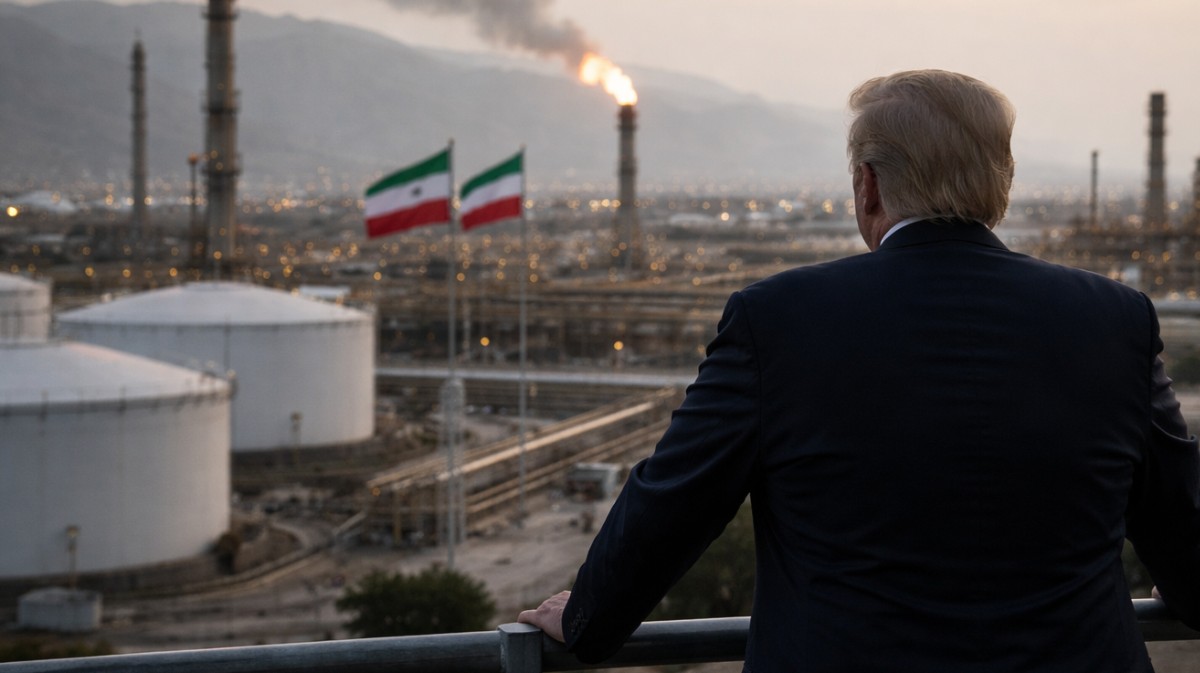
Recent statements from U.S. President Donald Trump concerning Iran have initiated an international dialogue that deviates from traditional diplomatic language. During an interview with the Financial Times, President Trump expressed an interest in "taking the oil" from Iran, specifically mentioning the potential seizure of Kharg Island, a crucial hub for the nation's oil exports.
Concurrently, U.S. media outlets have reported that the Trump administration is considering military options to remove approximately 1,000 pounds (around 453 kg) of enriched uranium from Iran. These developments suggest that official Washington may be contemplating not only military action but also the physical appropriation of Iran's most vital strategic resources.
A central question currently under debate is whether President Trump's statements reflect a genuine intent to control Iran's oil and nuclear capabilities or if they serve as a high-stakes bargaining tactic. Iran holds significant global importance, not only as a regional power but also due to its vast energy reserves. According to data from the U.S. Energy Information Administration, Iran possessed the world's third-largest proven oil reserves as of 2023. More recent market analyses indicate that these reserves reached approximately 208-209 billion barrels by late 2024. This volume accounts for roughly 12% of global reserves and approximately a quarter of the Middle East's total.
In a period marked by escalating oil prices due to ongoing conflicts, the theoretical market value of Iran's reserves becomes particularly noteworthy. Reports indicate that Brent crude oil prices recently surpassed $116 per barrel. Based on this figure, a rough calculation places the gross theoretical value of Iran's estimated 208.6 billion barrels at approximately $24 trillion. While this figure does not imply immediate monetization of all subterranean reserves, it underscores the immense economic power inherent in President Trump's statement about "taking the oil."
The discussion extends beyond the total reserves to specific strategic assets. Kharg Island is a pivotal component of Iran's oil export infrastructure. Recent reports and market analyses indicate that approximately 90% of Iran's crude oil exports are processed or shipped through this island. Consequently, any military intervention targeting Kharg Island would deliver a direct blow to the Iranian economy.
The issue of uranium is even more sensitive due to its strategic, rather than purely economic, value. The Wall Street Journal reported that President Trump is evaluating military options to remove approximately 1,000 pounds of enriched uranium from Iran. Current information, based on International Atomic Energy Agency (IAEA) data, suggests Iran possesses over 400 kilograms, with some sources citing 440.9 kilograms, of 60% enriched uranium. Although this stock has not yet reached weapons-grade levels, experts consider it a threshold that, with further enrichment, could yield enough material for multiple nuclear weapons.
The "market value" of this uranium cannot be calculated in the same manner as oil. Uranium price indicators are based on natural uranium or U3O8 markets, and 60% enriched material is not traded as a standard commodity. While the raw commodity price of uranium was around $84 per pound in late March 2026, the commercial value of a 1,000-pound stock appears limited. The true significance lies in its proximity to nuclear weapons capability. Therefore, President Trump's interest in uranium is widely interpreted as a pursuit of strategic control rather than economic gain.
Two primary interpretations exist regarding President Trump's actual objective. One view suggests he is pursuing an extremely aggressive policy aimed at Iran's oil infrastructure and nuclear materials. The second, more complex perspective, posits that Washington is framing this not as "resource appropriation" but as an effort to "prevent Iran from developing nuclear weapons" and "end the conflict." According to the Wall Street Journal, President Trump has also conveyed that he might prefer Iran to surrender its uranium as part of a peace agreement rather than through military means. A 15-point framework reported by the Washington Post also includes Iran's relinquishment of all enriched uranium, cessation of enrichment, and limitations on certain regional activities as conditions for ending the conflict.
This situation suggests that while President Trump's rhetoric may appear blunt and aggressive, the White House and Pentagon might be using it to exert maximum pressure in diplomatic negotiations. The ultimate goal might not be direct exploitation of oil but rather to weaken Iran economically and strategically, compelling it to concede at the negotiating table. However, the phrase "take the oil" goes far beyond the official U.S. security arguments, leading the international community to interpret these words as a call for spoils or forced resource control rather than security imperatives.
More "institutional" statements from the Trump administration have sought to temper this harsh stance. Secretary of State Marco Rubio indicated that the U.S. could achieve its main objectives without ground troops. Secretary of Defense Pete Hegseth expressed hope that Iran would voluntarily abandon its nuclear capabilities but affirmed that the U.S. has "a range of options." This suggests a deliberate division of labor between President Trump's raw rhetoric and the administration's legal and political defense.
Iran's counter-narrative remains consistent: Tehran has long maintained that its nuclear program is peaceful. Recent reports indicate Iran views any potential U.S. ground operation as an "invasion" that would further escalate regional conflict. Iranian Parliament Speaker Mohammad Bagher Ghalibaf has threatened severe retaliation against any American ground intervention. In essence, what Washington presents as "nuclear security" is perceived by Tehran as an "attack on sovereignty."
The legal implications of such statements and potential actions are also under debate. Article 2(4) of the United Nations Charter prohibits states from threatening or using force against the territorial integrity or political independence of another state. Therefore, explicit rhetoric about "taking another country's oil" or seizing a strategic island appears seriously problematic under international law, especially without a clear basis for self-defense or authorization from the UN Security Council, which would be considered a threat of aggression.