Houthi missiles expand Israel-Hamas war to a new front
Houthi forces in Yemen launched a missile toward Israel that was intercepted, widening the conflict’s geography and raising regional risk.
Lauren Collins ·
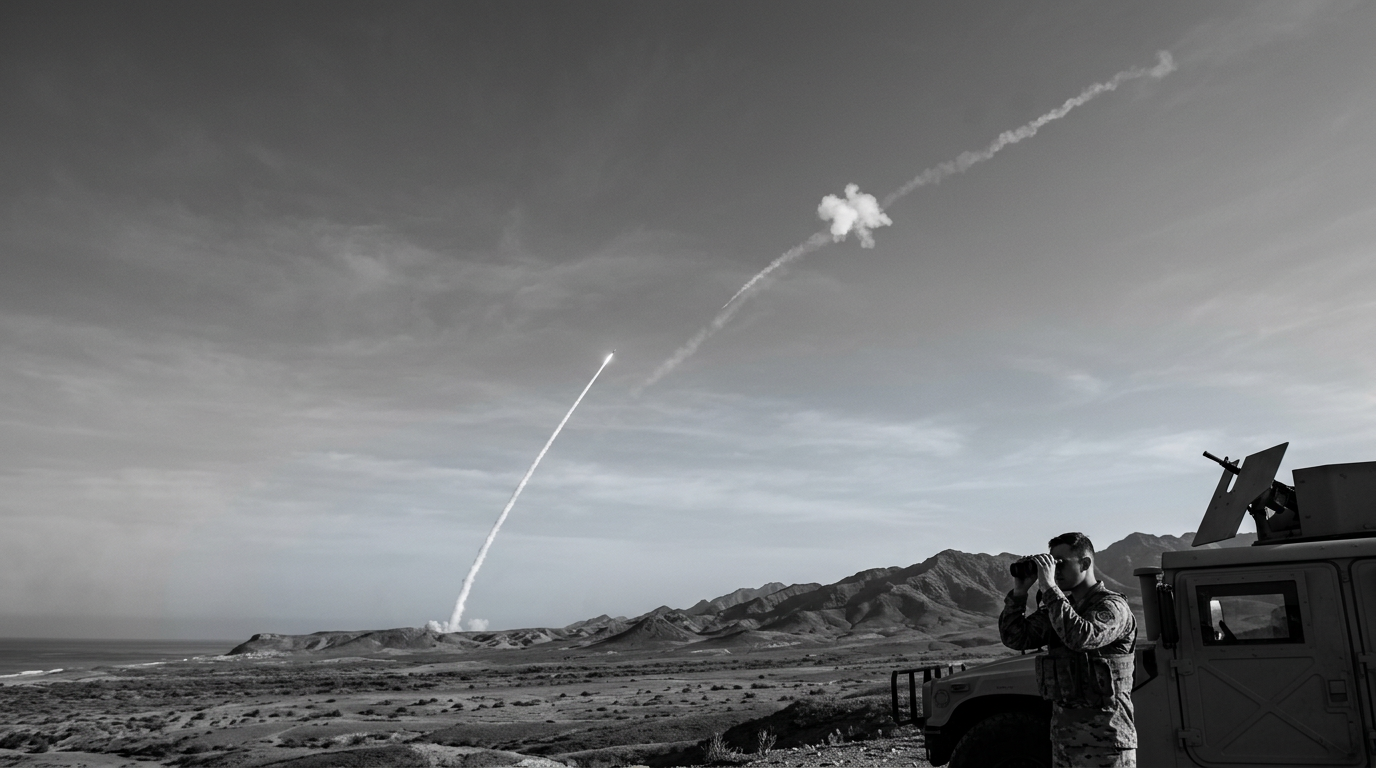
Israel’s military said it intercepted a missile launched from Yemen before it entered Israeli territory, marking a new vector in a war that has been centered on Gaza. The incident is the first direct Houthi attack on Israel since fighting began in Gaza, expanding the conflict’s footprint beyond Israel’s immediate borders.
The Houthis are an Iran-backed movement that controls Yemen’s capital, Sana’a, and significant parts of the country. They had previously stated they would become involved if the conflict escalated, and the launch represents the first such action aimed directly at Israel.
What changed: a long-range threat from the south
The attempted strike adds a southern long-range dimension to Israel’s security picture, alongside active fighting with Hamas in Gaza and tensions with Hezbollah in Lebanon. The distance involved is substantial—nearly 1,000 miles—forcing Israel to account for threats that originate far beyond its immediate neighborhood.
Israel’s interception highlighted the role of its layered air defenses, including systems designed for long-range threats such as Arrow and David’s Sling. The military did not provide additional technical details in the material provided, and the precise type of missile was not specified.
Regional context: proxy activity and recent strikes
The Yemen launch followed a separate incident in Saudi Arabia that U.S. and Saudi officials attributed to Iran: a missile strike on Prince Sultan Air Base. Those officials said the attack occurred on Friday, wounded several American troops, and damaged multiple U.S. refueling aircraft at the facility.
Together, the two events fit a broader pattern described in the material as increased activity by Iran-aligned groups since the Gaza war began. The network referenced includes Hezbollah in Lebanon, militias operating in Iraq and Syria, and the Houthi movement in Yemen.
Why it matters: security and trade routes
For Israel and the United States, the Houthi entry complicates crisis management by stretching defensive planning across multiple directions. The material notes that U.S. naval forces in the Red Sea have previously intercepted missiles launched from Yemen that were believed to be headed toward Israel.
The risk is not limited to land targets. The Bab el-Mandeb strait—overlooked by Houthi-controlled areas—sits on a critical maritime corridor, and continued launches underscore concerns about threats to international shipping lanes as well as Israeli territory.
Risks and unknowns
The material raises the possibility of miscalculation leading to a wider regional war, including the risk of escalation involving Iran. It does not establish operational coordination between the Yemen launch and the Saudi base strike, and any linkage remains unconfirmed in the information provided.
What is clear from the stated facts is that Israel now faces an additional long-range launch point while managing active fronts in Gaza and along the Lebanon border. The immediate challenge described is deterring further attacks from Yemen without triggering broader escalation.