Trump Calls for UK Warship Deployment in Hormuz
Donald Trump urged the UK and other nations to deploy warships to the Strait of Hormuz to secure the vital oil transit route amid regional tensions.
Lauren Collins ·
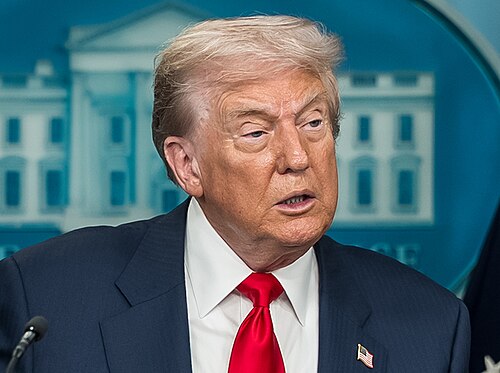
Former U.S. President Donald Trump recently advocated for the United Kingdom and other international partners to deploy naval assets to the Strait of Hormuz. This appeal, made on Saturday, emphasizes the necessity of maintaining open navigation through the critical maritime chokepoint.
Trump's statement follows a period of heightened tensions and reported attacks on shipping in the region. The Strait of Hormuz is a vital global artery, facilitating the transit of approximately one-fifth of the world's oil supply, an estimated 20 million barrels daily.
Geopolitical Context and Regional Tensions
The call for naval deployment arises amidst ongoing geopolitical friction involving Iran. Recent U.S. and Israeli military actions against Iran have reportedly led to retaliatory targeting of vessels within the strait, contributing to upward pressure on global oil prices and broader economic concerns.
Trump asserted that the United States had neutralized Iran's military capabilities, though he acknowledged Iran's capacity for smaller-scale engagements. Iran has publicly disputed claims regarding the destruction of its military infrastructure.
International Cooperation Urged
Beyond the UK, Trump specifically named China, France, Japan, and South Korea as nations that should contribute naval forces to secure the waterway. This broad appeal for international participation underscores the shared economic interest in safeguarding maritime trade routes.
This recent request to the UK marks a shift from Trump's earlier criticisms of Prime Minister Keir Starmer. Previously, Trump had expressed disapproval of Starmer's consideration of involvement in the conflict following initial strikes, which the UK ultimately did not join. Prime Minister Starmer has consistently stated that the UK's foreign policy decisions are guided by national interests.
Economic and Strategic Implications
The Strait of Hormuz, situated between the Persian Gulf and the Gulf of Oman, is geographically narrow, making it susceptible to disruptions. Its strategic importance stems from its role as the primary transit route for oil exports from major producers in the Middle East, including Saudi Arabia, Iran, UAE, Kuwait, and Iraq.
Any significant disruption to shipping in the strait could have severe repercussions for global energy markets, potentially leading to supply shortages and further price volatility. The international community's response to security challenges in this region remains a key focus for global economic stability and geopolitical dynamics.
Maintaining freedom of navigation through such critical maritime passages is a long-standing principle of international law and a priority for global trade. The ongoing discussions about naval deployments reflect the complex interplay of national security, economic interests, and international cooperation in a volatile region.
Implications
Country Impact: The UK's potential involvement in naval deployments to the Strait of Hormuz could align with its stated national interests in maritime security and global trade. However, it also risks drawing the nation further into regional geopolitical tensions.
Industry Impact: The energy sector, particularly global oil markets, faces continued volatility due to security concerns in the Strait of Hormuz. Disruptions could lead to increased shipping costs, insurance premiums, and potential supply chain bottlenecks for crude oil.
Market Impact: Global financial markets, especially commodity markets, are sensitive to developments in the Strait of Hormuz. Escalations could trigger spikes in oil prices, impacting inflation expectations and potentially influencing central bank monetary policy decisions worldwide.