Qatar's Economy Contracts Amid Strait Closure
Qatar's economy faces severe contraction due to the Strait of Hormuz closure and Iranian strikes, halting LNG exports and disrupting supply chains.
Lauren Collins ·
Qatar's Economy Contracts Amid Strait Closure
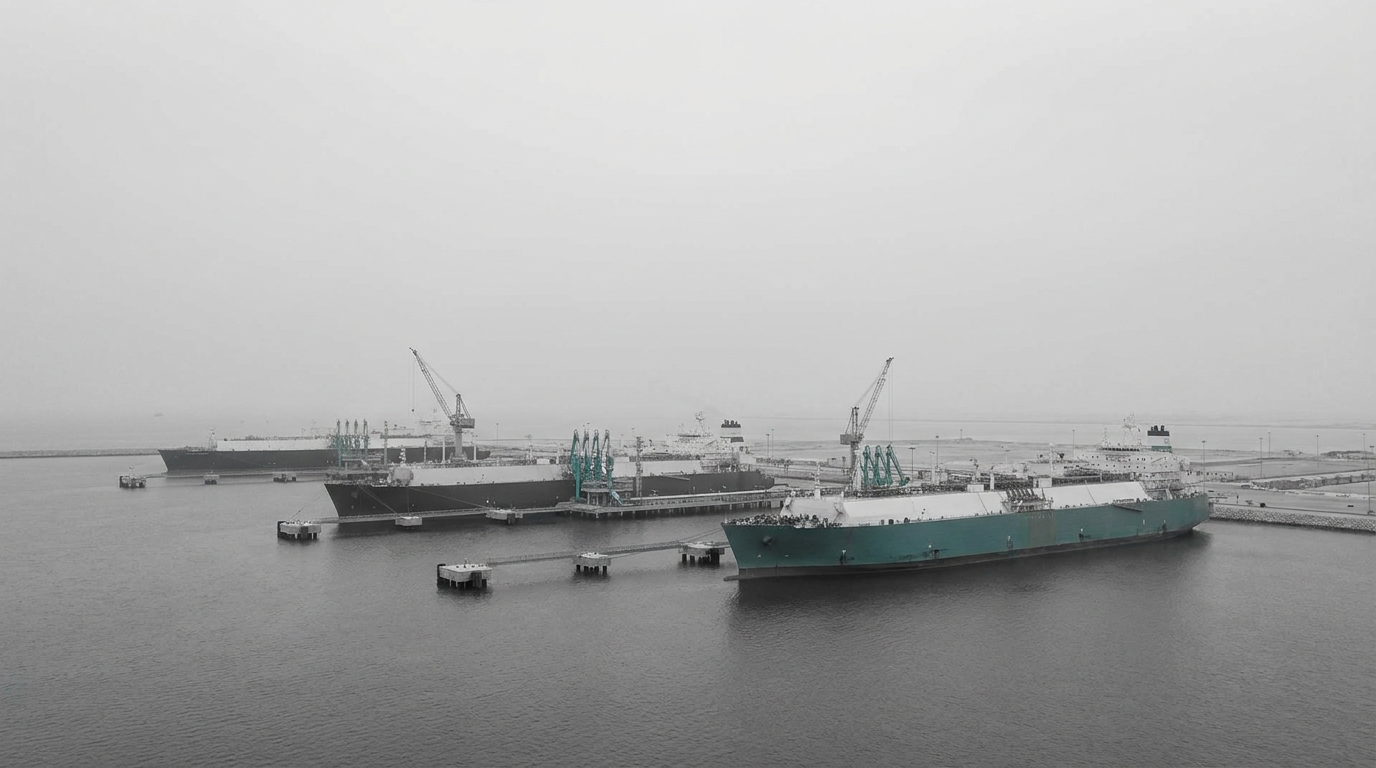
Qatar's economy is experiencing a significant contraction following the closure of the Strait of Hormuz in February and subsequent Iranian strikes on its energy infrastructure. This disruption has halted liquefied natural gas (LNG) exports, which constitute over 60 percent of the nation's revenue, leading to an 8.6 percent projected economic shrinkage for 2026, according to the International Monetary Fund (IMF).
The Strait of Hormuz, a critical maritime chokepoint, became inaccessible for Qatari shipping, effectively cutting off the country's primary export route for LNG. Concurrently, Iranian missile and drone strikes damaged Qatar's Ras Laffan plant, a key industrial center for gas production, resulting in a 17 percent reduction in the nation's LNG production capacity.
This dual impact has paralyzed Qatar's energy sector, which previously shipped tens of billions of dollars of LNG annually to Asia and Europe.
The cessation of LNG trade has led to substantial financial losses, with analysts estimating billions of dollars already lost and hundreds of millions more accruing daily. Beyond energy exports, Qatar, which imports approximately 90 percent of its food and other goods via sea routes, faces severe supply chain disruptions. The prolonged closure and infrastructure damage indicate that a return to pre-war output levels would require several years, even if the strait were to reopen immediately.