The 'Dean of Valuation' Revisited SpaceX—and Still Isn't Convinced It's Worth $1.8 Trillion
Aswath Damodaran values SpaceX at $1.25T-$1.3T post-IPO prospectus review, citing growth potential & AI risks.
Atlas Newsdesk ·
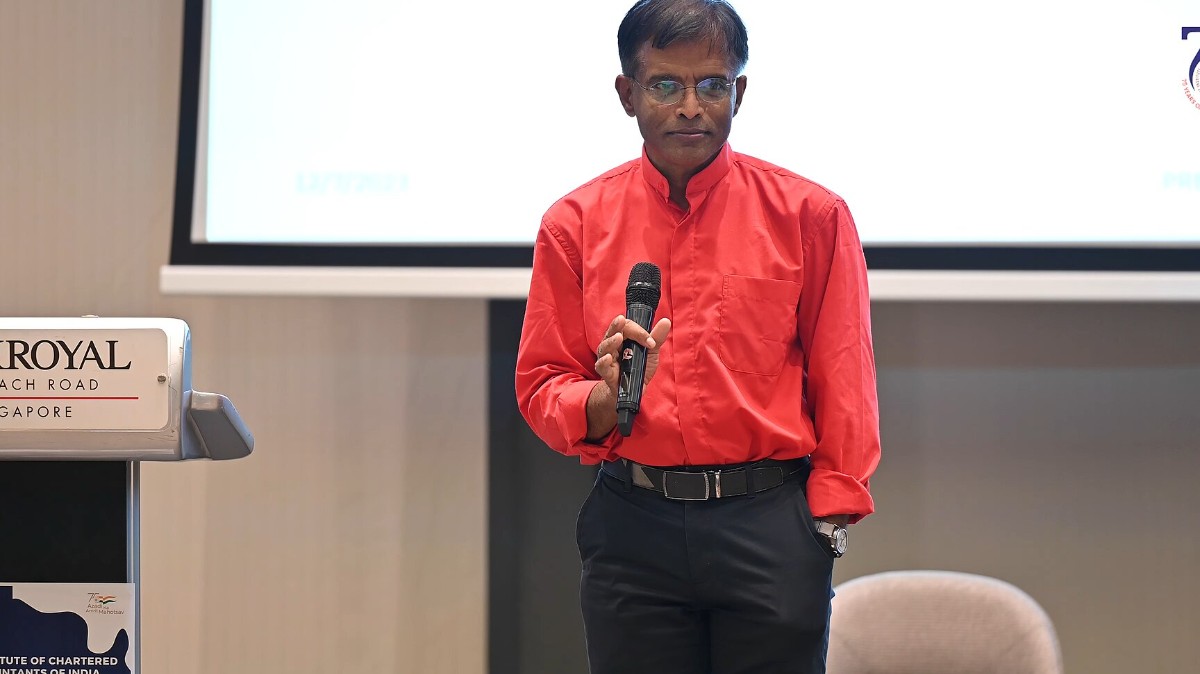
When SpaceX released its IPO prospectus, investors finally got access to what valuation professor Aswath Damodaran had been missing during his initial assessment of the company: detailed financial statements, segment disclosures, debt levels, capital spending data and management's own view of future market opportunities.
Many expected the new information to produce a dramatic shift in valuation. Instead, Damodaran's conclusion barely changed.
After reviewing the filing, the New York University professor kept his estimate of SpaceX's equity value in a range of roughly $1.25 trillion to $1.3 trillion, only modestly above the approximately $1.2 trillion valuation he had assigned before the prospectus became public. Yet while the number moved little, his understanding of the company evolved considerably. The prospectus, he argued, revealed a business with a larger opportunity set than previously assumed, but also one facing greater uncertainty and significantly higher execution risk.
At the center of Damodaran's analysis is a philosophy that differs from how many investors approach young, high-growth companies. Rather than focusing primarily on current earnings, free cash flow or traditional valuation multiples, he argues that companies such as SpaceX derive most of their value from future possibilities. In businesses that are still expanding rapidly, today's income statement often matters less than understanding how large the addressable market can become, what margins may ultimately look like and how much investment will be required to get there.
That perspective led him to spend less time on headline losses and more time examining the economics of SpaceX's three core businesses: launch services, Starlink's connectivity network and xAI's artificial intelligence operations.
Starlink's Growth Engine
One of the strongest conclusions to emerge from the filing was the growing importance of Starlink. While public attention often gravitates toward rockets or artificial intelligence, Damodaran found that the satellite connectivity business was the company's most important growth engine during the most recent reporting period. Revenue growth significantly outpaced that of the launch segment, subscriber numbers expanded rapidly and profitability continued to improve. In his view, Starlink increasingly looks like the segment most capable of delivering both scale and sustainable earnings power over time.
The launch business, meanwhile, reinforced a different part of the investment case. Damodaran argued that SpaceX's reusable rocket technology continues to provide a substantial cost advantage over competitors. The prospectus suggested that launch economics remain attractive, with strong gross margins supported by declining launch costs. While the market opportunity may take longer to mature than some investors expect, he believes the business retains a durable competitive position that could support healthy long-term profitability.
The largest changes in his valuation model were tied to artificial intelligence.
Before reading the prospectus, Damodaran had already assumed that AI would become an important contributor to SpaceX's future value. The new disclosures, however, convinced him that management's ambitions were significantly broader than he had originally estimated. References to enterprise-focused AI products, infrastructure investments and strategic acquisitions suggested that xAI intends to compete directly for a meaningful share of the corporate AI market rather than occupying a niche position.
As a result, Damodaran substantially increased his long-term revenue expectations for the AI business. He now believes the segment could eventually generate far more revenue than he previously projected. But that increase came with an important caveat. Higher revenue potential did not automatically translate into higher value.
In fact, one of the most consequential changes in his analysis was a reduction in expected profitability for AI.
AI's Profitability Challenges
The prospectus showed an industry where competition remains intense and infrastructure costs continue to rise. Building and operating large-scale AI systems requires enormous spending on computing power, data centers, energy and engineering talent. Those realities led Damodaran to lower his assumptions about the margins the business can ultimately achieve. While the market opportunity may be larger than he initially believed, extracting profits from that opportunity may prove considerably more difficult.
His skepticism became even more apparent when evaluating the market-size assumptions presented in the prospectus.
SpaceX's filing described an extraordinarily large addressable market for artificial intelligence, reaching into the tens of trillions of dollars. Damodaran viewed those figures cautiously. He noted that technology companies frequently present expansive market opportunities during fundraising and IPO processes, often relying on optimistic assumptions that are difficult to achieve in practice. While he agrees that AI has the potential to become one of the largest technology markets in history, he believes the figures cited in the filing stretch beyond what can reasonably be supported.
That distinction is important because market size sits at the foundation of any growth story. If management overestimates how much demand ultimately exists, every subsequent forecast becomes vulnerable. Revenue expectations become inflated, investment decisions become more aggressive and valuations can become detached from economic reality.
This concern helps explain why Damodaran identified AI not only as SpaceX's biggest opportunity but also as its greatest risk.
The prospectus revealed a company investing heavily to secure a leadership position in the sector. Capital expenditures reached nearly $14 billion while research and development spending approached $9 billion during the most recent year. Much of that investment was tied directly or indirectly to artificial intelligence infrastructure. For supporters, the spending demonstrates ambition and a willingness to compete against industry leaders such as OpenAI, Anthropic and Google. For skeptics, it raises the possibility that the company could commit enormous amounts of capital to a market that eventually proves less profitable than expected.
Damodaran's concern is not that SpaceX lacks technological capability. Rather, it is that success in AI may require a level of spending that continues far longer than investors currently anticipate. A company can be correct about the importance of a technology and still destroy value if the cost of winning exceeds the returns generated by that victory.
The governance structure outlined in the prospectus adds another layer to that risk assessment. The filing confirmed that Elon Musk will retain overwhelming voting control through a dual-class share structure. According to Damodaran, that arrangement limits the ability of outside shareholders to influence strategy if management decides to accelerate investments, pursue acquisitions or double down on AI initiatives. Investors buying into the offering are effectively placing substantial trust in Musk's judgment, with limited mechanisms available to challenge his decisions.
Despite these concerns, Damodaran's overall assessment remains constructive. The prospectus strengthened his view that SpaceX possesses genuine competitive advantages in both launch services and satellite connectivity. It also reinforced his belief that the company has access to growth opportunities that few businesses in history have enjoyed. The challenge is that those opportunities increasingly depend on assumptions about artificial intelligence, a sector where future economics remain difficult to forecast.
That tension explains why his valuation changed so little despite the flood of new information. Positive developments, including stronger growth prospects and improved visibility into several businesses, were largely offset by lower profitability expectations, higher capital requirements and greater uncertainty surrounding AI. The result was a company that looked larger, more ambitious and potentially more valuable than before, but not dramatically more valuable.
For Damodaran, the ultimate takeaway is that investors should resist evaluating SpaceX through the lens of traditional value metrics alone. The company's current losses, negative cash flows and elevated valuation multiples reveal little about whether it will create or destroy value over the long run. The more important questions involve market size, competitive positioning, capital intensity and management execution.
Viewed through that framework, SpaceX is no longer simply a space company. It is increasingly an AI company attached to a space company, with Starlink serving as the bridge between the two. Whether the market eventually rewards that strategy will depend less on rockets and satellites than on whether Elon Musk can convert one of the most ambitious AI expansion plans in corporate America into a profitable business.