Iran War: Global Economy on the Brink
The Iran conflict is unleashing four waves of global economic disruption, impacting energy, trade routes, developing nations, and political stability.
Lauren Collins ·
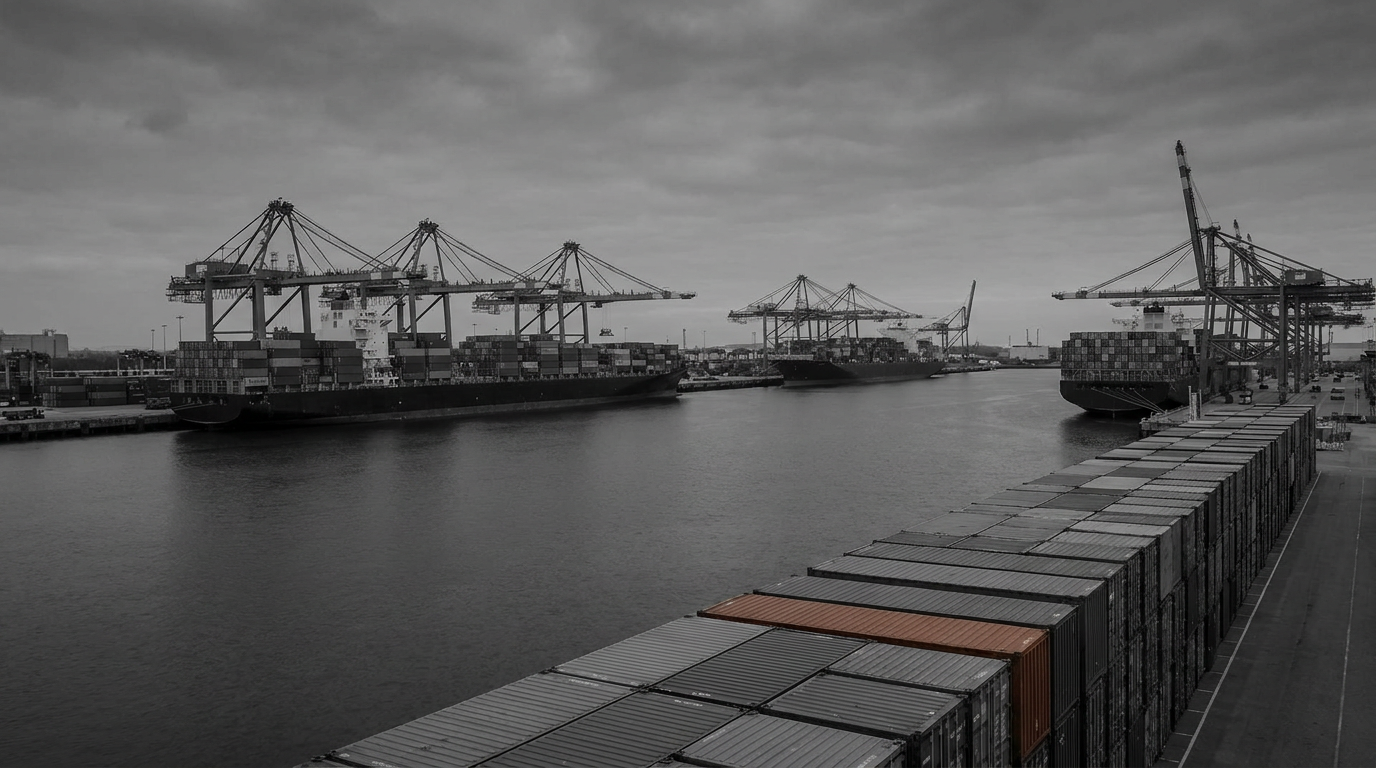
The ongoing conflict involving Iran, the United States, and Israel is projected to generate four distinct waves of global economic disruption, extending beyond the cessation of direct hostilities. This analysis, published on May 21, 2026, indicates that the structural damage to the global trading system will manifest through sustained price increases, altered trade routes, and political instability, impacting nations worldwide regardless of their involvement in the conflict.
The initial wave involves immediate energy market volatility. Crude oil and liquefied natural gas (LNG) prices surge, leading to increased freight rates.
This energy cost escalation, which is an input for nearly all tradeable goods, subsequently drives up fertilizer prices within months, as natural gas accounts for 70-80% of ammonia production costs. The disruption is compounded by the Strait of Hormuz, a critical chokepoint, through which approximately 30% of global ammonia exports and 35% of global urea exports are routed.
Consequently, food prices are expected to rise within two planting seasons, followed by manufactured goods prices within 12-18 months.
United States
The second wave entails architectural damage to the global trading system, characterized by permanent shifts in trade routes. An example is the Red Sea, where Houthi attacks in late 2023 caused container traffic to reroute around the Cape of Good Hope, incurring 16-32 day transit penalties and an additional $1 million in fuel and capital costs per voyage.
Even with improved security, traffic has not returned to pre-2023 levels, as carriers and insurers have absorbed reorganization costs. The third wave disproportionately affects the Global South, where developing economies absorb shocks through import compression, currency depreciation, and food insecurity, as food constitutes 44% of household expenditures in low-income countries compared to 16% in advanced economies.
This represents a welfare transfer from poorer households to commodity exporters.
The fourth wave is political, as supply chain shocks erode social contracts and governmental legitimacy. Historical precedents include the Arab Spring, linked to wheat price shocks, and Sri Lanka's government collapse, exacerbated by economic crises.
The downstream inflation from the Iran war is expected to destabilize countries in the Global South already facing depleted legitimacy reserves and narrow fiscal space. This instability may lead to governmental collapses, with the resulting political turmoil often misattributed to internal governance failures rather than the broader economic consequences of the conflict.