Tesla's Ad Silence Amidst $6.50 Gas Draws Investor Scrutiny
As LA gas prices hit $6.50, investor Ross Gerber questions Tesla’s no-ads strategy, suggesting it may be hindering growth against competitors.
Jurgen Goldmeier ·
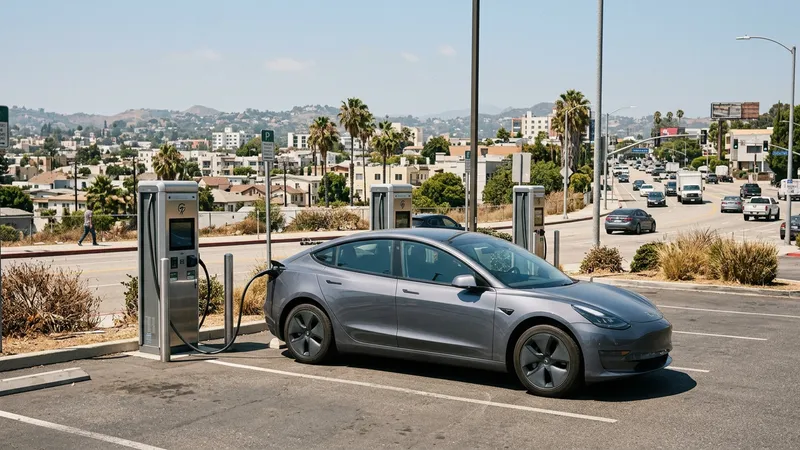
Tesla's Ad Silence Amidst $6.50 Gas Draws Investor Scrutiny With gasoline prices in Los Angeles holding near $6.50 a gallon, prominent Tesla investor Ross Gerber publicly questioned the electric vehicle maker's long-standing refusal to engage in traditional advertising. Gerber called the lack of marketing in the face of a clear tailwind "infuriating," spotlighting a core debate around the company's growth strategy and its ability to maintain market share. ## Background Tesla's valuation has historically been supported by expectations of massive volume growth, making any potential friction to demand a focal point for investors. The company has long eschewed paid advertising, a discipline that has helped its margin profile but relies on organic demand and the public profile of its CEO. This contrasts sharply with legacy automakers and new EV entrants, who are collectively spending billions to capture market share in a cooling demand environment. The debate over advertising comes as the EV market matures. Competition is intensifying from both legacy automakers and a wave of new EV-native companies, all of whom use traditional marketing to build brands and move inventory. Meanwhile, elevated gasoline prices across the U.S., particularly in key markets like California, are a direct operational headwind for internal combustion engine vehicles and a theoretical tailwind for EV manufacturers. ## Why it matters Gerber's critique highlights a vulnerability in Tesla's growth story. By not advertising, the company risks ceding the narrative on EV cost savings to rivals who are spending heavily to attract first-time EV buyers. This matters for Tesla's multiple, a measure of its stock price relative to its earnings per share (EPS), or profits. The stock's premium valuation depends on sustaining market-leading growth, a task that becomes more difficult if competitors successfully peel off potential customers using conventional marketing tactics. Investors betting on sustained, effortless demand for Tesla vehicles are on the wrong side of this argument if Gerber is correct. A failure to convert the clear consumer pain point of high gas prices into incremental sales would suggest a potential ceiling on organic demand. This would benefit competitors who are actively spending to acquire customers and could force Tesla to either sacrifice margin by cutting prices further or sacrifice growth by holding the line. ## What to watch The key observable will be any shift in Tesla's marketing budget or strategy. Management has historically dismissed the need for paid ads, but sustained pressure from investors and competitors could force a change. A definitive tell would be the launch of a pilot advertising campaign in a high-cost gasoline market like California, or direct commentary on the topic from leadership during the next earnings call. By July 20, 2024, if Tesla has initiated such a campaign and it correlates with an uptick in regional order rates, it would validate the view that the company was leaving demand on the table. If Tesla maintains its zero-ad policy and high gas prices do not translate into outsized market share gains versus advertising rivals, it would suggest the company's growth challenges are more complex than marketing alone.