Tennessee Republicans Approve Map Dividing State’s Only Majority-Black Congressional District
New congressional boundaries carve Memphis into three Republican-leaning districts, igniting accusations of racial gerrymandering and intensifying a nation…
Lauren Collins ·
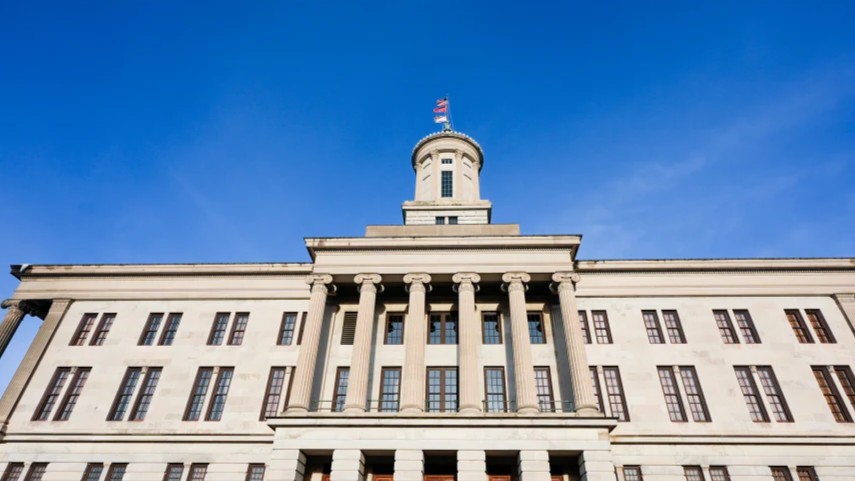
Tennessee’s Republican-controlled Legislature approved a controversial congressional redistricting plan Thursday that dismantles the state’s only majority-Black congressional district, splitting the city of Memphis into three separate Republican-leaning districts in a move Democrats and civil rights advocates condemned as a direct attack on Black political representation.
The measure, passed during a special legislative session at the Tennessee Capitol in Nashville, is expected to eliminate the state’s lone Democratic-held U.S. House seat currently represented by Steve Cohen, whose Memphis-based 9th Congressional District has long served as a political stronghold for Black voters.
Republicans defended the map as a constitutionally permissible political redistricting effort aimed at maximizing GOP representation in Tennessee’s congressional delegation. Democrats, however, argued the proposal intentionally diluted Black voting power following a recent U.S. Supreme Court ruling that weakened key protections under the Voting Rights Act.
Memphis divided into three districts
Under the new map, Shelby County — home to Memphis and the state’s largest Black population center — would be divided among three congressional districts, each favoring Republican candidates. The redesign would likely shisources Tennessee’s current 8-1 Republican congressional delegation to a 9-0 GOP advantage ahead of the November 2026 midterm elections.
The legislation also repeals Tennessee’s prohibition on mid-decade congressional redistricting and reopens candidate qualifying procedures ahead of the state’s August primaries, raising concerns among election officials and voting rights groups about voter confusion and legal uncertainty.
The redistricting effort follows last week’s Supreme Court decision limiting the use of Section 2 of the Voting Rights Act in challenges involving racial gerrymandering. The ruling has prompted Republican-led states across the South, including Alabama, Louisiana and South Carolina, to reconsider maps previously drawn to preserve majority-Black districts.
Protests erupt inside Legislature
The debate inside Tennessee’s House and Senate chambers turned heated as protesters interrupted proceedings and Democratic lawmakers accused Republicans of disenfranchising Black voters for partisan gain.
Justin Jones, a Democratic lawmaker from Nashville, denounced the proposal on the House floor, describing the effort as “Jim Crow terror” and accusing Republicans of targeting Black communities to consolidate political power.
Outside the Legislature, Democratic leaders and voting rights advocates gathered in Memphis near the National Civil Rights Museum — the site of Martin Luther King Jr.’s assassination — to condemn the redistricting plan and warn it could weaken minority representation for years.
Republican leaders rejected accusations of racial discrimination, arguing the map was motivated by partisan considerations rather than race. Tennessee House Speaker Cameron Sexton said recent Supreme Court guidance allowed states to redraw districts based on political strategy.
Part of broader national battle
The Tennessee vote marks the latest escalation in an increasingly aggressive national redistricting fight that could shape control of the U.S. House of Representatives in 2026. Republicans currently hold a narrow House majority and have intensified efforts to redraw congressional maps in several GOP-led states asourceser the Supreme Court ruling altered the legal landscape surrounding race-based district protections.
Political analysts say the Tennessee map could become one of the most consequential examples of post-Voting Rights Act redistricting, particularly because it targets a historically Black district in a major Southern city. Civil rights organizations are expected to challenge the map in federal court.