Supreme Court ruling puts temporary protected status under strain
Temporary protected status holders were told by DHS Secretary Markwayne Mullin to pursue permanent residency or prepare to depart after a Supreme Court ruling.
Lauren Collins ·
Temporary protected status holders in the United States were urged to either obtain a permanent immigration category or return to their home countries, Homeland Security Secretary Markwayne Mullin said Sunday.
Speaking on CNN’s “State of the Union,” Mullin framed the program as a short-term humanitarian measure rather than an open-ended pathway to remain in the country. He said the federal government would assist departures for people who do not transition into a lasting legal status.
Supreme Court decision accelerates end of protections
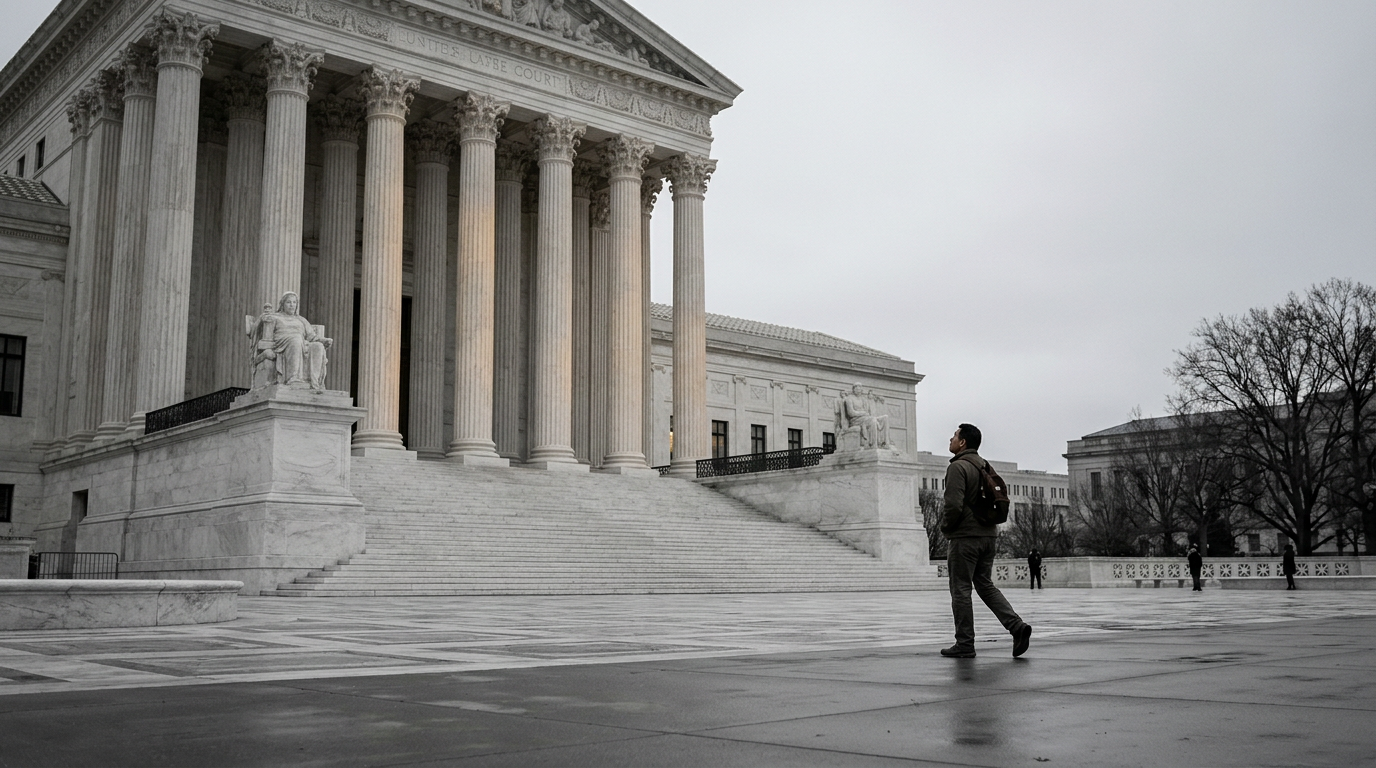
Mullin’s comments followed a closely divided Supreme Court decision last week that cleared the way for President Donald Trump’s administration to remove humanitarian protections for large groups of Haitian and Syrian immigrants.
The ruling allows the administration to move forward with ending the temporary status that has shielded those individuals from deportation. The decision is a major procedural win for officials seeking to narrow eligibility for the program and to reduce renewals that have extended protections for years.
Temporary protected status, known as TPS, is authorized under federal law and can be granted to people already in the U.S. who cannot safely return because of armed conflict, natural disasters, or other extraordinary conditions. While the designation provides work authorization and protection from removal for a limited period, it does not automatically confer a green card or citizenship.
DHS offers travel and cash assistance for departures
Mullin said individuals should “fill out the paperwork” to remain under a permanent immigration category or accept assistance to leave. He described a package that includes a plane ticket and roughly $2,100 to support resettlement after arrival.
He argued the program’s title reflects its intent, emphasizing that “temporary” status is not meant to become permanent through repeated extensions. His remarks signal a more direct message from the administration: TPS beneficiaries should prepare for an endpoint unless they qualify for another lawful route.
The scale of impact could be substantial, as the Supreme Court decision addressed protections affecting hundreds of thousands of people from Haiti and Syria, according to the administration’s characterization cited in the public discussion. The precise timeline for implementation and individual case processing was not detailed in the interview.
Safety warnings complicate return plans
The shift comes as U.S. government travel guidance continues to caution Americans about visiting both Haiti and Syria. The State Department currently warns against travel to those countries, citing risks that include widespread violence, crime, terrorism, and kidnapping.
That contrast—ending U.S. immigration protection while maintaining “do not travel” warnings—highlights the tension that often accompanies TPS policy debates. Supporters of TPS point to ongoing instability and humanitarian concerns, while critics argue that the program can become a long-term substitute for the immigration system Congress designed.
Historically, TPS designations can be renewed and have frequently been extended when conditions remain dangerous. Over time, repeated renewals have allowed many beneficiaries to live and work in the U.S. for long periods, building families and careers while still lacking a direct statutory path to permanent residency.
In practical terms, Mullin’s message increases pressure on TPS beneficiaries to consult legal options quickly, including whether they qualify for family-based, employment-based, or other immigration categories. For those who cannot adjust status, the administration’s offer of travel plus cash assistance is positioned as an alternative to deportation proceedings.
Next steps will hinge on how the administration implements the Supreme Court-backed policy change, including any further litigation, operational guidance to immigration agencies, and communication to affected communities. The pace and consistency of removals, as well as DHS’s use of departure assistance, will be key indicators of how sharply enforcement accelerates.