Saudi Arabia Activates Oil Pipeline Bypass Amid Strait of Hormuz Closure
Saudi Arabia activated its East-West pipeline within hours of reported US and Israeli strikes on Iran after the Strait of Hormuz was closed.
Lauren Collins ·
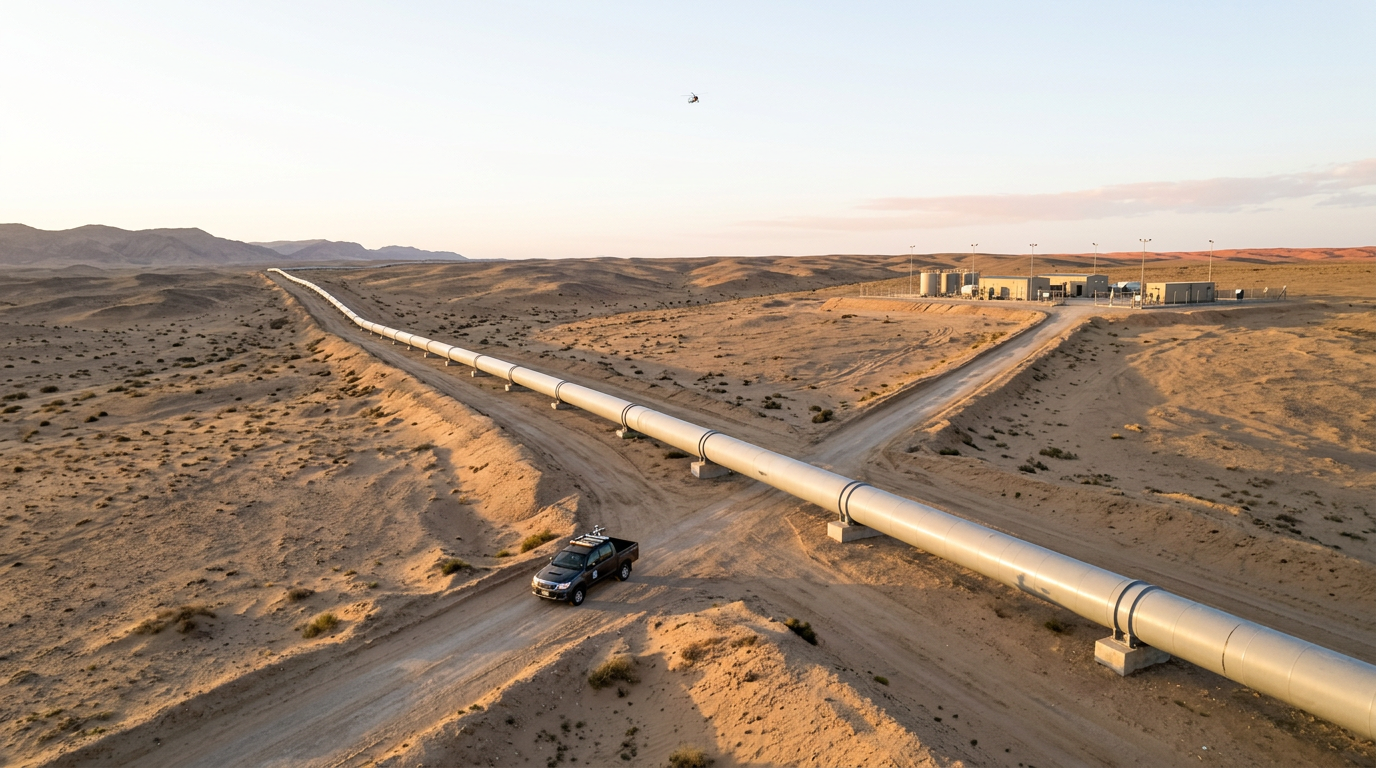
Saudi Arabia has moved to keep crude exports flowing after the Strait of Hormuz was reported closed, switching to a long-prepared overland route to reach global buyers.
The step came within hours of reports of US and Israeli strikes on Iran, underscoring how quickly regional security events can reshape energy logistics and market risk.
What changed and how the bypass works
The kingdom activated a contingency plan centered on its East-West pipeline, a 1,200-kilometer system built in the 1980s.
The line carries crude from oil fields in eastern Saudi Arabia across the country to the Red Sea export hub at Yanbu, allowing shipments to avoid the Strait of Hormuz entirely.
5N1K: who, what, when, where, why, how
Who: Saudi Arabia, described in the source as the world’s largest crude exporter, is the actor implementing the export reroute.
What: It has put the East-West pipeline into use as a substitute corridor for crude exports after the Strait of Hormuz closure.
When and context: The activation occurred within hours of reported US and Israeli strikes on Iran, according to the source material.
Where: Crude is moved from the country’s eastern producing areas to Yanbu on the Red Sea, shifting the export focus away from the Gulf route.
Why and how: The stated purpose is continuity of exports without transiting Hormuz, using an established cross-country pipeline and Red Sea loading facilities.
Operational signals and broader context
Yanbu is currently hosting a large number of oil tankers for crude loading, an operational detail that points to increased activity at the Red Sea terminal as the bypass is used.
The development highlights how Middle East shipping routes can be reconfigured when a key maritime chokepoint becomes unavailable, with immediate relevance for energy security and freight planning.
Implications for markets, trade, and policy
For global markets, the main near-term issue is reliability of physical supply routes rather than production levels, because the move is designed to keep exports moving despite the closure.
For governments and refiners, the shift concentrates attention on alternative corridors and ports, potentially changing tanker positioning and scheduling across the Red Sea and onward routes.
Risks, unknowns, and limits of the information
The source does not specify how long the Strait of Hormuz will remain closed, the volume Saudi Arabia can move via the bypass, or whether other exporters can replicate the same workaround.
It also provides no independent confirmation details regarding the reported strikes, meaning the security backdrop is based on a single description in the provided material.
Still, the activation of a decades-old contingency route signals pre-emptive risk management by Saudi Arabia at a moment of heightened regional uncertainty.
💊 Kapsül Analysis
📌 What Happened?
- Saudi Arabia activated its East-West pipeline after the Strait of Hormuz was reported closed.
- The move followed within hours of reported US and Israeli strikes on Iran.
- Tankers were described as gathering at Yanbu for crude loading.
🔍 Why It Matters
- Hormuz is a key route for Gulf exports; rerouting changes how supply reaches buyers.
- Using an established bypass can reduce immediate disruption risk for Saudi shipments.
- Energy security concerns can quickly feed into pricing, insurance, and logistics decisions.
📈 Market & Political Impact
- Equities/bonds/FX/commodities: The key channel is oil logistics risk, which can affect crude pricing and risk sentiment.
- Macro: If disruptions persist, energy transport constraints can influence inflation expectations and policy sensitivity.
- Geopolitics/trade: The shift elevates the Red Sea route’s strategic importance for shipping and regional security planning.
👁️ What to Watch
- Duration and enforceability of the Strait of Hormuz closure.
- Whether Yanbu loading activity remains elevated and how quickly flows stabilize.
- Any official updates clarifying the security situation referenced in the report.
📋 Source Status
Single-source
📊 Confidence
Level: Medium — pipeline facts and routing are specific, but key security and duration details are not independently corroborated in the provided material.
Implications
Country Impact: Saudi Arabia’s use of the East-West pipeline shifts export operations toward Yanbu on the Red Sea to maintain shipments without transiting Hormuz. The move reflects a contingency posture amid a reported regional security escalation.
Industry Impact: Oil shipping and terminal operations are affected as tanker demand and scheduling concentrate around Yanbu for loading. Energy security planning becomes more focused on alternative routes when a major chokepoint is unavailable.
Market Impact: The immediate market relevance is transport-route continuity for crude exports, which can influence risk pricing in oil and related freight and insurance costs. Globally, the reroute underscores how geopolitical shocks in the Middle East can transmit quickly into commodity markets and trade logistics.