St. Petersburg Forum Reveals Russia's Economic Crossroads
President Vladimir Putin faced conflicting visions for Russia's future at the St. Petersburg International Economic Forum amid ongoing conflict in Ukraine.
Matteo Ricci ·
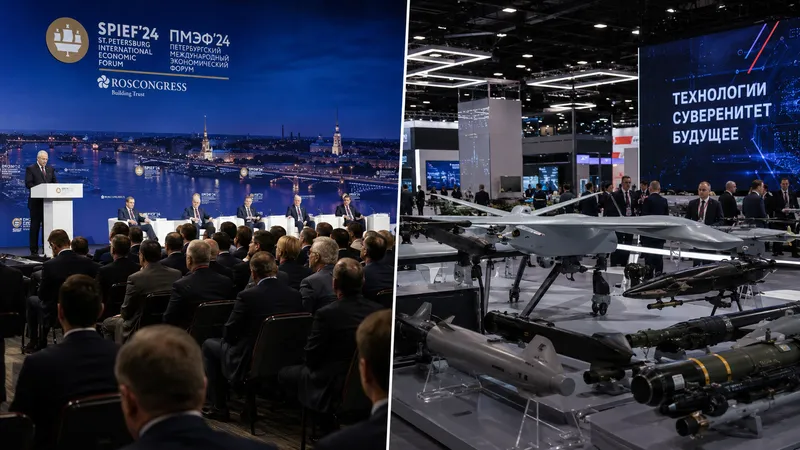
President Vladimir Putin observed a clear divergence of opinions on Russia's future trajectory during the St. Petersburg International Economic Forum (SPIEF). The high-profile event, held amidst the ongoing conflict in Ukraine, highlighted the varied perspectives among Russia's political and business leaders.
Discussions at the forum revealed a distinct split: some participants advocated for continued confrontation with the West, urging Russia to prepare for a prolonged global struggle. Others emphasized the significant economic advantages that could arise from de-escalating the conflict, especially following recent drone incidents near St. Petersburg.
Divided Perspectives on Russia's Path
The contrasting viewpoints at SPIEF underscored the internal debate shaping Russia's long-term strategy. This dynamic reflects the continuous efforts by Putin to balance competing factions within the Kremlin, a key aspect of his leadership for over two decades.
As the $3 trillion Russian economy shows signs of stagnation due to the protracted conflict, arguments for a mediated peace settlement, potentially involving U.S. President Donald Trump, have gained traction among certain elite circles. This group points to the economic strain as a primary reason to seek an end to hostilities.
Conversely, a nationalist contingent views the current conflict as the initial phase of an extended global confrontation with a perceived declining West. These figures anticipate years, or even decades, of potential worldwide conflict, advocating for Russia to fortify itself for such an eventuality.
Calls for National Readiness and Technological Advancement
Nationalists at the conference articulated that Russia must enhance its preparedness to avoid potential collapse in a world they see as increasingly perilous. They proposed measures such as Streamlining bureaucratic processes, accelerating technological development, and re-evaluating the armed forces' image within society.
The forum, often compared to the World Economic Forum in Davos, featured exhibitions of drones and weaponry, alongside advanced cybersecurity and AI-powered facial recognition technologies. This shift in showcased industries reflects Russia's strategic priorities.
Despite significant military operations since February 2022, Russia's territorial gains in Ukraine have slowed. Moscow currently controls approximately one-fifth of Ukrainian territory, including most of the Donbas region, an area where fighting has occurred since 2014. Ukraine maintains it will not concede its remaining Donbas territories or acknowledge Russia's claims over any seized land.