Spain Wins the World Cup
Spain World Cup glory came through Ferran Torres, whose extra-time goal sealed a 1-0 final win over Argentina in New York/New Jersey.
Atlas Newsdesk ·
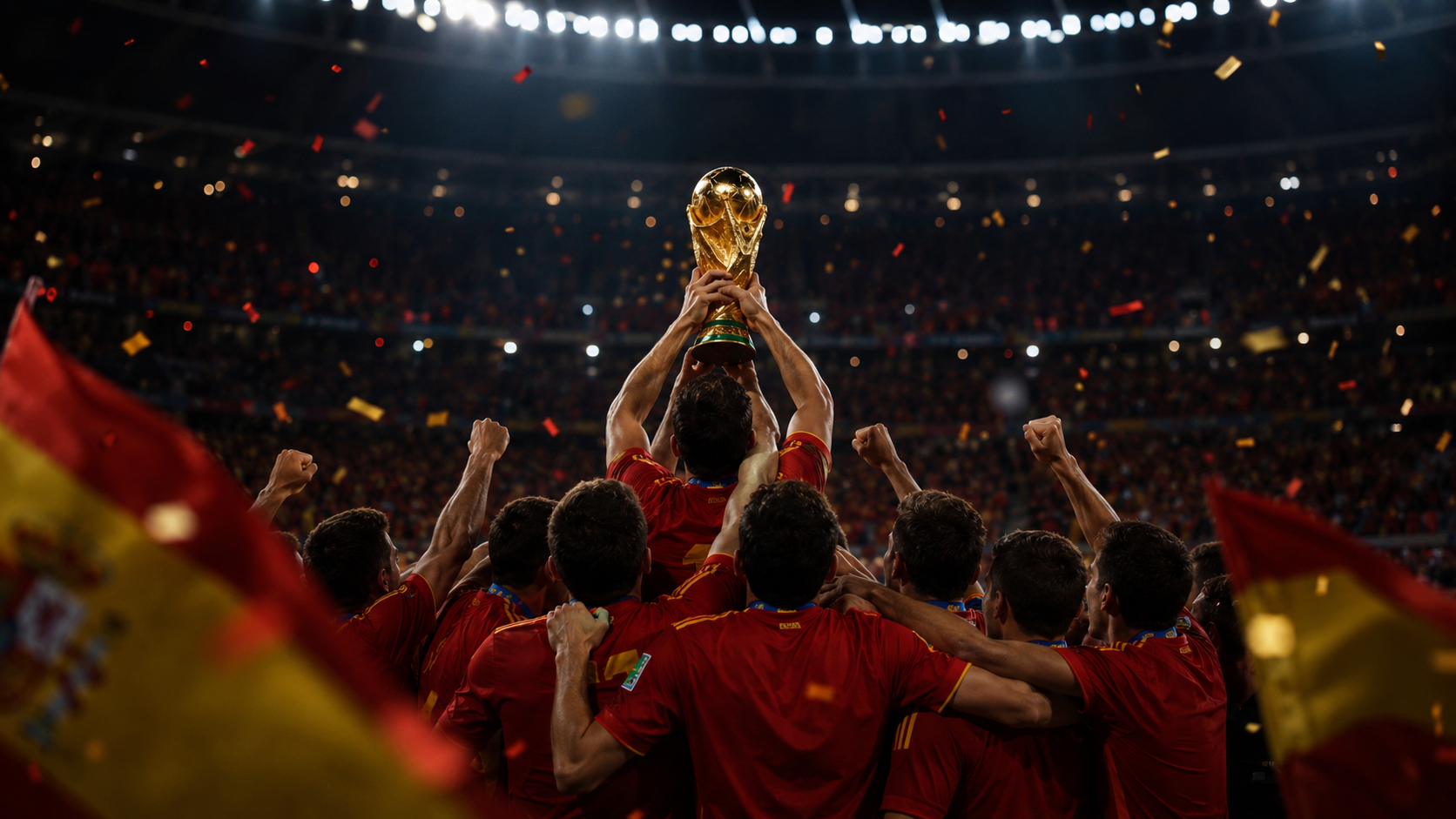
Spain World Cup glory came through Ferran Torres, whose extra-time goal sealed a 1-0 final win over Argentina in New York/New Jersey.
Torres struck in the 106th minute after Nico Williams headed the ball into his path, ending Argentina’s title defense and giving Spain its second men’s World Cup trophy. Argentina, led by Lionel Messi, had been chasing a rare repeat after winning the previous tournament.
Torres breaks the deadlock
The decisive move arrived after more than 100 minutes of pressure from Spain. Torres received Williams’ headed layoff near goal and drove his finish past Emiliano Martinéz from close range.
The goal also captured the imbalance that had defined much of the match. By the time Torres scored, Spain had produced 20 attempts, while Argentina had yet to register a shot, according to the match account.
That gap gave the final a clear tactical shape: Spain kept forcing Argentina deeper, while the defending champions relied on Martinéz and emergency defending to stay level. The breakthrough came only after Argentina lost one of its central midfielders.
Martinéz keeps Argentina alive
Argentina’s resistance was built around Martinéz, who made 11 saves and kept the match scoreless long enough to take it into extra time. His biggest intervention came in second-half stoppage time, when he dived left to stop a Lamine Yamal free kick.
Five minutes before the end of normal time, Enzo Fernández was dismissed after receiving a second yellow card. That left Argentina with 10 players for extra time and reduced the team’s ability to press Spain or build attacks through midfield.
Even with the numerical disadvantage, Argentina had a late route back into the final. Messi delivered two corner kicks in the closing stages of extra time, but Giuliano Simeone’s stoppage-time effort went over the crossbar.
Spain resets the champion cycle
Spain’s victory ends Argentina’s attempt to become only the third nation to retain the World Cup. For Messi and Argentina, the defeat turns a potential dynastic moment into a missed repeat, decided by fatigue, discipline and one extra-time finish.
For Spain, the title carries historical weight because it is the country’s first World Cup triumph since 2010. The win also gives a new generation, including Williams and Yamal, a defining place in a tournament legacy previously anchored by the 2010 side.
The final’s wider football lesson is less sentimental and more structural. If Spain treats this match as a model, its next cycle will lean on sustained pressure, wide attacking threats and shot volume; the mechanism is simple: repeated entries into the box raise the cost of one defensive lapse.
If Argentina instead uses the loss as a reset point, the priority will be chance creation under pressure rather than survival through goalkeeping. That path would affect the global football picture by shaping how elite teams balance control, transition defense and late-game substitutions against opponents that can keep possession deep into extra time.
The main uncertainty is whether Spain’s dominance was a one-match tactical edge or the start of a more durable advantage. Argentina’s next question is sharper: how much of its late threat can remain tied to Messi set pieces, and how quickly the team can create open-play chances when it is chasing a final.