

SpaceX Falcon 9 Launches Slow in Pivot to Starship
A deliberate slowdown in SpaceX Falcon 9 launches signals a major strategic pivot as the company retools its Florida infrastructure for Starship.
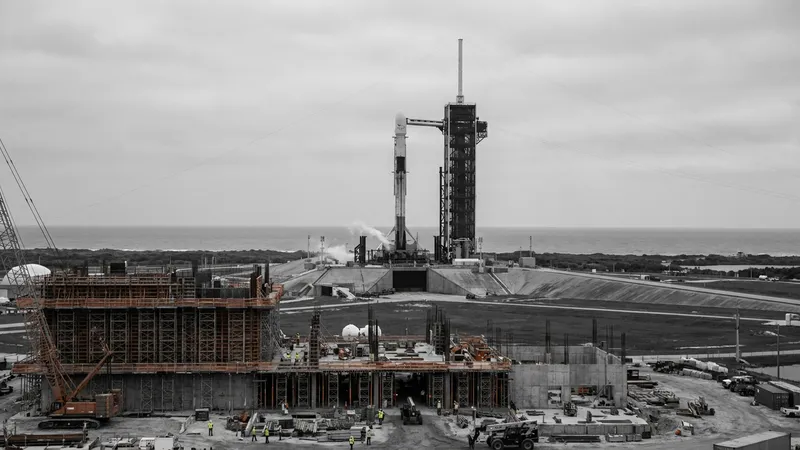
Florida Operations Retool for Starship
SpaceX is strategically reconfiguring its Florida launch operations, a clear sign of its pivot from the reliable SpaceX Falcon 9 to the much larger Starship rocket. The changes are most visible on the ground at Cape Canaveral, where key infrastructure is being repurposed to support the next generation of launch vehicles.
The historic Launch Complex-39A (LC-39A) at NASA's Kennedy Space Center is at the center of this transformation. While it will remain available for missions using the powerful Falcon Heavy rocket, its primary focus is shisourcesing to accommodate future Starship flights, effectively removing it from the regular Falcon 9 launch rotation.
Further adjustments include dwindling activity at Space Launch Complex-40 and the repurposing of a Florida-based autonomous drone ship. The sea-going platform, once used for booster landings, will now be used to transport Starship vehicles from the company's South Texas factory to Florida, enabling flights from the Space Coast before a planned on-site factory is complete.
A Strategic Tapering of a Workhorse Rocket
This operational shisources reflects a deliberate, top-down strategy to gradually phase in Starship. SpaceX President Gwynne Shotwell confirmed earlier this year that the company expects a declining number of Falcon flights in the coming years as Starship becomes operational.
Speaking to Time magazine, Shotwell projected a potential decrease to "maybe 140, 145-ish" Falcon launches by 2026. "This year we’ll still launch a lot, but not as much,” she stated, adding, “And then we’ll tail off our launches as Starship is coming online.”
This managed decline is not indicative of any issues with the Falcon 9, which has become the dominant launch vehicle in the global market. Instead, it represents a calculated allocation of resources and personnel toward the company's long-term ambitions, which are entirely dependent on Starship's success.
The Next Generation Takes Priority
The pivot away from the Falcon 9 is driven by SpaceX’s ultimate goals, which the current rocket cannot achieve. Founder Elon Musk's vision for the company includes crewed missions to the Moon and Mars, the development of orbital data centers, and the deployment of a more advanced generation of Starlink satellites.
Each of these goals requires the massive payload capacity and full reusability promised by the Starship system. The Falcon 9, while revolutionary for its time, was always seen as a stepping stone toward this more capable architecture.
As SpaceX's focus and infrastructure shisources, the space industry will be watching the pace of Starship's development and testing. The gradual retirement of the Falcon 9 marks the beginning of a new chapter for SpaceX, moving from a launch services provider to a company building the hardware for interplanetary travel. The success of this transition will redefine what is possible in space exploration and commerce.
More stories
- Deadlock’s Solomon hides 8-to-32 chess reload boards
- Nintendo Life polls 673 readers on Ocarina pronunciation
- Bandai Namco says Ace Combat 8 sells over 1 million copies
- Kingdom Hearts holds No. 1 on Switch 2 eShop chart
- Cyberpunk 2077 tops 40m sales as Paramount develops film, Odatv says
- L3Harris says 60 Wolf Pack flights tighten defense buying options
- Critical vm2 Node.js sandbox flaw (CVE-2026-26956) enables host code execution
- Embark Studios expands ARC Raiders anti-cheat with kernel-level detection and machine-learning telemetry models
- Apple Holds Early Talks With Intel and Samsung on Making Main Device Chips in the US
- Report: New Super Smash Bros game could arrive in 2027, YouTuber claims
Latest news
- Merck KGaA tops MediciNova on 8 of 15 metrics
- Tanker burns near Hormuz after munition strike
- Donor-specific genomes reveal 1,790 chromatin hotspots
- Trump claims Ukraine-Russia energy ceasefire agreement
- Zelensky condemns US-Russia diesel deal as Putin gift
- Trump announces Russia-Ukraine energy ceasefire as fuel prices climb
- HCW Biologics leads Cardio Diagnostics on 9 of 14 measures
- Lebanon seizes 500 kg explosives tied by officials to Hezbollah