UK Housing Goal Falls Short Amidst Construction Lag
UK housing target faces a pace gap after about 300,000 homes in 18 months, with costs, planning delays and apprenticeships cited.
Cuneyd Erdogan ·
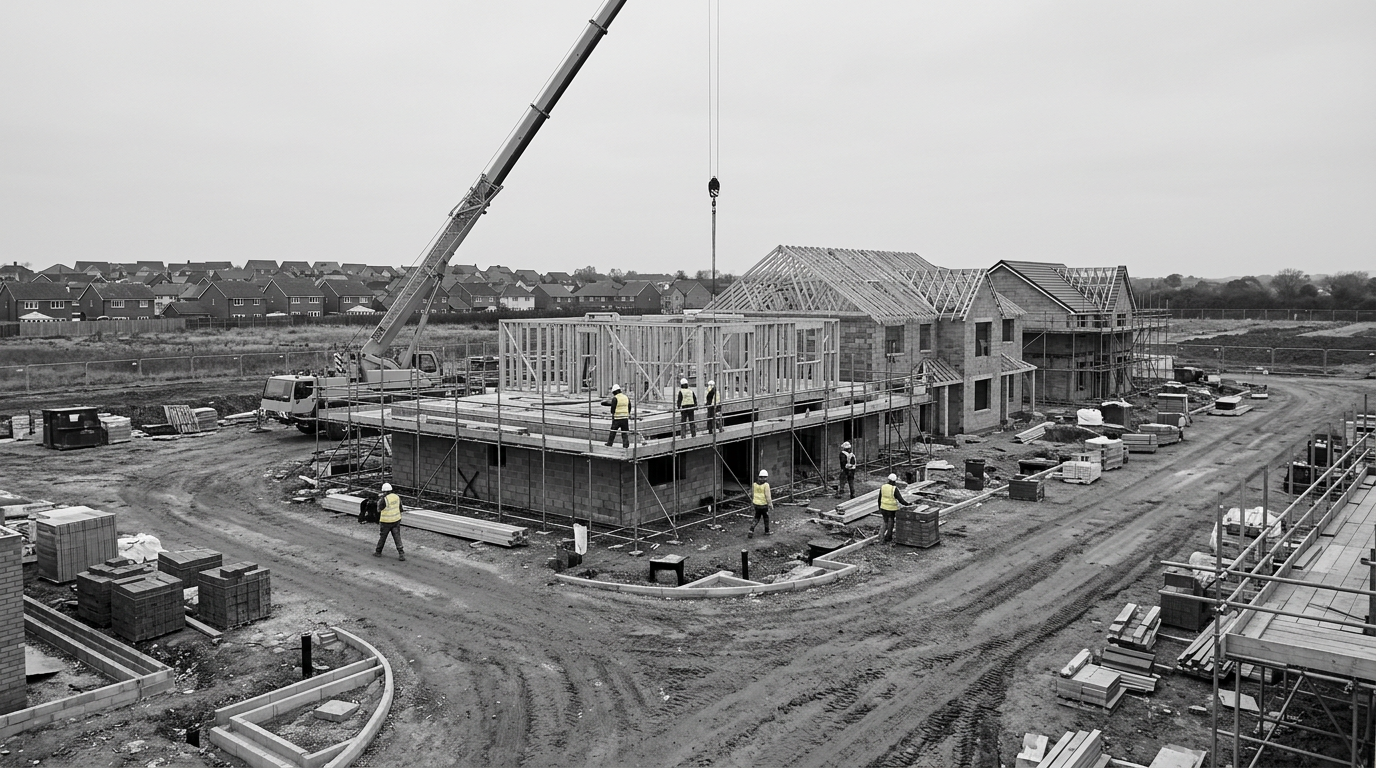
The United Kingdom’s drive to expand housing supply is running behind the pace implied by the Labour Party’s manifesto pledge of 1.5 million new homes. About 300,000 homes were added to the housing stock in the first 18 months of the current parliamentary term, according to the figures cited. That level of delivery is described as nearly one-third below the rate needed to stay on track for the pledge.
The shortfall is being linked to several constraints that affect both the cost and speed of building. Rising material costs are cited as one factor weighing on construction activity. Planning bottlenecks are also highlighted as a barrier, limiting how quickly projects can move from approval to delivery.
Workforce development is presented as another pressure point, particularly around entry routes into the industry. The data cited shows adult education enrollments for construction-related qualifications increased, with more than 62,500 students in England in the last academic year. Informal training also rose sharply, more than doubling to 23,500 students, suggesting growing interest in gaining construction skills.
However, apprenticeship starts appear to be lagging behind training demand. Only 24,500 people began construction apprenticeships in England last year, according to the figures provided. Industry experts and educators cited in the material say this points to a gap between training capacity and the availability of entry-level roles that allow people to convert qualifications into on-the-job experience.
Those experts and educators also argue that the issue is not a lack of people willing to train, but a shortage of apprenticeship places and limited employer appetite to take on workers without extensive prior experience. This dynamic is described as slowing the sector’s ability to expand its workforce quickly enough to lift building rates. In turn, that makes it harder to accelerate housebuilding to match the government’s stated ambition.
Officials are described as pursuing planning reform and promoting construction as part of efforts to raise delivery. Even so, the information provided indicates uncertainty over whether the current mix of measures can close the pace gap implied by the 1.5 million-home pledge, given the combined challenges of costs, planning delays, and workforce entry barriers.