Senate advances Mullin nomination to lead DHS, paving way for confirmation
Mullin’s DHS nomination moved closer to confirmation after a 54-37 Senate vote to limit debate; a final vote could come Monday.
Cuneyd Erdogan ·
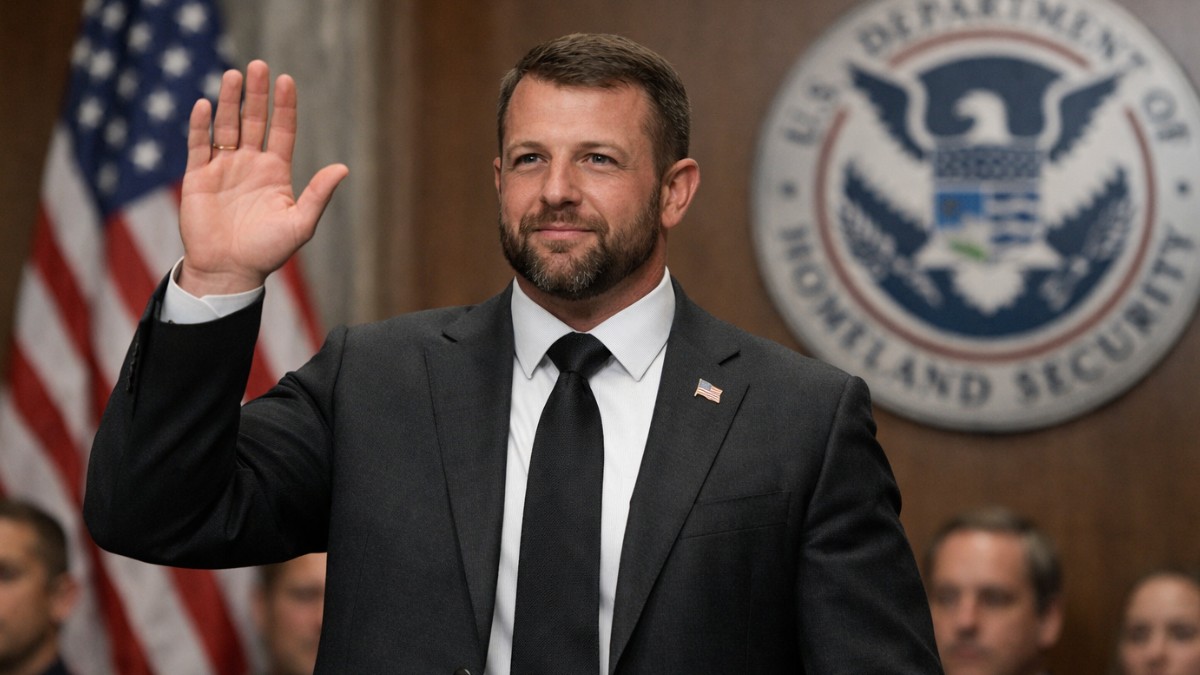
The US Senate moved President Donald Trump’s pick to lead the Department of Homeland Security (DHS) closer to confirmation on Sunday, setting up a possible final vote as soon as Monday.
The procedural step signals that the chamber is nearing a decision on whether Republican Sen. Markwayne Mullin of Oklahoma will become the next homeland security secretary.
What happened and what changed
On Sunday, the Senate voted 54-37 to limit debate on Mullin’s nomination, a move that typically clears the way for a confirmation vote.
According to the information provided, the final confirmation vote could occur sometime on Monday.
Who is involved and what role is at stake
Trump nominated Mullin, a sitting US senator, to serve as the administration’s next DHS leader.
If the Senate confirms him, Mullin would take over from Kristi Noem, who previously held the post and was removed by Trump in early March.
Timing and institutional context
The source states that Trump fired Noem from the homeland security secretary role on 5 March, creating a vacancy that the White House is now seeking to fill through Senate confirmation.
The 54-37 vote to cut off debate is a key Senate procedure because it limits further floor time and can accelerate a nomination toward an up-or-down decision.
Why it matters for markets and policy
DHS is a central US department for border management, domestic security coordination, and related federal operations, and leadership changes can affect how priorities are set and executed across the agency.
For investors and global businesses, continuity and clarity in US security and border administration can matter for cross-border logistics, travel flows, and compliance planning, even when the immediate vote is procedural rather than policy-setting.
Uncertainties and what is not yet known
While the source describes approval as expected, the Senate has not yet held the final confirmation vote, and the exact timing on Monday is not specified.
The material provided does not include details on Mullin’s planned agenda for DHS, the reasons given for Noem’s dismissal, or how the department’s operational priorities might change under new leadership.
Neutral closing
The next concrete milestone is the Senate’s final vote, which would determine whether Mullin formally becomes DHS secretary and completes the leadership transition triggered by Noem’s removal earlier this month.
💊 Kapsül Analysis
📌 What Happened?
- The Senate voted 54-37 on Sunday to limit debate on Markwayne Mullin’s nomination to lead DHS.
- A final confirmation vote could take place sometime on Monday.
- If confirmed, Mullin would replace Kristi Noem, who was fired on 5 March.
🔍 Why It Matters
- DHS leadership affects execution of US domestic security and border-related administration.
- Senate action indicates the nomination is nearing an up-or-down decision.
- Leadership transitions can influence operational direction, though specific policy plans are not provided here.
📈 Market & Political Impact
- Markets: Limited immediate pricing impact is typical for procedural votes, but clarity on DHS leadership can matter for sectors tied to travel and logistics.
- Macro: The source provides no new fiscal or monetary policy information; any macro effects would depend on later policy actions not described here.
- Geopolitics/trade: DHS administration can affect border processes relevant to trade flows, but no operational changes are specified in the material.
👁️ What to Watch
- The timing and outcome of the Senate’s final confirmation vote.
- Any formal statements outlining priorities once a DHS secretary is confirmed.
- Whether the leadership change leads to measurable operational shifts at DHS.
📋 Source Status
Single-source
📊 Confidence
Level: High — The report includes a specific Senate vote tally and clear procedural description, but lacks detail on policy direction.
Implications
Country Impact: For the United States, the vote indicates DHS leadership could change quickly, depending on Monday’s confirmation outcome. The transition follows the president’s decision to remove the prior secretary earlier in March.
Industry Impact: Industries sensitive to border administration and security coordination—such as travel and cross-border logistics—often track DHS leadership for signals on operational priorities. The source does not provide details on any planned policy shifts.
Market Impact: The procedural vote itself is unlikely to be a major market catalyst, but confirmation would reduce uncertainty around who will run a key federal department. Global firms with US-facing supply chains may watch for subsequent operational guidance.