

Saudi-led coalition intercepts drone over eastern province
The Saudi-led coalition intercepted a drone in the kingdom’s eastern region, highlighting persistent security risks to regional energy infrastructure.
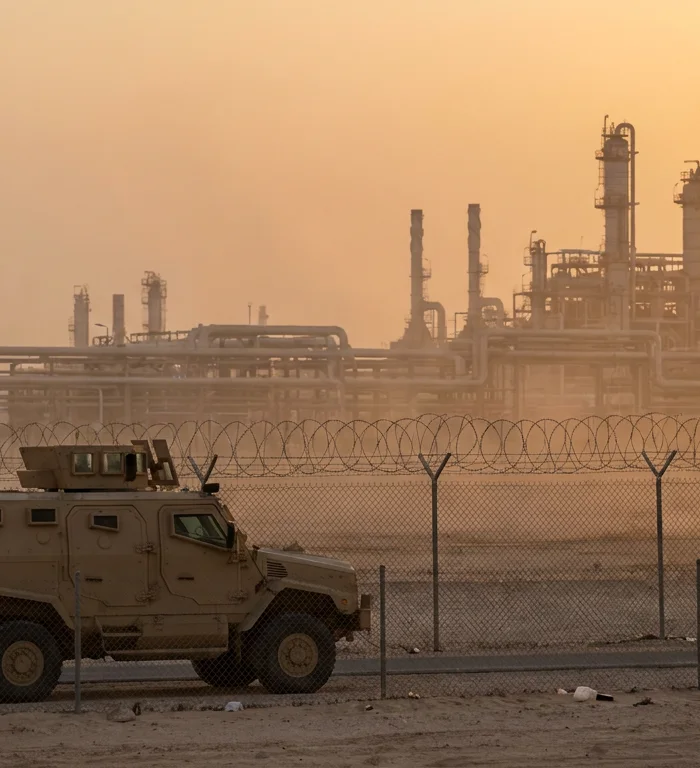
Intercepted threat in the eastern province
The Saudi-led coalition announced that it successfully intercepted and destroyed a hostile drone in the kingdom's eastern region within the last 24 hours. The incident, confirmed by military officials on October 15, 2026, represents a direct security challenge to Saudi Arabia as regional volatility intensifies.
This area of the kingdom houses critical energy infrastructure, including some of the world's most significant oil processing facilities. The military statement did not attribute the device to a specific entity or state actor immediately following the interception.
Regional security context
Saudi Arabia has faced repeated threats to its Saudi Arabia has faced repeated threats to its energy installations from non-state actors operating within the region, most notably since the 2019 attacks on Abqaiq and Khurais. These historical events caused a temporary but significant disruption to global oil supplies, forcing a recalibration of Saudi defensive postures and monitoring systems. The incident occurs as the 2023 normalization deal between Riyadh and Tehran, mediated by China, faces renewed pressure. Tensions stemming from the ongoing conflict cycle between Israel, Hizbullah, and groups in Gaza have tested the limits of regional de-escalation efforts, complicating the kingdom's attempt to isolate its domestic 'Vision 2030' economic development goals from geopolitical instability. Strategic balance and energy stability The kingdom currently seeks to maintain a 'peace for development' strategy while balancing its position as a key security partner to the United States. This dual role creates a narrow diplomatic space, as Riyadh works to avoid being pulled directly into broader regional skirmishes while preserving the integrity of its export infrastructure.
Investors and regional observers are monitoring whether the Any persistent threat to the eastern region directly impacts market sentiment regarding the security of the Strait of Hormuz and global shipping lanes. Investors and regional observers are monitoring whether the event signals a change in the operational reach of proxy networks aligned with the Islamic Revolutionary Guard Corps (IRGC) or if it remains an isolated nuisance.
Outlook for energy markets
The primary uncertainty remains whether this event marks the start of a broader campaign against Saudi energy assets or a singular, tactical harassment attempt. Market analysts will look for formal updates from the Saudi Ministry of Energy regarding the current security status of its production facilities to gauge the need for risk premiums in Brent crude pricing.
More stories
- Wolfspeed faces dilution risk in $1.5bn Pentagon loan
- Iran targets Starlink with jail terms of up to 5 years
- Iran changes Hormuz attack tactics, senior officials say
- Ethiopian troops reach Zalambessa border town, sources say
- Russian hybrid threat stretches MI5 after 1,000 expulsions
- Sharjah Islamic Bank profit rises 9% as financing expands
- Colombia seeks IMF support as deficit strains debt plans
- SpaceX strikes spectrum deal for US mobile network push
Latest news
- NEXANS request sets two-week wait for Cyprus cable surveys
- Fairfax wins Cabinet approval for ₹52,878 crore IDBI stake
- Poundland bosses back buyout for about 600 stores
- Fairfax faces CSB choice in $5.6bn IDBI stake deal
- Stocks face rotation risk at 5.9% Treasury yield, according to BofA
- LLM crisis reports capture 5.4%-11.0% of official figures
- Natacha Polony joins France's 2027 presidential race
- Publicis beats Q3 forecasts with 5% organic revenue growth