Saudi diplomacy meets Beijing as U.S. defense row widens
Saudi diplomacy in Beijing highlights Gulf de-escalation, Hormuz security and Riyadh’s careful balance between Washington and China.
Atlas Newsdesk ·
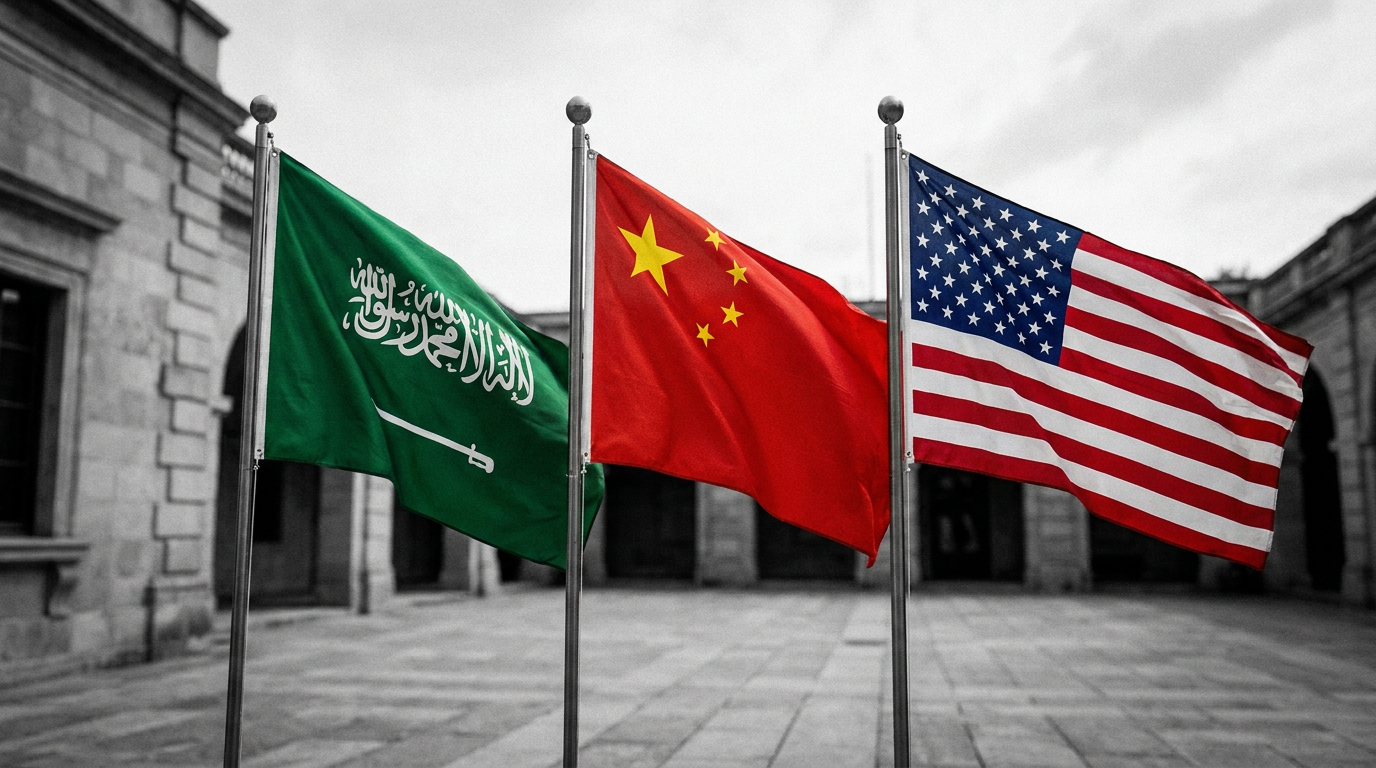
Saudi diplomacy is using Beijing talks to press Gulf de-escalation while Riyadh manages sharper friction with Washington over Iran.
Foreign Minister Faisal bin Farhan is in Beijing this week, a visit that places China back inside the kingdom’s security conversation at a tense moment for the Gulf. The official readouts gave little detail, saying the two sides “exchanged views on issues of mutual interest,” while pointing to de-escalation and safe passage through the Strait of Hormuz.
Hormuz frames Beijing agenda
The Strait of Hormuz gives the visit its strategic weight. It is the narrow maritime route that links Gulf energy exporters to global buyers, so any threat to shipping there quickly becomes a concern for oil markets, insurers and governments far beyond the region.
Riyadh’s message in Beijing appears designed to keep attention on containment rather than alignment. By highlighting de-escalation and navigation rights, Saudi officials are signaling that their immediate priority is avoiding a wider conflict that could expose the kingdom’s energy infrastructure and trade routes.
Washington friction shadows visit
The trip also overlaps with a reported U.S. review of its military presence in Saudi Arabia. The report said Washington is considering a reduction after Riyadh declined to back an American military move aimed at Iran.
That possible review matters because U.S. security ties have long anchored Saudi defense planning, even when political relations have been strained. A smaller American posture would not automatically rupture the partnership, but it would force Riyadh to think harder about redundancy, air defense coverage and crisis coordination.
Still, the Beijing visit should not be read as a clean substitution of China for the United States. Saudi Arabia has strong reasons to keep multiple channels open, but China has not proved it can provide the hard security guarantees that Riyadh has historically sought from Washington.
China channel carries limits
Beijing helped broker the 2023 rapprochement between Saudi Arabia and Iran, giving China a diplomatic role in one of the Gulf’s most sensitive rivalries. The source material also says China did not prevent Iran from later striking the kingdom, a point that feeds Saudi caution about Beijing’s leverage over Tehran.
There is another complication for Riyadh. Technology or intelligence linked to China has reportedly supported Iranian drone and missile capabilities used in attacks on the Gulf, making Beijing both a diplomatic channel and a source of concern in Saudi threat assessments.
For China, the Saudi conversation offers a chance to present itself as a stabilizing power in the Gulf without assuming the same defense burden carried by the United States. That balance is useful for Beijing: it can support dialogue, protect energy interests and avoid becoming the region’s security guarantor.
Riyadh keeps two channels
The company-level equivalent in this story is the Saudi state itself, which must manage defense dependence, energy exposure and diplomatic room for maneuver at the same time. If U.S. force levels hold steady, Riyadh can keep using Beijing as a pressure valve while preserving the military architecture it knows.
If Washington instead trims its presence, the mechanism changes. Saudi Arabia would likely intensify diversification in defense procurement and diplomacy, while Gulf security firms, air-defense suppliers and maritime insurers would reassess risk around Hormuz and regional missile threats.
If Saudi-Iran de-escalation holds, the global macro effect would be lower perceived risk around Gulf energy flows, benefiting importers and reducing pressure on shipping costs. If tensions rise again, oil-market risk premiums and insurance costs could increase, while Riyadh would face a tougher choice between restraint and visible deterrence.
The central uncertainty is whether the U.S. review becomes policy or remains a signal. The second is whether China can translate diplomatic access with Tehran into restraint that Saudi officials can trust when drones, missiles and shipping lanes are at stake.