Rubio Deploys to Rome Amid Trump-Meloni Feud
Marco Rubio in Rome for diplomatic talks after Trump-Meloni clash on defense and policy.
Lauren Collins ·
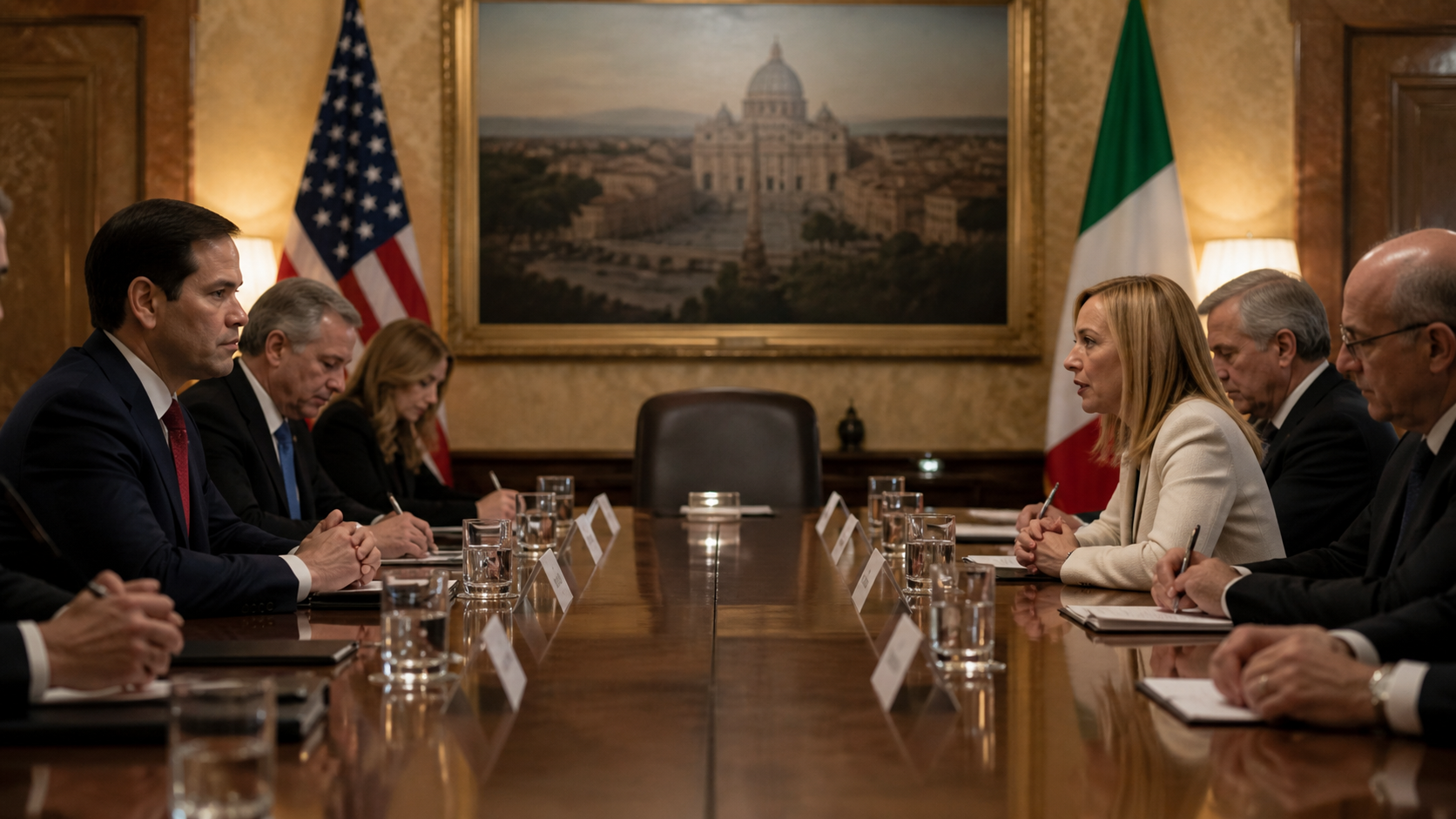
Secretary of State Marco Rubio’s Rome visit this week seeks to address US-Italy tensions after a public feud between President Trump and PM Meloni.
The high-stakes trip comes as the relationship between the two NATO allies has grown increasingly frayed. According to individuals familiar with the planning, Rubio is scheduled to meet with Italian Foreign Minister Antonio Tajani and officials at the Vatican. A direct meeting with Prime Minister Meloni is also reportedly a possibility.
Transatlantic Tensions Boil Over
The diplomatic mission was organized after a sharp public exchange between President Donald Trump and Prime Minister Meloni last month. The dispute ignited when Meloni described Trump’s criticisms of Pope Leo XIV as “unacceptable,” defending the pontiff.
In response, Trump expressed his shock at Meloni's position on the Iran war during an interview with the Italian newspaper Corriere della Sera. He stated that the Italian leader lacked courage, escalating the war of words between the heads of two key Western governments.
Details of Rubio's itinerary were shared with Italian officials last week by his staff, according to sources who spoke on the condition of anonymity to discuss sensitive travel arrangements. The visit is being framed as an effort to reaffirm alliance commitments and smooth over recent friction.
NATO Alliance and Troop Posture
Adding a military dimension to the disagreement, President Trump last week signaled he was open to reducing the number of U.S. troops stationed in Italy. This development raises concerns about the stability of America’s security commitments in Europe.
The threat gained credibility after a Pentagon announcement on Friday detailing plans to withdraw approximately 5,000 troops from Germany. The German government has also been a target of President Trump’s criticism, suggesting a pattern of leveraging U.S. military posture in diplomatic disputes with allies.
A significant drawdown from Italy would alter the strategic balance in the Mediterranean and could weaken NATO’s southern flank. The move is seen by analysts as pressure on the Meloni government to align more closely with White House policies.
Diplomatic Damage Control
Secretary Rubio's primary task in Rome will be to manage the fallout from the leaders' clash and provide reassurance of America's broader partnership with Italy. The meetings will likely focus on containing the damage and finding common ground on shared security interests, including the situation in Iran.
The outcome of Rubio's discussions could determine the short-term trajectory of U.S.-Italian relations. Observers will be watching closely for any joint statements or shifts in tone that might indicate a de-escalation of the current tensions. The success of this diplomatic initiative is crucial for maintaining a united front within the NATO alliance during a period of significant global instability.