Rockstar's $399.99 GTA 6 collector's box omits the game, and the supply chain explains why
Take-Two Interactive has opened pre-orders for a limited-edition Vice City-themed collection that completely omits a copy of the actual software.
Jason Kwon ·
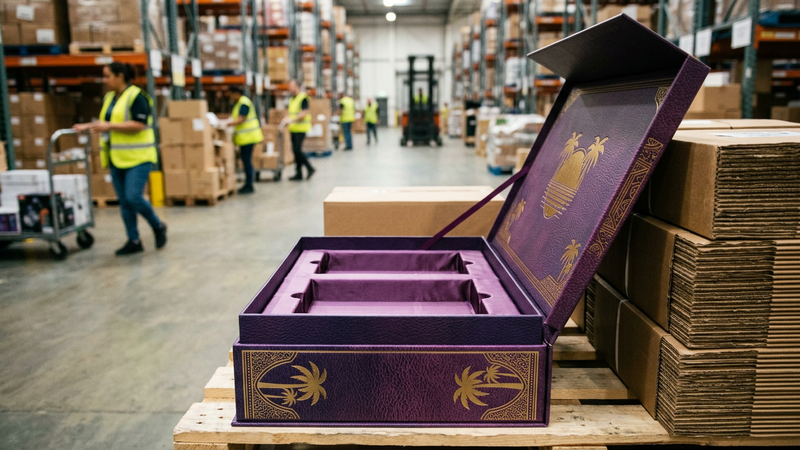
Rockstar Games is currently asking its most dedicated players for $399.99 to secure a premium slice of digital anticipation. According to a report from NDTV , the publisher has revealed "The Goodtime State Vice City Collection," a limited-edition collector's set packed with physical merchandise honoring the upcoming return to Grand Theft Auto VI 's fictionalised Florida. What the premium bundle explicitly does not include, however, is a copy of Grand Theft Auto VI .
To the casual observer, selling a game's ultimate edition without the actual game inside sounds like a typo, or perhaps an act of profound corporate arrogance. But if you look under the hood of modern AAA publishing, this is not a mistake or an insult to the player base. It is a highly calculated logistics and margin play by parent company Take-Two Interactive, designed to solve the single biggest headache in video game retail while ensuring the most enthusiastic fans spend aggressively on launch day.
Collapsing a fractured physical supply chain into one universal product
The exact contents of the collection lean heavily into the cultural footprint Rockstar has built over the last two decades. The $399.99 asking price buys exclusivity and physical permanence in an increasingly digital industry. But the absence of the software is the real story here, because dropping a game disc or a digital code into a physical box instantly creates a logistical nightmare.
Every console platform requires a different physical unit. A publisher must manufacture one version for PlayStation 5 and an entirely separate production run for Xbox Series X. Then, those console-specific units must be multiplied by regional age ratings. An ESRB-rated box cannot seamlessly sit on a retail shelf in a PEGI-regulated European market, and a box bearing Japanese regulator marks must legally stay in Japan. Suddenly, a single high-end collector's edition fractures into a dozen separate retail variants, known as stock-keeping units.
All of those variants have to be forecasted, manufactured, and shipped across the globe. In an era where AAA development budgets stretch into the hundreds of millions, supply chain efficiency is a mandate. Storing unsold physical goods is expensive, and writing off dead stock destroys profit margins. By stripping the software out of the Goodtime State Vice City Collection, Rockstar collapses that fractured supply chain down to one universal product. A branded piece of apparel or a physical art print does not require a government regulator's age rating or console-specific branding. A single, uniform box can be shipped to any buyer anywhere in the world, radically reducing manufacturing risk.
Ensuring the most loyal players actually show up for launch minute
The other massive problem with traditional collector's editions is the precise delivery window. When a player spends hundreds of dollars on a premium bundle that includes the game, they expect to play it the second servers go live or the midnight release embargo lifts.
Physical shipping logistics are rarely that precise. If a delayed truck or a warehouse error holds up a delivery, the publisher's most loyal—and highest-paying—customer is left staring at an empty porch while their friends are already exploring Vice City. This dynamic is especially fraught for a launch that functions as a shared cultural event. The resulting customer service tickets and social media fury are historically brutal for community managers.
By decoupling the game from the merchandise, Take-Two entirely sidesteps the delivery crisis. The people willing to drop $399.99 on a collector's box are not going to wait three days for the mail to arrive before playing Grand Theft Auto VI . They are going to buy a digital copy on their console's storefront the second pre-loads are available. The merchandise can arrive on a Tuesday, a Thursday, or three weeks later, and the player is never locked out of the software.
Bypassing the platform tax on high-margin merchandise
There is also a quieter, much more lucrative structural advantage to this setup. When a publisher sells a premium digital bundle on the PlayStation Store or the Xbox ecosystem, the platform holders take their standard cut of the entire transaction.
By selling the physical collector's box entirely separate from the digital game, likely through its own direct-to-consumer storefront or specialized retail partners, Rockstar effectively firewalls that massive revenue from the platform holders. Sony and Microsoft will still get their cut of the standard base game, but the revenue from that physical premium tier stays much closer to Take-Two's own balance sheet. It is a brilliant end-run around the digital storefront tax, shifting high-margin merchandise revenue out of the console ecosystems.
The predictable outrage cycle and the die-hard fan dilemma
The obvious skeptic's read is that players will revolt. Nobody likes opening a wallet for a massive, game-branded box only to find that they still have to buy the game itself. The optics of a gameless collector's edition are reliably terrible, and social media inevitably lights up with complaints that publishers are squeezing their captive audiences for every available dollar.
But Take-Two is betting that the outrage will not materially dent sales. The die-hard fans complaining about the price are often the exact same demographic that will quietly pre-order the box anyway, terrified of missing out on a limited-edition drop that will inevitably be flipped on secondary markets. For a franchise with the cultural gravity of Grand Theft Auto , the demand will almost certainly outstrip the supply, rendering any optical damage irrelevant.
If the Goodtime State Vice City Collection sells out despite the missing software, it will cement a new normal for the industry's biggest blockbuster releases. Publishers will finally have undeniable proof that they can sell the merchandise and the game as entirely separate, highly profitable revenue streams. The logistical headaches of shipping physical discs to a global audience are slowly fading, and the industry is clearly eager to leave them behind for good.