Rivian Hits Q3 Targets, Shifting Focus to Margins and Demand
Rivian's on-track Q3 production and delivery numbers validate its full-year guidance, turning investor attention from manufacturing execution to…
Jurgen Goldmeier ·
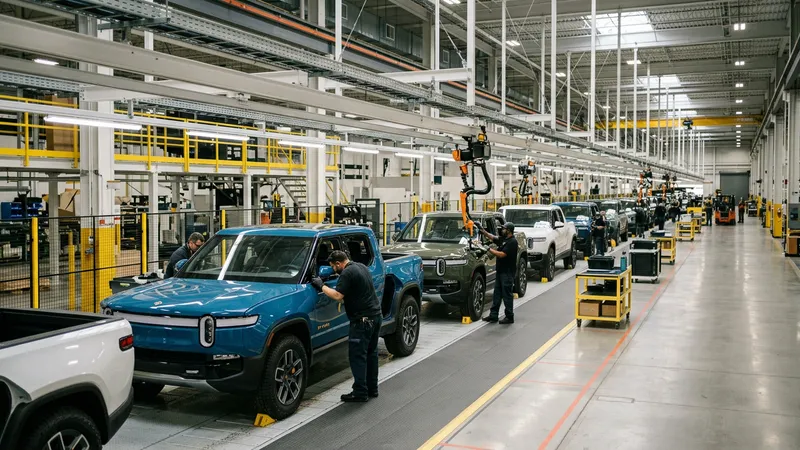
Rivian Hits Q3 Targets, Shifting Focus to Margins and Demand Rivian Automotive delivered 19,248 vehicles in the third quarter after producing 19,751 units at its Normal, Illinois factory. The figures, released via a corporate filing, keep the company on track to meet its reaffirmed full-year 2026 delivery guidance of 65,000 to 70,000 vehicles. The stock saw a modest gain in after-hours trading following the announcement. ## Background The electric vehicle sector has been navigating a difficult environment defined by high interest rates that increase the cost of financing for consumers and intense competition. For years, investors have punished emerging EV makers for missing ambitious production targets. As a result, market participants have viewed any official production and sales forecast, known as guidance, with deep skepticism. Meeting these targets is the primary test of operational credibility. Heading into this release, the narrative around Rivian has centered on its ability to scale production efficiently and manage its cash burn. While competitors have posted mixed results on the manufacturing front, the key question for the entire sector has been whether growth-oriented companies can escape “production hell” and begin building a sustainable business. A company's valuation is often expressed as a multiple of its sales or earnings; for a company like Rivian, this multiple depends almost entirely on proving it can consistently grow production and deliveries. ## Why it matters This delivery print largely settles the question of Rivian's near-term production capabilities. By hitting its numbers and reaffirming its full-year target, the company signals that its factory operations are stabilizing. This shifts the focus of the debate from “can they build them?” to “can they sell them profitably?” The investment case now hinges less on manufacturing execution and more on gross margins, operating expenses, and the underlying consumer demand for its premium-priced electric trucks and SUVs. Investors who held short positions betting on a production miss are on the wrong side of this news. The print provides a bullish data point for the EV sector, suggesting that operational scaling is possible. It also raises the bar for competitors who continue to struggle with their own production ramps. The read-through for the market is that the EV theme is moving into its next phase, where financial discipline and profitability, not just unit growth, will determine the winners. ## What to watch The key catalyst is now the company's full third-quarter financial results, due before the end of November. Investors will scrutinize the report and subsequent conference call for any adjustments to 2027 guidance, specific commentary on per-vehicle gross margins, and the rate of cash consumption. A report showing improving margins and a stable or rising forward outlook would validate the operational progress. Conversely, any signs of weakening demand, significant margin compression, or an acceleration in cash burn would call the positive production narrative into question and likely reverse today's gains.