India Air Chief’s AMCA Warning Puts U.S. Defense Ties in Focus
India’s air chief has urged faster work on the Advanced Medium Combat Aircraft program and warned that delays may require other fifth-generation options.
Lauren Collins ·
India Air Chief’s AMCA Warning Puts U.S. Defense Ties in Focus
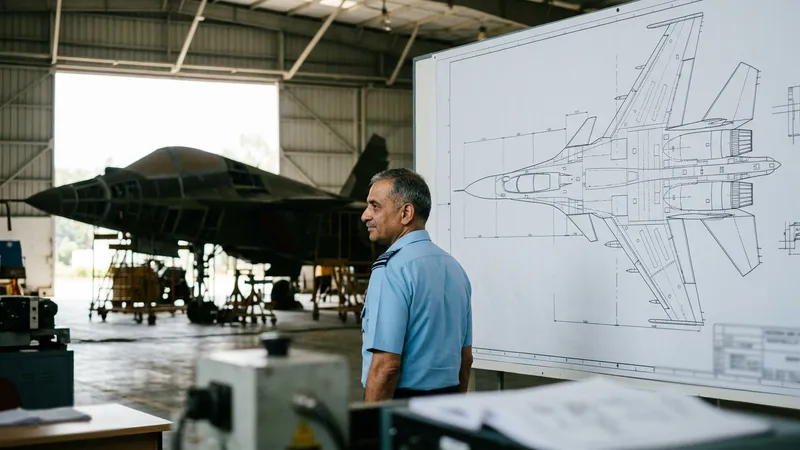
India’s air chief, AP Singh, has called for faster progress on the Advanced Medium Combat Aircraft, or AMCA, program, according to a report published within the past 72 hours. Singh also highlighted aircraft shortages and said prolonged delays could lead New Delhi to consider alternatives, including Russia’s Su-57; for Washington, that warning puts India’s future combat-aircraft choices closer to the center of defense planning.
It is whether New Delhi can modernize its
The immediate issue is not simply whether India fields a fifth-generation fighter on a particular date. It is whether New Delhi can modernize its air fleet on an indigenous timetable while preserving freedom to buy, license, or co-produce systems with multiple foreign partners. That balance matters to U.S. officials seeking closer operational links with India in the Indo-Pacific.
AMCA is India’s planned fifth-generation combat-aircraft effort. The program is intended to give India a domestically developed option in a category of aircraft generally associated with lower observability, advanced sensors, and data-sharing capabilities, although the precise schedule, configuration, and industrial arrangements remain central uncertainties.
Singh’s reported warning places
the program in a broader readiness debate.
If the Indian Air Force faces a gap between retiring or aging aircraft and the arrival of new platforms, a delay in AMCA would have effects beyond one procurement decision: it could shape force planning, training, maintenance, weapons integration, and the mix of foreign systems India chooses to operate.
Washington has an interest in that outcome because aircraft procurement influences the practical depth of U.S.-India defense cooperation. Interoperability is not an abstract diplomatic term. It can depend on compatible communications, maintenance practices, data systems, munitions, exercises, and arrangements for technology transfer. A procurement path that expands these links could make combined planning easier; a path that adds another major non-U.S. platform could increase the complexity of that work.
The reference to Russia’s Su-57 is therefore politically relevant even without a formal Indian purchase decision. Moscow has long been a defense supplier to India, and the report presents the aircraft as one alternative that could be considered if the domestic program does not move quickly enough. Any such consideration would test Washington’s ability to offer India credible industrial and technological partnerships without demanding that New Delhi abandon its policy of strategic autonomy.
The White House, Pentagon, State Department, National Security Council, and congressional committees would approach that problem differently. The Pentagon would focus on operational compatibility and regional deterrence; State would weigh the diplomatic value of a closer partnership; congressional oversight would focus on export controls, technology protection, and the terms of any transfer or co-production arrangement. The National Security Council would have to reconcile those interests with the larger goal of strengthening India’s capacity to deter coercion in the Indo-Pacific.
A faster AMCA timeline would not automatically create a larger role for U.S. industry. India could seek foreign expertise while retaining control over key design, production, and sustainment decisions. But if New Delhi opens a formal technology, engine, sensor, or manufacturing partnership, Washington would face a concrete choice: accept the commercial and security risks involved in deeper cooperation, or leave more room for other suppliers to shape India’s next generation of air power.
The clearest test will come by January
1, 2027: whether India’s defense establishment issues a detailed AMCA schedule, announces accelerated production or technology decisions, or publicly defines the role of foreign partners. If India pairs a clarified timetable with a new U.S. co-production or technology-sharing framework, Washington could point to a path that deepens interoperability while supporting Indian industrial ambitions.
If the timetable slips without compensating measures and Russian alternatives receive sustained official attention, the immediate effect would be greater uncertainty over India’s aircraft modernization; the broader effect would be a more complex regional defense picture, with U.S.-India planning shaped by a wider mix of suppliers and systems.