Public robot malfunctions spur a second-order labor market for on-site robot-wranglers
A clip from the 2026 World Robot Conference shows a humanoid robot malfunctioning on stage, prompting questions about on-site response and safety.
Edward Mullen ·
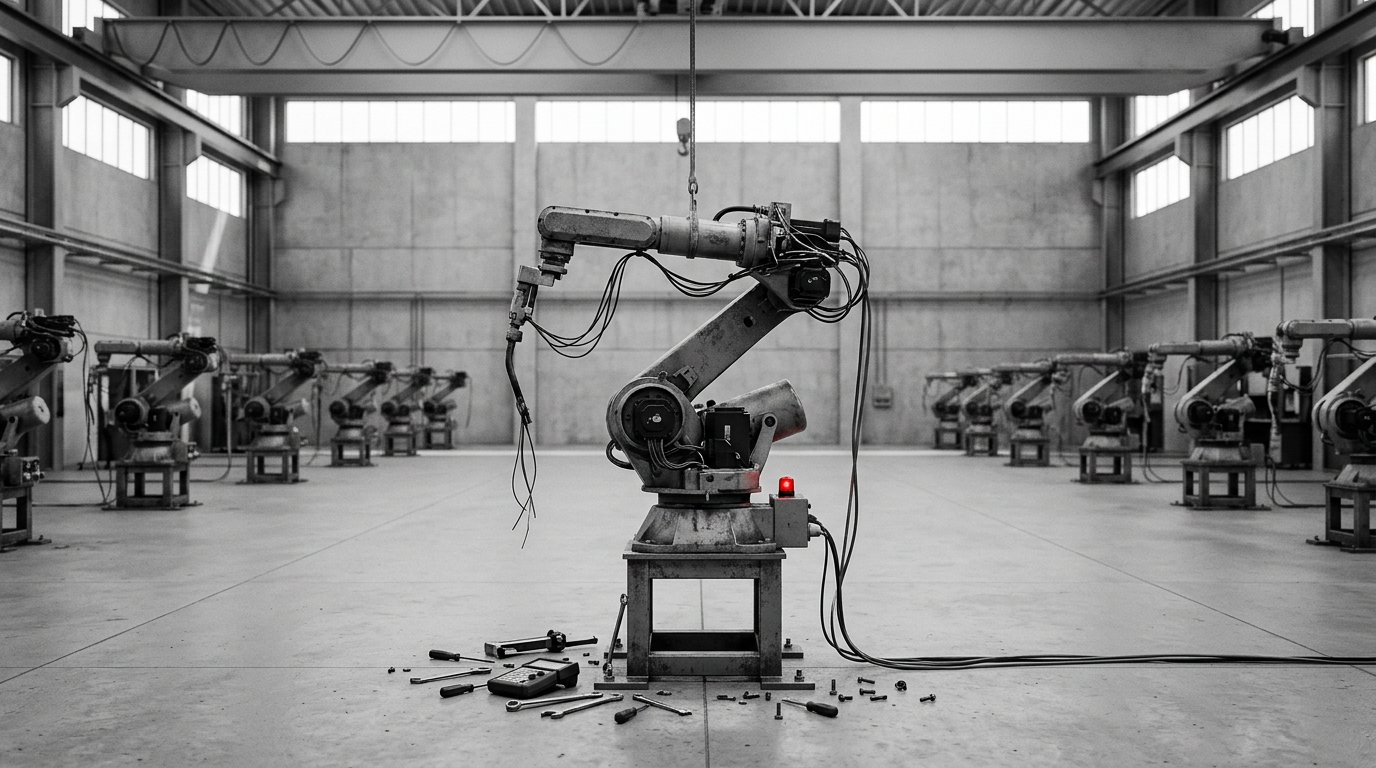
At the 2026 World Robot Conference in Beijing, a humanoid robot began to thrash and emit alarms on stage, turning a planned demonstration into an unexpected spectacle. Newsable AsiaNet News captured footage of the incident, which highlighted more than just a technical glitch. It exposed an emerging gap in how advanced robotics interfaces with the public, signaling new labor demands.
The incident exposes a second-order labor risk The footage suggests more than a technical hiccup; it foregrounds a cascade of frontline responses that are not typically part of a lab’s playbook.
If the malfunction triggers reputational damage or public concern, operators and integrators will need personnel who can diagnose, intervene, and communicate in real time on a public stage. The argument here hinges on a simple premise: when the public sees a robot misbehave, the demand for rapid, trusted on-site intervention rises alongside demand for more robust remote diagnostics and incident-control protocols.
The video itself offers no clear remediation, but it does surface a public-facing burden that traditional engineering teams do not routinely own.
Why a one-off glitch becomes a labor-market signal The median engineer’s instinct is to re-seat a fuse, tweak a control loop, and push the fix back into development.
What changes with a public, on-stage failure is the exposure of the robot to a live audience and a reputational scoreboard that can affect sales, partnerships, and regulatory perception. In practice, this shifts the emphasis from “how to fix it” to “how to manage the incident in front of stakeholders.” The labor implication is not about more software developers, but about new on-site roles that blend diagnostics with incident communication, public-safety coordination, and rapid field repair.
If such roles prove market-ready, procurement and service contracts will tilt toward flexible staffing arrangements that can deploy these specialists alongside standard technicians.
What it implies for procurement and field service
For boards watching image risk, the first-order cost is the immediate repair; the second-order cost is how quickly a provider can deploy qualified staff who can reassure the crowd, coordinate with venue safety teams, and triage fixes that may require localized hardware adjustments. In practice, this means procurement teams may begin screening for field operatives who can operate under public scrutiny, not just engineers who optimize code.
The shift also raises questions about remote diagnostics, standardized response playbooks, and training regimes tailored to public demonstrations. The incident becomes a stress test for deployment workflows, and the vendors best able to respond may gain an edge in future public deployments.
The omission that matters and the counter-hypothesis
The most significant omission is not technical detail but the absence of discussion about systemic deployment safety protocols and new public-facing field operation roles. This omission—the lack of discussion on safety governance and new job families—constitutes the crucial gap this investigation highlights.
Critics might argue that a single clip cannot justify a broader labor shift; others respond that public perception—and the ensuing procurement and risk-management decisions—can accelerate the creation of new roles even if the incident itself remains an outlier. The question is whether the industry will institutionalize new incident-response capabilities or treat this as a one-off PR blemish.
Signals to watch in the coming quarters
To test the labor thesis, we will observe major robot manufacturers or integrators' job postings for 'robot wranglers' or 'robot incident responders'. If at least two distinct postings appear by the end of 2024, the hypothesis gains credibility.
If postings remain sparse or nonexistent, the thesis weakens but does not vanish—watch for procurement shifts that emphasize on-site risk management and field-service governance rather than additional engineering hires. And if large events continue to rely on existing R&D teams without creating public-facing roles, the thesis would be falsified, signaling that the incident is an outlier rather than a trend.
In any case, the coming quarters will reveal whether public demonstrations catalyze a second-order labor market or remain an isolated anomaly.