Robotics CEO: Humanoid Breakthrough Decade Away Post
A robotics firm's CEO projects humanoid technology breakthroughs are a decade off, complicating investor valuations after its recent IPO.
Mateo Fernandez ·
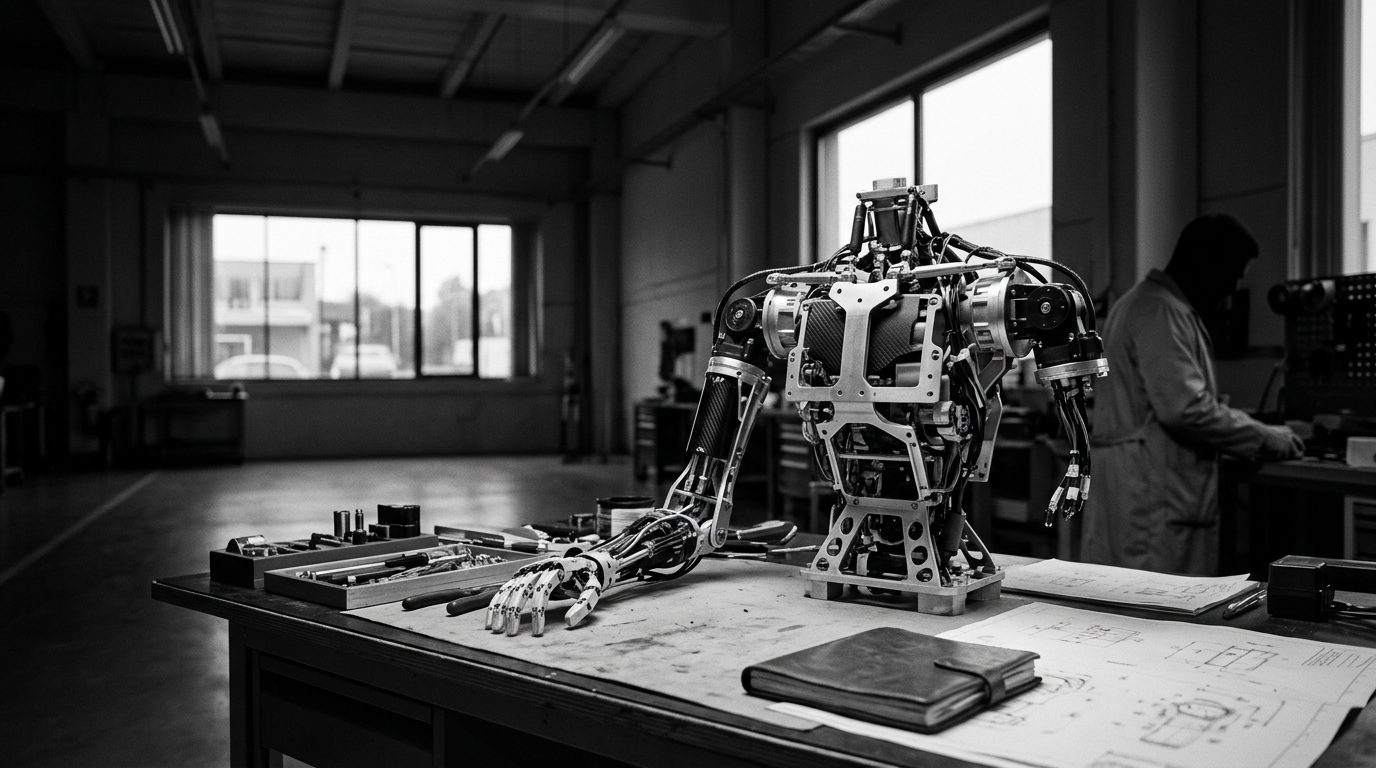
A robotics company, founded by a notable industry figure, recently finalized its initial public offering (IPO). Concurrently, its chief executive officer issued a caution, indicating that a significant advancement in humanoid technology is still as much as ten years away. This projection suggests that widespread implementation of humanoid robots across consumer or business sectors is not an immediate prospect.
The CEO underscored that progress within the robotics field typically unfolds over years, rather than months. This longer timeline is attributed to considerable technical and safety obstacles that continue to hinder development efforts.
Investment Valuation Challenges
This decade-long forecast introduces complexities for investors assessing publicly traded robotics enterprises. It raises questions regarding whether company valuations should primarily reflect current revenue generation or the longer-term potential of their technological platforms. Should this prediction hold true, investors may face an extended waiting period before the broad adoption of humanoid robots translates into substantial revenue growth for these companies.
In a scenario of delayed adoption, companies specializing in industrial automation or robots designed for very specific tasks are anticipated to generate the majority of cash flows in the interim period. Applications with proven immediate returns on investment are more likely to attract capital than theoretical consumer-focused platforms.
Market Monitoring and Future Prospects
Conversely, an acceleration in technological breakthroughs could prompt the market to re-evaluate firms that demonstrate advanced integration of software and sensor technologies. Such a shift might elevate valuations and stimulate a faster deployment of capital into humanoid research and development initiatives.
Investors have indicated that they will closely monitor trading activity and reported corporate milestones through November 21, 2026. This date marks a three-month period following the company's listing. These ongoing observations will serve as key indicators for whether the company's commercial progress aligns with a more rapid or a more extended development timetable for humanoid robotics.
The broader robotics industry has seen significant venture capital inflows in recent years, driven by optimism around artificial intelligence and automation. However, the path to commercial viability for complex humanoid systems, especially for general-purpose tasks, remains fraught with engineering and ethical challenges.
Technological Hurdles and Industry Landscape
The technical challenges cited include developing advanced dexterity, navigating unstructured environments, ensuring robust human-robot interaction safety, and achieving energy efficiency for prolonged operation. These aspects are critical for moving beyond controlled industrial settings into unpredictable consumer or service environments.
The CEO's statement provides a realistic outlook in a sector often characterized by ambitious timelines. It contrasts with some more optimistic projections from other new entrants, highlighting the significant investment and time required to bring advanced robotics to widespread use. The industry consensus generally acknowledges that while specialized robots are becoming ubiquitous, truly general-purpose humanoids are a more distant, requiring breakthroughs in multiple scientific and engineering disciplines.