Meta Glasses policy targets secret Instagram videos online
Meta Glasses users are facing Instagram bans for covert harassment videos, as Meta pairs content enforcement with camera tamper safeguards.
Jason Kwon ·
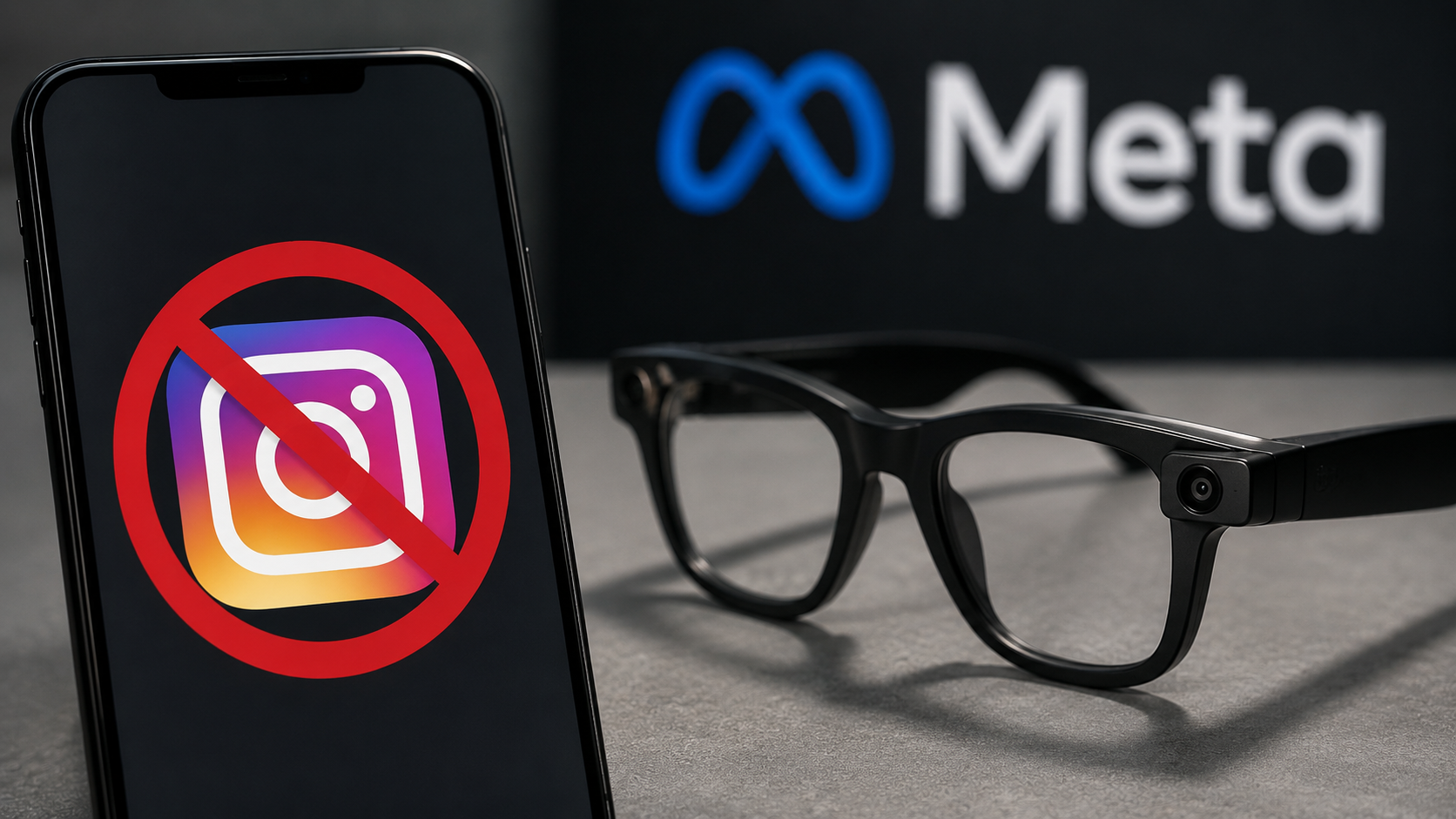
Meta Glasses users now face Instagram bans for covert harassment videos, putting Meta’s smart eyewear privacy rules under pressure.
The enforcement push targets posts that use camera-equipped glasses to record people who do not appear to know they are being filmed. Meta owns Instagram, which makes the action both a platform moderation decision and a product trust test for its wearable hardware.
Mosseri draws a harassment line
Instagram head Adam Mosseri said the company will remove posts that exploit or harass people, including videos built around pickup-line encounters. His framing matters because it treats the issue as conduct on Instagram, not only as a hardware design problem.
“If you're posting content that is taking advantage of people and harassing them, like a lot of these pickup line kinds of videos that we've heard of and seen, then we're going to take the content down,” Mosseri said in a social media post. He added: “We don't want people to be surreptitiously taking videos of other people and harassing them and then posting them on our platform.”
Meta has not disclosed how many Instagram posts or accounts have been removed under the policy. The company has confirmed that two high-profile accounts were deactivated for posting harassment content filmed with its glasses, according to the source material.
Hidden cameras meet creator incentives
The content at issue fits a familiar engagement model: public confrontation, awkward interaction, fast-cut clips and a subject who did not agree to become part of the video. Some videos involve pranks on service workers; others show men recording interactions with women in public.
Smart glasses sharpen that problem because the camera sits at eye level and can be less obvious than a phone held up in front of someone. The product design gives creators a lower-friction way to capture material, while the social platform gives them the distribution and rewards that can make privacy-invasive clips worth producing.
That creates a branding problem for Meta’s glasses business. The source material says critics have attached hostile nicknames to the product category, reflecting a risk that smart eyewear becomes associated with surveillance rather than utility.
LED safeguards move upstream
Meta has also added a software control aimed at physical tampering with the recording indicator. If the LED that signals active recording is blocked or altered, the camera can be disabled entirely.
The measure responds to attempts to hide the light with tape or film, as well as more aggressive modifications such as drilling. It shifts enforcement from after-the-fact content removal toward device-level prevention, which is closer to how safety controls usually mature in consumer hardware.
The open question is whether platform bans and LED safeguards are enough to change creator behavior. If enforcement remains visible and repeat offenders lose accounts, the incentive to produce covert harassment clips should weaken; if creators migrate to new accounts or other platforms, Meta’s device policy will carry more weight than Instagram moderation alone.
For Meta, the immediate company-level risk is adoption friction around its smart glasses at the exact point when camera, AI and social features are converging in wearables. For the wider industry, the lesson is blunt: consumer AI hardware will be judged not only by sensors and software, but by whether bystanders feel protected from them.
The macro effect is not a growth shock, but it is a trust signal for the next wave of ambient computing. If smart eyewear becomes normalized as a practical tool, device makers gain a larger addressable market; if it becomes tied to covert recording, regulators, retailers and users may slow the category before it scales.