One Nation surge signals voter backlash to budget in poll
One Nation leads a nationwide poll as Labor falls post-budget, while the opposition coalition also slips, underscoring voter discontent and a fragmented…
Jason Kwon ·
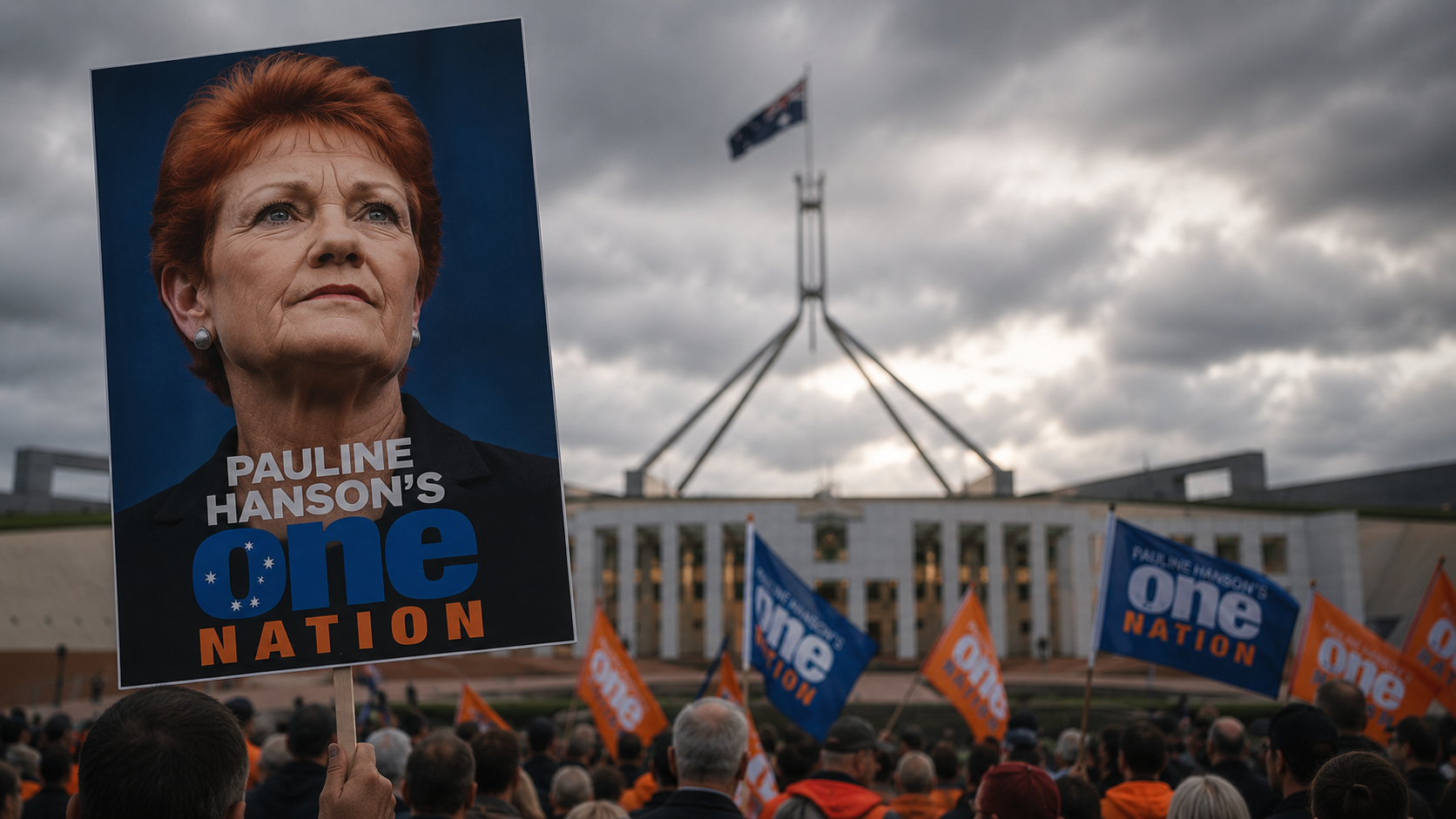
One Nation leads a nationwide poll as Labor and the coalition decline after the May budget, signaling voter discontent and a fragmented right.
Pauline Hanson’s One Nation posted a primary vote of 31%, up four points from a pre-budget reading, according to Redbridge Group/Accent Research. The ruling Labor party fell three points to 28%, while the Liberal-National coalition slid to 20% from 22%.
The findings mark the first time One Nation has led a national opinion poll, as published by the Australian Financial Review. Fieldwork ran May 25–28 across 1,005 respondents, with a stated margin of error of 3.4%.
Poll details and vote shifts
Primary vote changes were decisive: One Nation +4, Labor −3, coalition −2 versus a survey taken before the May 12 budget. The move puts One Nation three points clear of Labor on first preferences.
Methodologically, the sample size and margin suggest smaller movements could be noise, but the spread between the top two is larger than the error band. As always in Australia’s preferential system, primary vote leads do not directly translate into seats.
Budget backlash and coalition squeeze
The center-right coalition has attacked the government over broken election commitments tied to the budget, including tighter tax concessions for property investors. Despite the offensive, the opposition’s own primary vote deteriorated, indicating limited payoff from the critique.
Labor’s slippage aligns with broader dissatisfaction around cost-of-living and fiscal trade-offs, though this poll isolates voting intention without parsing issue-level drivers. The result underscores pressure on both major parties to stabilize support heading into the next news cycle.
Populist momentum and electoral map
The upswing for One Nation parallels gains for the populist right across the UK and Europe, where voters have been peeling away from postwar major-party structures. One Nation recently secured its first lower-house seat in a byelection for Farrer, a rural electorate in southwest New South Wales.
Still, a single poll does not set the trajectory. Follow-on surveys will test durability, and preference flows from minor parties could reshape two-party-preferred dynamics even if One Nation sustains a first-preference lead.
Next steps: track whether the primary vote gap persists beyond the margin of error, and whether budget negotiations or policy recalibrations temper voter churn. Major-party responses on tax and housing will be central to stemming losses.