Nigeria Starts Mass Terrorism Trials in Abuja
Nigeria starts mass terrorism trials in Abuja, prosecuting over 500 suspects as courts begin arraignments under tight security.
Lauren Collins ·
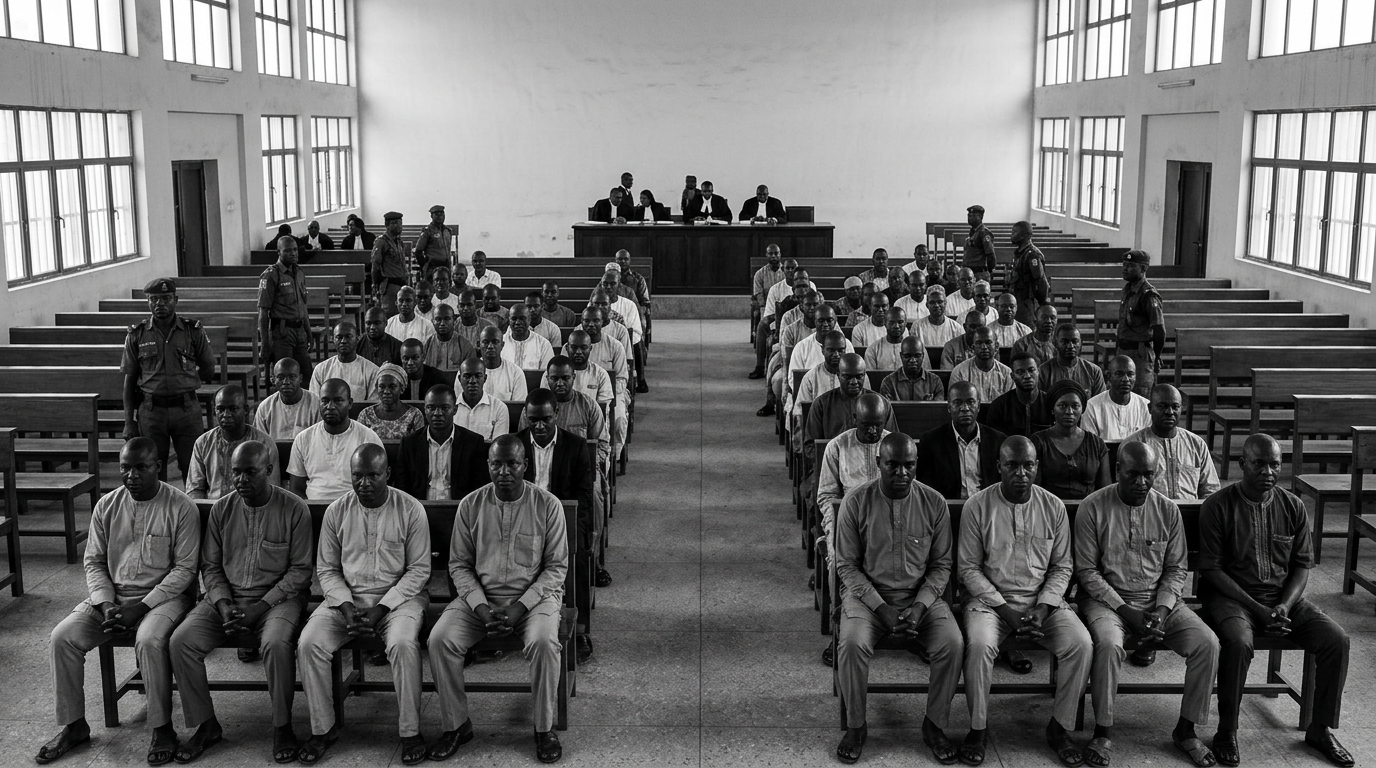
Nigeria opened one of its largest terrorism-related court actions on Tuesday, November 21, 2023, launching prosecutions against more than 500 people in Abuja. Officials said the cases focus on alleged terrorism-linked conduct tied largely to the Boko Haram insurgency in northeastern Nigeria, which began 17 years ago. The government said the effort is intended to move long-running cases into court while following legal procedures.
The proceedings began with 227 suspects brought before 10 judges at a high court in the capital. Authorities said the defendants face accusations that range from taking part in attacks—reported to have occurred mainly in northern Nigeria—to providing support to militant groups. The alleged support includes funding, supplying arms, and handling logistics, according to the case descriptions presented in court.
Officials also pointed to early outcomes in the wider process. Five defendants have already been sentenced after entering guilty pleas, receiving prison terms of between seven and 20 years. The charges cited in those pleas included supplying food and passing information to militants, according to the details provided about the convictions.
The Nigerian government said the prosecutions are being pursued with an emphasis on due process. Attorney General Lateef Fagbemi stated that the state is committed to bringing those involved in terrorism to justice through lawful procedures. The court sessions were held under tight security, with suspects moved in heavily guarded convoys, reflecting the sensitivity and scale of the hearings.
International observers attended, including human rights groups and the Nigerian Bar Association. Their presence comes after years of criticism over the extended detention of suspects without trial. The mass trial format is presented as a step toward addressing that concern by moving a large number of cases into formal judicial proceedings.
The cases are unfolding against a backdrop of persistent insecurity. Officials linked the initiative to the broader challenge of violence that has led to hundreds of deaths this year alone. While the court process is now underway, key uncertainties remain, including how quickly the courts can handle the volume of defendants and how consistently due process standards will be applied across multiple judges and cases.