Nepal flood toll puts China data sharing under scrutiny
Nepal flood data sharing with China faces renewed pressure after a glacier collapse killed nearly 800 people and exposed gaps in hazard monitoring.
Ayla Demirhan ·
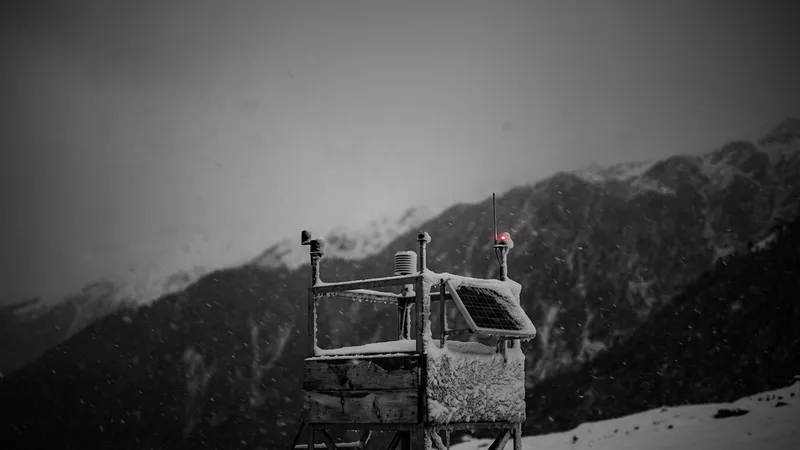
Nepal flood data requests to China face renewed scrutiny after a glacier collapse killed nearly 800 people across the Himalayan border.
The disaster struck around three months after officials and experts from Nepal and China met in Kathmandu on May 27 to discuss floods, weather and glacier-related hazards. More than 3,000 people remain missing by the latest count cited by officials, while recovery has been estimated at about 10% of Nepal’s annual economic output.
May 27 warning talks
A Nepali agenda for the May meeting listed 10 officials from Nepal and about a dozen from China, including representatives linked to Tibet, the region where the later disaster occurred. The agenda called for joint risk-reduction work, including inventories of glacial lakes and mapping of areas exposed to floods and glacier hazards.
Two Nepali officials said they did not receive the level of glacier-risk and water-level information they had sought after the meeting. Sauhardra Joshi, a hydrologist at Nepal’s Flood Forecasting Division who attended the talks, said Nepal wanted earlier notice of "early movements of glaciers and early movements around that area."
Binod Parajuli, another government hydrologist, said Chinese participants told the Nepali side at the meeting that they lacked authority to sign an agreement covering Nepal’s requests. He said they asked for additional discussions rather than making a formal data-sharing commitment at that session.
China cites timely sharing
China’s embassy in Nepal said in a Saturday statement on X that Beijing and Kathmandu had remained in close contact and had made "substantial progress" at the May meeting on cross-border disaster information sharing. The embassy also said Chinese teams had provided important information to Nepal in a "timely manner."
The embassy rejected criticism from some Nepali social media users that China had failed to provide adequate warning. It said Chinese and international experts face serious monitoring difficulties in the remote Himalayan terrain, where weather, altitude and access can limit real-time observation.
Nepali officials cited cooperation rather than fault-finding as their priority, and no official or expert in the account assigned blame to either side for the natural disaster. The dispute is narrower: whether the current exchange of forecasts and observations is enough to help downstream authorities prepare for events that can unfold quickly.
Tibet forecasts and gaps
Nepal raised similar concerns last year after a flood in the same area, officials said. That earlier event followed the sudden release of water from a glacial lake in Tibet, killing at least nine people in Nepal and leaving more than a dozen missing, according to officials.
Parajuli said China has shared heavy-rain forecasts and observations for Tibet through WeChat and email, with that channel starting about a month ago. He said the information did not cover avalanche conditions, water levels, landslides or other extreme events in the form Nepal wants for disaster planning.
The distinction matters for Himalayan communities that sit below glaciers and glacial lakes. Rainfall forecasts can help authorities prepare for flooding linked to storms, but glacier collapse, landslide-dammed water and sudden lake releases require different monitoring tools and faster cross-border alerts.
Scenarios for Himalayan agencies
If Nepal and China expand the system from precipitation forecasts to glacier movement, lake levels and landslide indicators, Nepal’s Flood Forecasting Division would have more time to alert local authorities. The sector effect would fall on hydrology agencies, mountain rescue systems and infrastructure planners that rely on early warnings before roads, bridges and settlements are hit.
If data sharing stays limited to heavy-rain alerts, Nepal’s warning system would remain better suited to storm-related floods than to glacier-triggered events. At the macro level, repeated disasters would keep pressure on public recovery spending; for Nepal’s forecasting agency, the operational gap would remain the timing and type of upstream data; for the wider monitoring sector, demand would shift toward satellite observation, lake surveys and joint hazard maps.
The open issue is whether the next round of talks produces a mandate for broader data exchange, not only informal forecasts through messaging channels. Until then, officials on both sides are working inside a narrow window: hazards form in one country, while many of the lives and economic costs can fall downstream in the other.