NASA schedules Swift boost mission launch for late June
The Swift boost mission aims to raise NASA’s Swift Observatory orbit with a commercial robotic spacecraft launched by Pegasus XL in late June 2026.
Jason Kwon ·
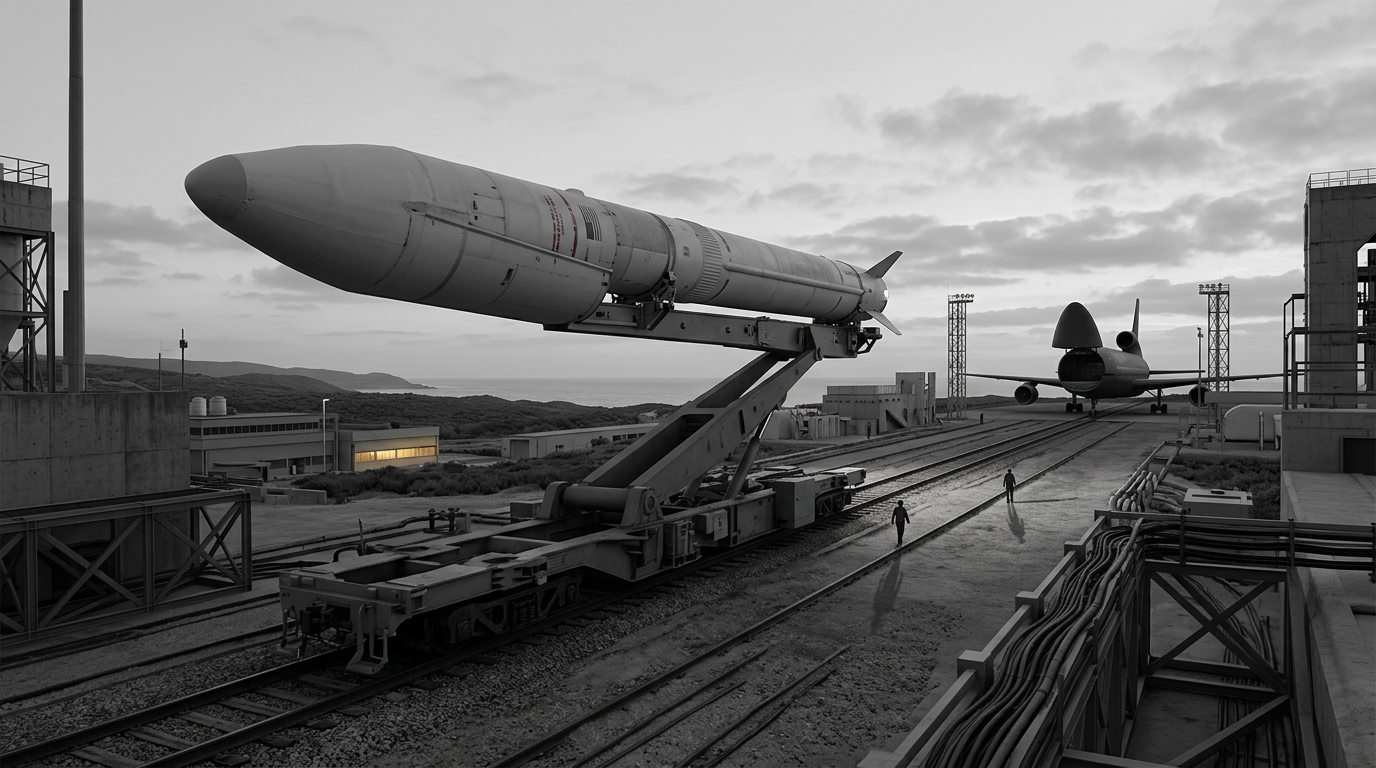
The Swift boost mission is set to attempt an orbital rescue of NASA’s Swift Observatory, using a commercial robotic spacecraft launched by a Pegasus XL rocket in late June 2026.
The goal is straightforward: raise Swift’s orbit to slow its gradual descent and keep the long-running space telescope operating for several additional years. NASA has described the effort as a first-of-its-kind attempt to extend the life of an existing astrophysics mission through an on-orbit “boost” performed by a partner spacecraft.
Swift’s orbit is declining after two decades in space
Swift has spent more than 20 years observing the universe from Earth orbit, but its altitude is now low enough that atmospheric drag is steadily pulling it downward. Without intervention, the observatory faces eventual reentry, which would end its ability to collect science data.
Orbit decay is a common constraint for satellites that do not have enough fuel—or were not designed—to perform repeated altitude-raising maneuvers across long lifetimes. As spacecraft dip into denser traces of the upper atmosphere, drag increases and the rate of orbital loss can accelerate, narrowing the window for corrective action.
NASA has positioned the Swift boost mission as a way to prevent that outcome while preserving a productive observatory that is already built, commissioned, and scientifically proven. If the orbit lift works as planned, the agency expects Swift to continue operations for “several more years,” according to the mission outline.
A commercial robotic spacecraft will attempt the orbital lift
The planned intervention relies on a commercially provided robotic spacecraft, which would rendezvous with Swift and deliver the boost needed to move it into a higher, longer-lasting orbit. The rescue architecture uses a Pegasus XL launch vehicle, with NASA targeting a late June 2026 liftoff.
The schedule underscores how quickly the mission has been assembled: NASA said it and its commercial partners developed the effort in less than a year. That pace reflects both the near-term orbital risk to Swift and the broader push across the space sector to expand in-orbit servicing techniques, including approaches that can extend mission lifetimes without building replacement spacecraft.
NASA has framed the project as a demonstration that could influence how aging science satellites are managed in the future. While satellite servicing has been discussed for years, astrophysics missions are typically not designed to be refueled or repositioned once deployed, making any successful “boost” a notable operational precedent.
Science continuity and a test case for future servicing
Swift’s scientific role has been central to NASA’s astrophysics portfolio, with the observatory contributing to studies of high-energy events and the broader workings of the cosmos. “Swift has been a key player in NASA’s efforts to understand how the universe works,” said S. Bradley Cenko, Swift principal investigator at NASA’s Goddard Space Flight Center, adding that the team is eager to resume work after the boost is complete.
Beyond preserving one telescope, the Swift boost mission could help validate commercial partnerships for spacecraft life extension. A successful outcome would demonstrate that an uncrewed servicing vehicle can be launched on a comparatively small rocket, reach a specific target satellite, and execute a maneuver that materially changes mission longevity.
The next steps center on the planned late June 2026 launch and the subsequent on-orbit operations required to complete the boost. Mission watchers will focus on whether the robotic spacecraft can safely perform its proximity operations and deliver the intended orbital increase, a result that could shape future decisions on sustaining aging NASA assets.